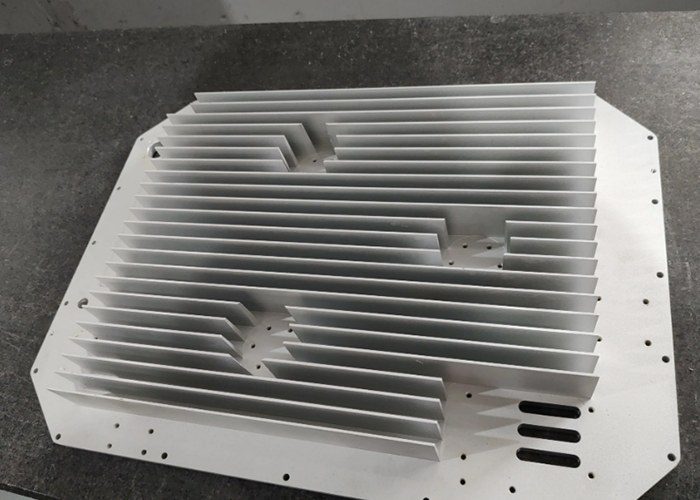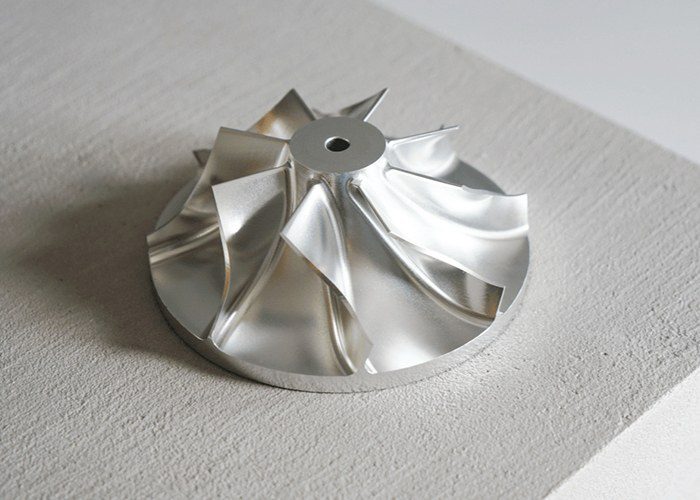
The trajectory of manufacturing excellence, transitioning from manual machining to computer-controlled precision, constitutes a paradigm shift of profound historical significance. Among the pivotal advancements in this journey stands 4-axis CNC machining—a technology that has fundamentally transformed how metal parts are designed, produced, and delivered. By adding a rotational axis to the traditional three linear axes, 4-axis CNC machining has unlocked new possibilities for complexity, accuracy, and efficiency in metal component manufacturing.
Understanding the Fourth Axis
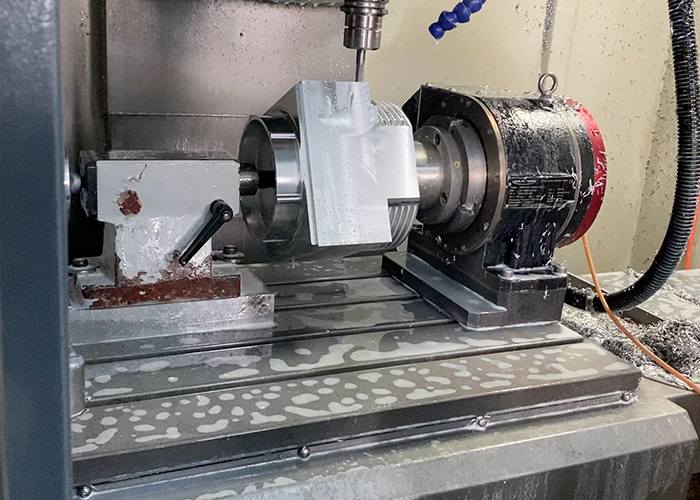
At its core, 4-axis CNC machining builds upon the familiar three-axis framework—X (left-right), Y (front-back), and Z (up-down)—by introducing a rotary axis, typically designated as the A-axis, which rotates around the X-axis. This additional degree of freedom allows the workpiece to rotate while the cutting tool operates, enabling access to multiple surfaces and angles in a single setup. The fourth axis can function in different modes: indexed machining positions the part at a fixed angle and locks it during cutting, while simultaneous machining rotates the workpiece continuously as the tool follows complex three-dimensional paths. This flexibility makes 4-axis machining remarkably versatile, capable of producing everything from simple cylindrical features to intricate contoured surfaces.
The Competitive Edge: Why Four Axes Matter
The advantages of 4-axis CNC machining over conventional 3-axis processes are substantial and multifaceted. Perhaps the most significant benefit is the dramatic reduction in setups. Traditional 3-axis machining often requires multiple clamping operations to access different faces of a part, each repositioning introducing potential for error. By consolidating setups, a four-axis machining center minimizes cumulative positioning errors from repeated clamping, delivering significantly improved machining accuracy.
This single-setup capability translates directly into tighter tolerances and superior surface finishes. By holding the part in one fixture throughout the entire machining process, 4-axis systems eliminate the cumulative errors that arise from repeated repositioning. The result is parts that meet exacting specifications with consistency and repeatability—qualities that are non-negotiable in industries where failure is not an option.
Efficiency gains are equally compelling. With fewer setups comes reduced cycle times, lower labor costs, and faster production throughput. Studies have shown that 4-axis machining can deliver up to 30% efficiency improvement compared to three-axis systems for certain part geometries. The ability to machine multiple features in one continuous operation not only accelerates production but also reduces the opportunities for human error that plague multi-setup workflows.
Industries Transformed by Four-Axis Technology
The impact of 4-axis CNC machining reverberates across virtually every sector of advanced manufacturing. In aerospace, where component geometries are notoriously complex and tolerances unforgiving, 4-axis machines produce turbine blades, engine housings, and structural parts with the precision that aviation safety demands. The automotive industry relies on four-axis machining for engine blocks, cylinder heads, transmission components, and gearboxes—parts that must withstand extreme stresses while maintaining exacting dimensional accuracy.
The medical device sector has equally embraced this technology. Orthopedic implants, surgical instruments, and curved bone plates require surface finishes and geometric accuracy that only multi-axis machining can consistently deliver. Four-axis CNC machining enables the production of these life-critical components with the reliability and repeatability that regulatory standards demand. Beyond these flagship industries, 4-axis machining serves the oil and gas sector with robust valve bodies and pump components, the electronics industry with precision housings and heat sinks, and the tool and die making trade with complex molds and dies.
Materials and Precision Capabilities
Modern 4-axis CNC machining centers work with an extensive range of metals, from readily machinable aluminum and brass to challenging materials like stainless steel, titanium, and superalloys such as Inconel and Hastelloy. The added rotational axis enables optimized cutting parameters for each material, allowing manufacturers to achieve surface finishes as fine as Ra 0.4–3.2μm and positional tolerances within ±0.003mm. This level of precision ensures that components meet the most demanding specifications while maintaining cost-effectiveness across production volumes.
Challenges and the Road Ahead
Despite its many advantages, 4-axis CNC machining is not without challenges. Programming for four axes is considerably more complex than for three-axis systems, requiring specialized CAM software and skilled operators. The initial investment in machinery and training is also higher than for conventional 3-axis equipment. However, for applications requiring intricate geometries, multi-face machining, and high precision, the return on investment is compelling.
As manufacturing continues its trajectory toward greater automation and intelligence, 4-axis CNC machining stands as a critical bridge between traditional three-axis processes and the full five-axis systems that represent the pinnacle of multi-axis capability. The integration of CAD/CAM systems, advanced toolpath strategies, and real-time monitoring continues to push the boundaries of what four-axis machines can achieve. With the global CNC machine market projected to reach $105.7 billion by 2031, the role of 4-axis machining in meeting the world’s demand for precision metal components will only grow more essential.
Conclusion
4-axis CNC machining represents a transformative force in metal parts manufacturing—a technology that delivers the perfect balance of capability, precision, and efficiency. By enabling complex geometries, reducing setups, and achieving superior accuracy, it has become an indispensable tool across aerospace, automotive, medical, and countless other industries. As manufacturers continue to push for greater complexity and tighter tolerances, the fourth axis will remain at the heart of precision metalworking, driving innovation and enabling the production of components that power modern civilization.