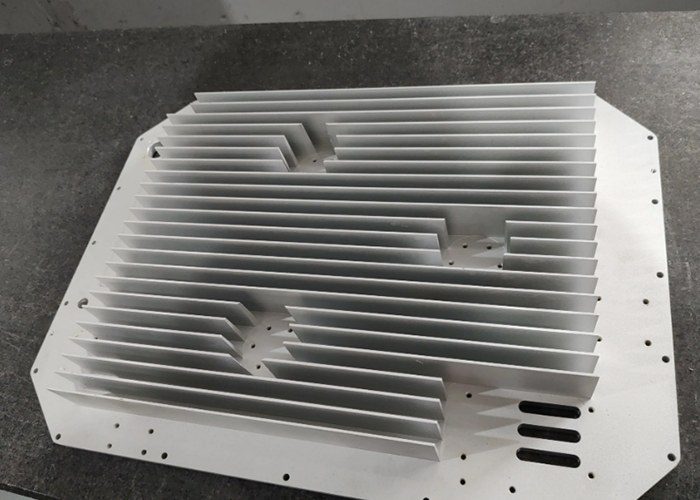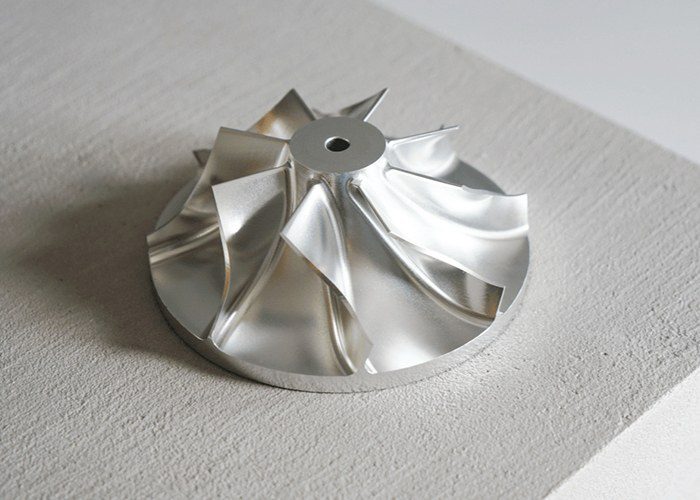
In an age dominated by artificial intelligence, electric vehicles, and space exploration, it is easy to overlook the physical components that make these marvels possible. Beneath every sophisticated digital interface and every powerful algorithm lies a tangible world of metal, ceramic, and composite materials—shaped with astonishing exactitude. These are high precision mechanical parts. While often unseen and uncelebrated, they are the silent, unyielding backbone of modern industrial civilization.
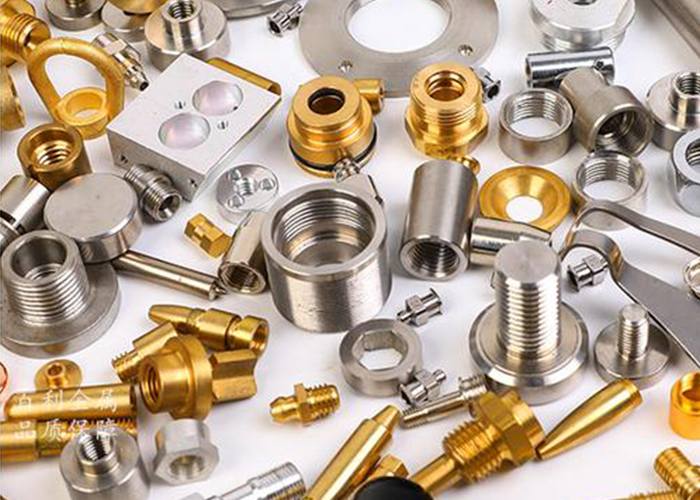
Defining Precision: Beyond Microns
What exactly makes a mechanical part “high precision”? In engineering terms, precision is defined as both the repeatability of measurements and their deviation from a nominal value. While standard machining might operate within tolerances of a tenth of a millimeter (100 microns), high precision machining operates in the realm of microns (one-millionth of a meter) and even sub-microns. To put this in perspective: a human hair is roughly 70 microns thick. High precision parts routinely achieve tolerances of 5 microns or less—a scale where temperature fluctuations, vibrations, and even the static electricity from an operator’s hand can alter a part’s geometry.
These components are not mass-produced by conventional lathes or mills. They are crafted using specialized equipment such as Swiss-type lathes, ultra-precision diamond turning machines, electrical discharge machines (EDM), and advanced multi-axis CNC machining centers, often operating in climate-controlled cleanrooms.
Critical Applications: Where Failure is Not an Option
The demand for such extreme accuracy arises in fields where failure is catastrophic. In the aerospace industry, turbine blades must be machined to tolerances within a few microns to ensure efficient combustion and resistance to thermal stress. A blade that is too thick disrupts airflow; one that is too thin risks fracture at 1,500°C. Similarly, fuel injection nozzles in jet engines require microscopic orifices that atomize fuel with mathematical perfection—any deviation reduces thrust and increases emissions.
In the medical sector, high precision parts are a matter of life and death. Orthopedic implants like hip and knee joints must achieve surface roughness measured in nanometers to promote osseointegration (bone bonding). Surgical robotic arms, such as Intuitive Surgical’s da Vinci system, rely on miniature gears and linkages with near-zero backlash to translate a surgeon’s hand movements into incisions measured in fractions of a millimeter. A single micron of slop could sever a nerve.
Perhaps the most demanding application is in semiconductor manufacturing. The photolithography machines that etch silicon wafers (produced by companies like ASML) contain wafer stages and mirrors that must move with nanometer precision. These parts are so precise that their positions are measured using laser interferometers that track movements smaller than an atom’s diameter. Without such parts, Moore’s Law—the doubling of transistors every two years—would have collapsed decades ago.
The Challenges of Manufacturing
Producing these components is an exercise in controlling the uncontrollable. One primary challenge is thermal stability. As a metal part is machined, friction generates heat, causing the material to expand. At the micron level, a 10°C temperature rise can change a part’s dimensions by tens of microns. Therefore, high precision machining often takes place in rooms held at exactly 20°C, with coolant fluids circulating to absorb heat instantaneously.
Another obstacle is material behavior. Exotic alloys like Inconel, titanium, and hardened tool steels are notoriously difficult to cut. They work-harden rapidly, so the cutting tool must be harder than the material; diamond or cubic boron nitride is typically used. Vibration (chatter) is the enemy; even sub-sonic vibrations leave microscopic chatter marks that ruin surface finish. Modern machines use active damping systems and sensors that adjust cutting parameters thousands of times per second.
Metrology—the science of measurement—is equally crucial. How can you make a part with a 2-micron tolerance if you cannot measure it? High precision parts require coordinate measuring machines (CMMs), laser scanners, and profilometers with accuracy an order of magnitude higher than the part’s tolerance. This creates a recursive challenge: the measurement tools themselves must be calibrated against traceable national standards, and those standards against physical constants.
The Future: Moore’s Law for Mechanical Parts
As electronic components approach atomic limits, the demand for even higher mechanical precision is accelerating. We are seeing the emergence of additive-subtractive hybrid manufacturing—3D printing near-net shapes followed by ultra-precision finishing. This reduces material waste and allows internal cooling channels impossible to drill conventionally.
Moreover, smart precision parts are on the horizon. Researchers are embedding micro-sensors into bearing races and gear teeth, enabling real-time monitoring of stress, temperature, and wear. These “cyber-physical” components will allow predictive maintenance, a cornerstone of Industry 4.0.
Perhaps the most exciting frontier is quantum mechanics. Quantum sensors and computers require mechanical mounts that isolate them from cosmic vibrations, with surfaces polished to atomic smoothness—a roughness average (Ra) of 0.1 nanometers or less. This pushes the boundaries of deterministic polishing and ion-beam figuring.
Conclusion
High precision mechanical parts are not mere commodities; they are enablers of human aspiration. They allow us to fly higher, operate inside the human body without harm, and etch circuits at the scale of viruses. As an engineer who has worked on precision spindle design, I have learned that the difference between success and failure is often invisible to the naked eye. It resides in that last micron, that final polish, that relentless obsession with perfection. In a world that increasingly celebrates the virtual, let us not forget the tangible—the exquisitely crafted, high precision parts that hold our reality together.