In an era where mass production dominates the global supply chain, the demand for uniqueness, precision, and adaptability has never been greater. Off-the-shelf components often fall short—either failing to fit complex assemblies, lacking the required durability, or compromising on material integrity. This is where Customized CNC Machining Services step in as a transformative solution, bridging the gap between digital blueprints and physical reality with microscopic accuracy.
What Defines a Customized CNC Machining Service?
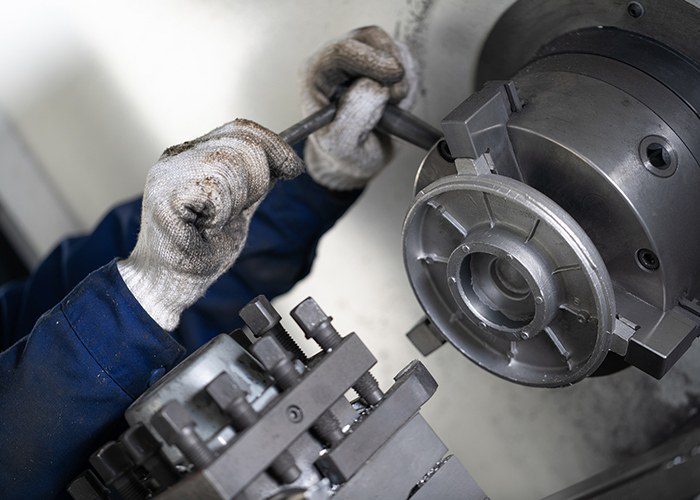
Unlike standard machining that churns out thousands of identical parts, customized CNC (Computer Numerical Control) machining focuses on producing individual components or small batches tailored to exact client specifications. The process begins with a CAD (Computer-Aided Design) file, which is converted into a set of machining instructions. Advanced multi-axis lathes, mills, routers, and grinders then remove material from a solid block—be it aluminum, stainless steel, titanium, engineering plastics, or exotic alloys—to form the desired geometry. The word “customized” implies control over every variable: dimensions, tolerances (often as tight as ±0.005 mm), surface finishes, heat treatments, and secondary operations like threading or anodizing.
Five Pillars of Competitive Advantage
- Geometric Complexity Unleashed
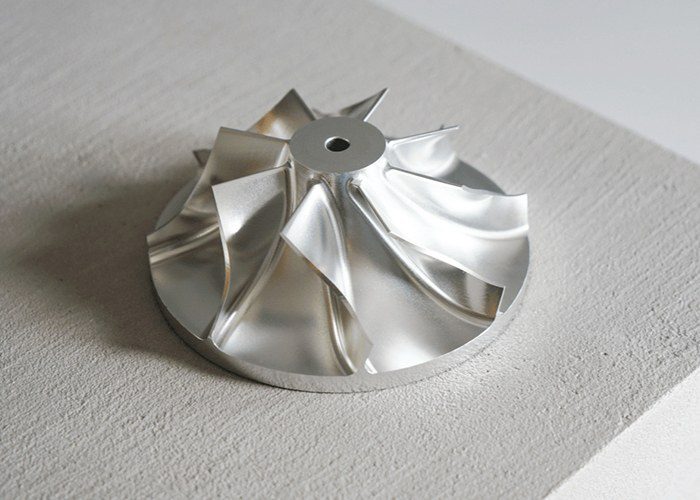
Customized CNC machining excels where 3D printing or manual fabrication struggle. Internal undercuts, deep blind holes, thin walls, and non-standard threads become achievable. For industries like aerospace or medical devices, where organically shaped cooling channels or patient-matched implants are required, 5-axis CNC machines can approach a workpiece from virtually any angle, eliminating multiple setups and enhancing accuracy. - Material Versatility with Integrity
While additive manufacturing imposes limits on alloys and plastics, CNC machining works with the full spectrum of engineering materials. Need a gear machined from hardened D2 tool steel? A chemical pump housing from PTFE or PEEK? A lightweight bracket from 7075 aluminum? Customized services allow you to specify the exact material grade, ensuring mechanical properties—hardness, tensile strength, corrosion resistance—match the application’s life cycle demands. No material waste from supports or binders; just pure, homogenous stock shaped to purpose. - Rapid Iteration & Low-Volume Viability
Prototyping and bridge production are classic use cases. When a startup designs a novel drone propulsion system or a medical researcher needs three iterations of a surgical guide, custom CNC machining shines. Setup times have plummeted with modern CAM (Computer-Aided Manufacturing) software and quick-change workholding. A part can be programmed, machined, and inspected within 24–48 hours. Unlike injection molding, which requires expensive tooling, CNC has no minimum order quantity (MOQ). You pay only for the machine time and material—perfect for pilot runs or replacement parts for obsolete equipment. - Superior Mechanical Properties & Surface Quality
Subtractive machining imparts stresses and heat differently than printing or casting. The homogeneous material, worked from a solid billet, yields a final part with consistent grain flow and no internal porosity. Post-machining, surface finishes can reach 0.4 µm Ra without secondary polishing. For functional surfaces—bearing journals, sealing lands, or optical mounts—this as-machined precision reduces assembly tolerance stacking and improves fatigue life. - Traceability & Quality Assurance
Reputable custom CNC shops are certified to ISO 9001:2015 or AS9100D (the aerospace standard). Every tool offset, feed rate, and inspection step is logged. In-process probing automatically compensates for thermal expansion. At completion, CMM (Coordinate Measuring Machine) reports provide dimensional validation down to the micron. For regulated sectors like defense or automotive safety, this digital thread provides irrefutable proof that each part meets spec—serialized and documented.
Critical Applications Across Industries
- Aerospace & Defense: These include turbine blade roots, wing spar fittings, and missile guidance housings. Lightweighting is paramount, achieved through pocket milling and rib structures that additive cannot reliably reproduce in Inconel.
- Medical & Dental: Titanium bone screws, spinal cages, surgical jigs, and custom abutments. Biocompatibility and cleanability demand mirror finishes and no surface defects.
- Automotive & Motorsport: Custom camshafts, throttle bodies, suspension clevises, and brake caliper pistons. High-performance builds rely on custom machined parts to handle extreme loads.
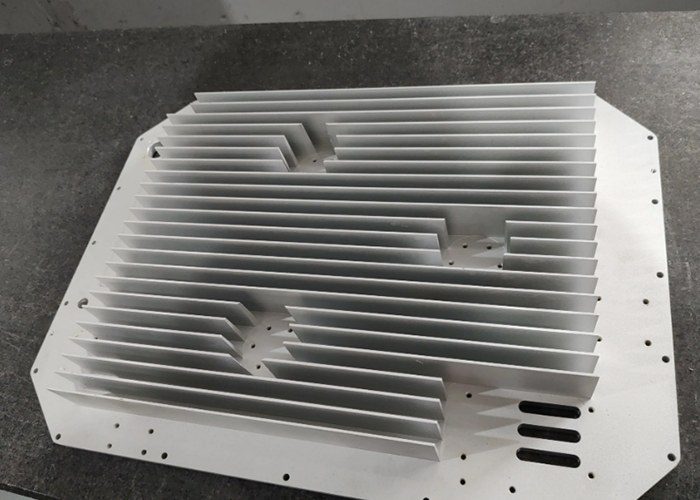
- Electronics & Semiconductor: Heat sinks, RF housings, probe card guides. Sub-millimeter features and tight flatness control over large areas are routine.
- Energy & Oil & Gas: Valve bodies for subsea hydraulics, geothermal exploration tools, fuel cell plates. Corrosion-resistant superalloys (Hastelloy, Monel) are machined to withstand high-pressure, high-temperature environments.
The Economic Case: Beyond Price Per Piece
When comparing customized CNC machining to overseas mass production or internal manual milling, decision-makers often ask: “Is it worth the cost?” Total cost of ownership holds the answer. A custom part that fits perfectly reduces assembly time, rework, and warranty claims. Rapid turnaround collapses development cycles, allowing products to reach market months earlier. And because design changes are implemented by simply editing a CAM file, no scrap inventory accumulates from obsolete tooling.
Choosing Your Custom CNC Partner
Not all shops offer true customization. Look for:
- In-house CAD/CAM engineering – Direct support for design optimization targeting machinability.
- Multi-axis capabilities – 3-axis is common; 4- and 5-axis denotes advanced contouring.
- Metrology lab – Ensures every part meets its unique dimensional requirements.
- Material sourcing flexibility – Ability to procure certified alloys or customer-supplied stock.
- Transparent lead times – Real-time machine monitoring and online quoting dashboards.
The Future: AI-Assisted & On-Demand
The customization trend is accelerating. Machine learning algorithms now predict tool wear and adjust feeds to preserve accuracy. Digital twin simulation detects collisions before metal is cut. Cloud-based platforms allow you to upload a STEP file, receive an instant DFM (Design for Manufacturing) analysis, and place an order—all without human intervention. As supply chains shorten and products become more individualized, customized CNC machining services are evolving from a niche specialty into a core manufacturing pillar.
Conclusion
Customized CNC machining is not merely a process; it is a partnership in precision. It liberates engineers from the constraints of standard catalogs and gives life to mission-critical components that must perform flawlessly. Whether you need one intricate prototype or five hundred production parts with evolving revisions, the right CNC partner transforms your drawing into a tangible asset—faster, stronger, and more accurate than any alternative. In a world demanding perfect fit, form, and function, customization is the ultimate expression of quality.