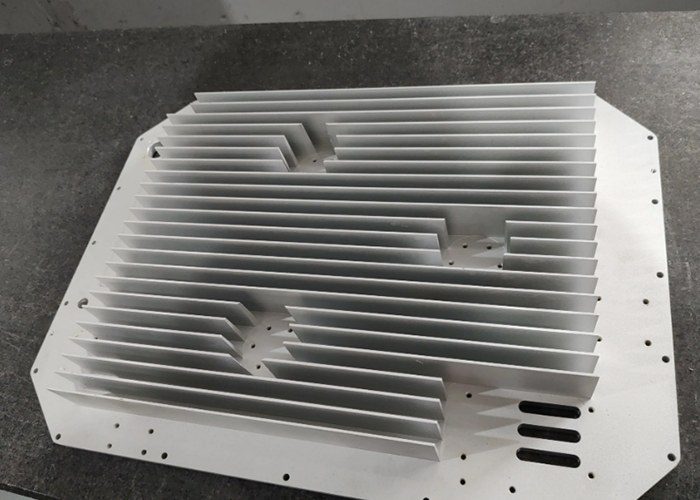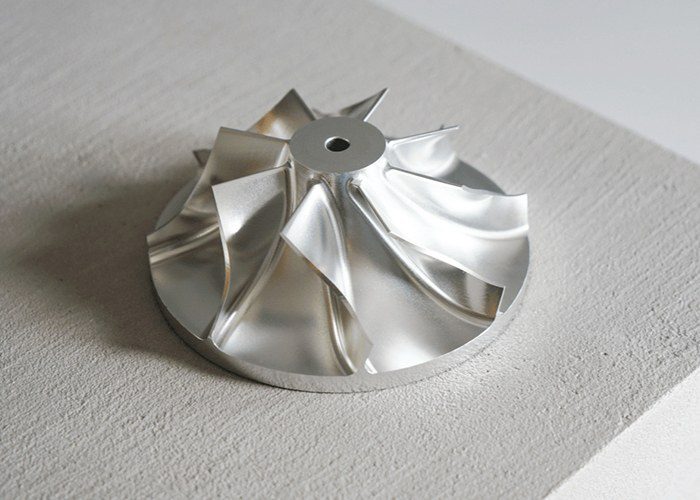
In the relentless pursuit of innovation, the difference between a concept that changes the world and one that remains a blueprint often lies in the realm of manufacturing tolerances. As industries push the boundaries of physics—whether in aerospace, medical devices, or electronics—the demand for components that fit perfectly, function flawlessly, and endure extreme conditions has never been greater. At the heart of this industrial evolution lies the High Precision Machining Service, a specialized sector that serves as the silent backbone of modern manufacturing.
High precision machining is defined by its ability to remove material from a workpiece to create complex geometries with extremely tight tolerances. While standard machining might operate within tolerances of thousandths of an inch, high precision machining routinely operates at the micron level (one-millionth of a meter) or even sub-micron levels. To put this into perspective, a human hair is approximately 70 microns wide; precision machinists routinely work to tolerances of less than 5 microns, creating components that must interact with one another at a scale invisible to the naked eye.
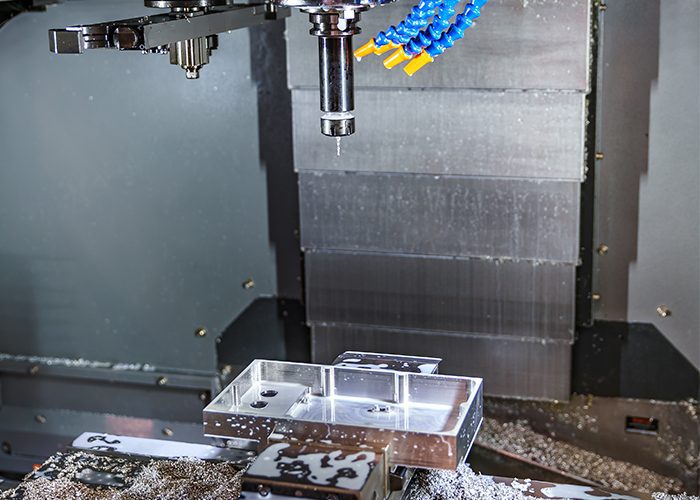
The foundation of these services rests upon advanced machinery, most notably Computer Numerical Control (CNC) systems. Unlike manual machining, where operators control the movement of tools via levers and handwheels, CNC machining relies on pre-programmed computer software to dictate the movement of factory tools and machinery. This allows for three-dimensional cutting tasks to be accomplished in a single set of prompts with remarkable repeatability. Within this category, equipment such as 5-axis milling centers represents the apex of capability. Unlike traditional 3-axis machines that move in linear X, Y, and Z planes, 5-axis machining adds rotational axes, allowing the cutting tool to approach the workpiece from virtually any direction. This capability is essential for producing the complex, organic shapes required in turbine blades, orthopedic implants, and intricate mold cavities.
However, the machine is only as effective as the environment that houses it. One of the often-overlooked aspects of high precision machining is environmental control. Thermal expansion is the enemy of precision; as a machine tool heats up during operation, the metal expands, potentially pushing a part out of specification. To combat this, leading precision machining facilities operate in climate-controlled environments, often maintained at exactly 68 degrees Fahrenheit (20 degrees Celsius), where thermal expansion is standardized. Some facilities even employ advanced vibration damping foundations to isolate sensitive equipment from the vibrations of nearby traffic or heavy machinery, ensuring that the only movements occurring are those intended by the program.
The range of materials that high precision machining services work with is as diverse as the industries they serve. On one end of the spectrum, they handle hardened tool steels and exotic alloys such as Inconel and titanium. These materials, prized for their strength-to-weight ratio and resistance to high temperatures, are notoriously difficult to cut. They require specialized tooling, such as diamond-tipped or carbide end mills, and strategic cooling techniques to prevent work hardening. On the other end, the industry is also increasingly working with advanced polymers, ceramics, and composites. The shift toward miniaturization, particularly in electronics and medical technology, demands the ability to machine these delicate materials without inducing stress fractures or burrs.
Quality assurance in this field is a discipline in itself. A high precision machining service cannot rely solely on the machine’s internal feedback loops; it requires rigorous external verification. This is typically achieved through a combination of in-process probing and post-process inspection using Coordinate Measuring Machines (CMM). These devices use tactile probes or laser sensors to map the physical geometry of a finished part against the original digital design file (CAD). In high-stakes industries like aerospace, where a single faulty component can jeopardize an entire aircraft, the documentation of this quality process—often referred to as First Article Inspection (FAI)—is as critical as the part itself.
The applications of these services are vast and life-altering. In the medical field, high precision machining is responsible for creating the intricate mechanisms within robotic surgical instruments, the threads of bone screws that must hold at specific torques, and the housings for implantable pacemakers. In aerospace and defense, it enables the production of fuel system components that must withstand corrosive chemicals and high-pressure environments without leaking. In the semiconductor industry, it produces the wafer chucks and handling components required to manufacture microchips, where a single speck of dust or a deviation of a micron can render a multi-million-dollar wafer useless.
Looking to the future, high precision machining services are undergoing a transformation driven by automation and connectivity, often referred to as Industry 4.0. The machine shop of tomorrow is becoming a “lights-out” manufacturing facility—a factory capable of running unattended for extended periods. This is made possible by robotic part loaders, automated tool changers, and sophisticated monitoring systems that use artificial intelligence to predict tool wear before a failure occurs. This shift not only reduces labor costs but also increases consistency, as the variability introduced by human intervention is minimized.
In conclusion, high precision machining services represent far more than just cutting metal; they represent the tangible realization of human ingenuity. As engineers continue to design smaller, faster, and more durable products, the gap between what can be imagined and what can be manufactured narrows. The precision machinist, armed with 5-axis mills, temperature-controlled environments, and micron-level measuring equipment, is the critical translator of digital blueprints into physical reality. For industries where failure is not an option, the expertise of a high precision machining service is not merely a vendor selection; it is a strategic partnership essential for turning groundbreaking ideas into reliable, market-ready realities.