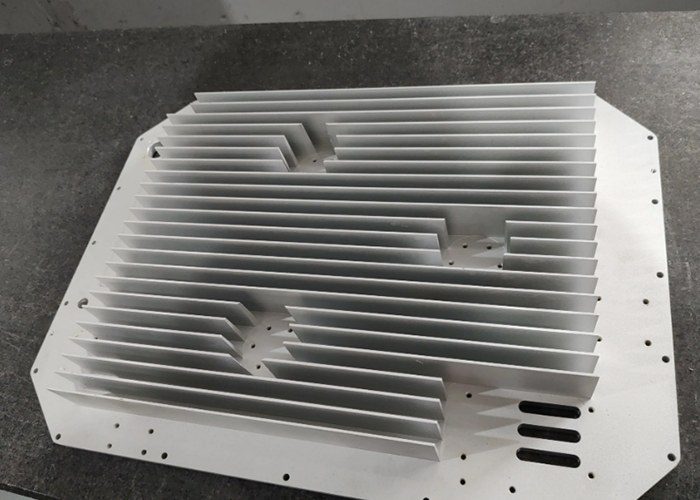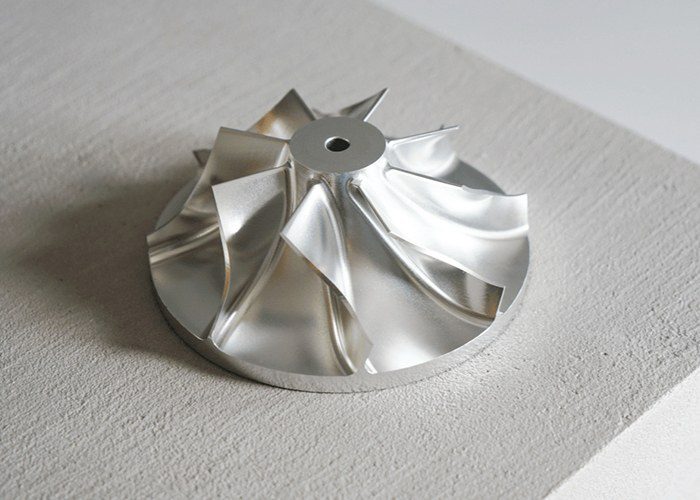
In the age of automation, artificial intelligence, and space exploration, we often marvel at the grand achievements—rockets launching, robotic arms assembling cars, or medical robots performing delicate surgeries. Yet, beneath every one of these technological marvels lies an invisible but critical foundation: high precision machine parts. These components, manufactured with tolerances often measured in micrometers (millionths of a meter), are the unsung heroes of modern engineering. Without them, the seamless functionality of complex machinery would simply collapse into chaos.
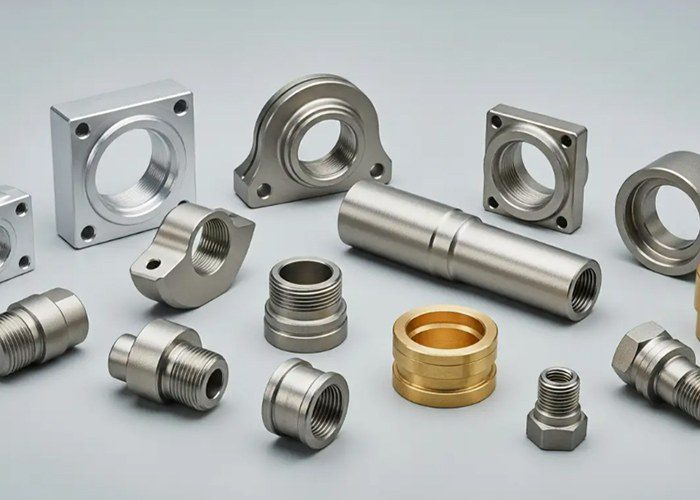
High-precision machine parts are defined not merely by their dimensions, but by their remarkable accuracy. While standard parts might allow deviations of a few millimeters, precision parts demand tolerances as tight as ±0.005 mm or even less. At this level of accuracy, the difference between a functional assembly and a catastrophic failure can be as thin as a strand of human hair. This level of precision is attained through advanced manufacturing processes, rigorous quality control, and a profound understanding of material science.
The Manufacturing Crucible
Creating a part that deviates less than a fraction of a micron requires more than just a skilled machinist; it demands a symphony of cutting-edge technologies. Computer Numerical Control (CNC) machining is the cornerstone of this industry. Modern 5-axis CNC machines can carve complex geometries from solid metal blocks with repeatable precision that was unimaginable fifty years ago. These machines operate in climate-controlled environments because even a one-degree Celsius change in temperature can cause a metal component to expand enough to fall out of specification.
Beyond CNC milling and turning, other techniques like Electrical Discharge Machining (EDM) and laser micromachining are employed for parts that are too hard or too intricate for traditional cutting. EDM, for instance, uses controlled electrical sparks to erode material, allowing for burr-free surfaces and micro-holes as small as 0.05 mm in diameter. After machining, processes like lapping, honing, and superfinishing bring surface roughness down to the nanometer level, ensuring that mating parts slide or rotate with minimal friction.
Equally critical is metrology—the science of measurement. High precision parts are worthless without verification. Coordinate Measuring Machines (CMMs), optical comparators, and laser interferometers inspect every critical dimension. Some manufacturers have implemented in-process inspection, where sensors check a part’s dimensions while it is still being machined, allowing for real-time adjustments. This feedback loop guarantees that every part—whether the first or the thousandth in a run—matches the blueprint with precision.
The Materials Matrix
The choice of material dramatically influences precision. Common choices include stainless steel, aluminum alloys, titanium, and engineering plastics like PEEK. However, as demands increase, exotic materials such as Inconel (for high-temperature stability) or beryllium copper (for thermal conductivity and non-sparking properties) become necessary. Each material behaves differently under stress and heat; a precision machinist must understand how a billet of aluminum will expand during a long milling cycle and compensate accordingly. Moreover, post-machining treatments like stress-relieving annealing or cryogenic processing are often applied to stabilize the part’s internal structure, preventing micro-movements over time.
Applications: Where Precision is Non-Negotiable
The application range of high-precision parts is extensive, yet certain sectors rely on them absolutely.
In aerospace, fuel system injectors and hydraulic actuators must operate flawlessly under extreme pressure and temperature swings. A deviation of a few microns in a turbine blade’s cooling hole could lead to premature fatigue and catastrophic engine failure.
In medical technology, surgical robots, bone screws, and implantable devices like pacemakers require microscopic precision. The threads on a bone screw, for instance, must be perfectly uniform to avoid damaging tissue or loosening over time. Similarly, the components of a drug-delivery pump must meter out doses with accuracy down to the microliter.
The semiconductor industry pushes the boundary even further. The machinery that fabricates microchips—lithography systems, wafer handlers, and inspection tools—relies on stages and mirrors with nanometer-level flatness. A single dust particle 10 times smaller than a pollen grain can ruin an entire silicon wafer, costing thousands of dollars.
Other applications include automotive (fuel injection nozzles for cleaner combustion), defense (guidance system gyroscopes), and robotics (harmonic drive gears for precise joint movement).
Challenges and Future Trajectories
Despite the technological advancements, high precision machining faces persistent challenges. The cost is prohibitive; a single 5-axis CNC machine can exceed half a million dollars, and the cutting tools themselves—often coated with diamond or cubic boron nitride—are expensive and wear quickly. Additionally, there is a growing skills gap: operating these machines requires a rare blend of theoretical knowledge and hands-on feel. Fewer young people are entering the trade, yet the complexity of parts continues to increase.
Looking ahead, the future lies in hybrid manufacturing (combining additive 3D printing with subtractive CNC machining) and smart factories. Artificial intelligence is being used to predict tool wear and optimize cutting paths, reducing scrap rates. Meanwhile, additive manufacturing allows for near-net shapes that require less raw material and fewer machining steps, after which precision finishing achieves the final tolerances.
Another frontier is micro-manufacturing. As devices shrink—from implantable medical sensors to miniature drones—the demand for parts smaller than a grain of sand but with micron-level accuracy is exploding. Swiss-type lathes and micro-EDM machines are now capable of producing screws with diameters of 0.2 mm.
Conclusion
High precision machine parts are the silent enablers of technological progress. They are the reasons an aircraft can fly safely for 30 years, a surgeon can operate through a tiny incision, and a smartphone can pack billions of transistors into a palm-sized device. In a world that demands ever-increasing efficiency, durability, and miniaturization, the ability to manufacture parts with impeccable accuracy is not just a competitive advantage—it is a fundamental necessity. As we venture further into the realms of quantum computing, fusion energy, and space colonization, the demand for these exquisite components will only intensify, reminding us that sometimes, the biggest impacts come from the smallest, most perfect parts.