
In the vast ecosystem of Computer Numerical Control (CNC) machining, where complexity often steals the spotlight, one technology remains the unsung hero of global manufacturing: 3 Axis Machining. While 5-axis and multi-tasking machines dominate trade show headlines, the humble 3 axis mill is the workhorse that produces the lion’s share of everyday precision parts. Any engineer, machinist, or product designer must understand its mechanics, capabilities, and strategic limitations..
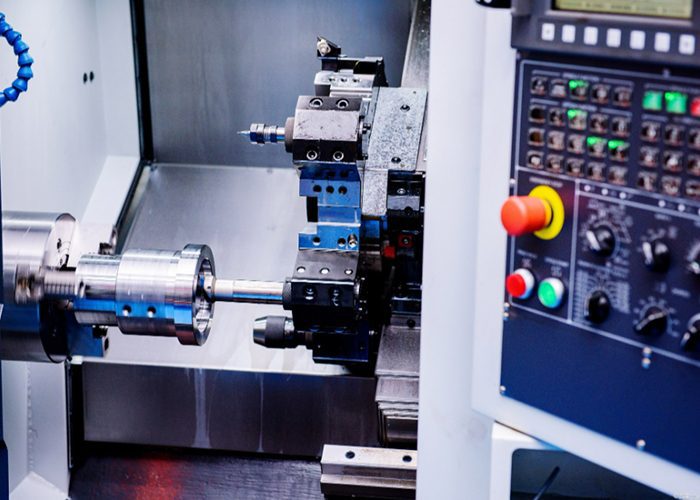
What is 3 Axis Machining?
At its core, 3 axis machining refers to a CNC milling process where the cutting tool moves simultaneously across three linear axes: X (left/right), Y (front/back), and Z (up/down). The workpiece remains stationary on a table, while a rotating spindle tool travels along these paths to remove material. Think of it as a robotic sculptor with three degrees of freedom.
Unlike its more advanced cousins (4, 5, or even 9-axis machines), the 3 axis machine cannot tilt the tool or rotate the part automatically. Every cut is made with the tool pointing straight down. This simplicity is both its greatest strength and its most significant constraint.
The Mechanical Dance: How It Works
Imagine a rectangular block of aluminum clamped to a table. The machine’s controller, running a G-code file generated by CAM (Computer-Aided Manufacturing) software, directs the spindle to a starting point. The spindle, spinning at thousands of RPM, plunges into the material along the Z-axis. Then, by moving simultaneously along the X and Y axes, it generates a 2D profile. By stepping down in Z incrementally—like a contour map—it builds complex 3D shapes layer by layer.
For example, to machine a pocket: The tool roughs out the bulk by moving in a zigzag pattern (X-Y) at one depth, then retracts, moves down another 0.5mm (Z), and repeats. This “2.5D” approach (where Z moves only between passes) is characteristic of most 3-axis work. True 3D contouring—moving all three axes simultaneously to trace a curved surface—is also possible, though limited by the tool’s inability to undercut.
Core Advantages: Why It Endures
- Accessibility and Low Cost: A 3 axis CNC mill is dramatically cheaper than a 5-axis machine. Entry-level models are affordable for small workshops and educational institutions. This democratization has fueled innovation worldwide.
- Simplicity in Programming: CAM software for 3 axis is robust and intuitive. Post-processors are mature and reliable. The learning curve is steep but manageable, allowing operators to become productive in weeks rather than months.
- Rigidity and Speed: With fewer moving joints and rotary components, a 3 axis machine is inherently more rigid. This allows for higher cutting speeds and feed rates on certain materials, often yielding excellent surface finishes on flat or slightly contoured parts.
- Ease of Fixturing: Since the tool always points down, workholding is straightforward. Standard vices, clamps, and vacuum chucks work perfectly. There is no need for complex tombstones or angled fixtures required in multi-axis work.
The Achilles’ Heel: Limitations
For all its virtues, 3 axis machining has clear boundaries:
- No Undercuts: Because the tool cannot tilt, it cannot reach horizontal surfaces from below. Features like dovetails, backside pockets, or the interior of a deep cup with an overhanging lip are impossible without manual repositioning.
- Ballnose Performance: When milling 3D contours (like molds or dies), a ball-nose end mill is used. The bottom center of a ballnose has zero surface speed, leading to poor finish and long cycle times. On a 5-axis machine, the tool can tilt to use its more efficient side edge.
- Manual Repositioning: Complex parts requiring machining on multiple faces must be unclamped, rotated, and re-zeroed by hand. This introduces errors, increases setup time, and drives labor costs. Each new face requires a new coordinate system.
Where 3 Axis Shines (and Fails)
Ideal applications: Bracket plates, engine mounting blocks, prototype enclosures, injection mold cores (with simple splits), wooden furniture components, sign making, and educational projects. Any part that is essentially 2.5D—featuring vertical walls and flat bottoms—works perfectly.
Poor applications: Turbine blades (need continuous 5-axis), hip implants (complex organic geometry requiring undercuts), deep ribs with tapered walls, or any part where critical features exist on five sides of a cube.
3 Axis vs. 4/5 Axis: A Strategic Choice
The decision isn’t about which is “better”—it’s about which is more appropriate for the job.
- 3 Axis: Ideal for low- to medium-complexity flat parts, or parts that can be machined in a single top-side setup. Cycle times are predictable. Ideal for job shops with varied, simple geometries.
- 4 Axis (adding an A-axis rotary table): Allows machining around a cylinder or the sides of a part without manual repositioning. Great for gears, cam lobes, and helical features.
- 5 Axis: Shines for aerospace structural parts, blisks, medical implants, and any part requiring deep, complex contours. It reduces setups to one, dramatically improving accuracy.
The modern trend is not obsolescence but integration. Many large factories operate 3-axis machines alongside 5-axis machining cells. The 3 axis mills handle the simple ops—flattening stock, drilling holes, roughing—while the 5 axis tackles the critical sculpted surfaces.
The Future of 3 Axis Machining
Will 3 axis machining disappear? Highly unlikely. Instead, it is evolving. We now see “hybrid” 3 axis machines incorporating tool setters, automatic pallet changers, and advanced probing routines that mimic some multi-axis flexibility. Moreover, the rise of inexpensive, high-power spindle motors and closed-loop stepper systems has created a renaissance of desktop 3 axis CNC mills, bringing precision metal cutting to hobbyists and inventors.
Furthermore, software innovations like adaptive clearing toolpaths (trochoidal milling) have extended the life and efficiency of 3 axis machines, allowing them to rough harder materials faster than ever before.
Conclusion
3 Axis Machining is not a primitive ancestor; it is the practical foundation of modern subtractive manufacturing. It embodies a golden rule of engineering: Simplicity is the ultimate sophistication. While 5-axis machines dance in six-figure enclosures, the 3 axis mill quietly, reliably, and affordably creates the millions of brackets, plates, and housings that hold our world together. For any machinist or designer, mastering 3 axis fundamentals is not a step backward—it is the essential first step toward understanding the soul of CNC.


