In the relentless pursuit of engineering perfection, few technologies have reshaped modern manufacturing as profoundly as High Precision Custom CNC Machining. This process is not merely about cutting metal or shaping plastics; it is a symphony of advanced software, robust hardware, and meticulous craftsmanship that transforms raw materials into mission-critical components. From aerospace turbines that must withstand scorching temperatures to microscopic surgical tools that navigate human veins, the demand for ultra-tight tolerances and bespoke geometries has never been greater. This article explores the essence, advantages, and future trajectory of high-precision CNC machining, revealing why it remains the gold standard for industries where failure is not an option.
The Evolution of Precision Manufacturing
The journey from manual lathes to computer numerical control (CNC) systems represents a quantum leap in manufacturing capability. Traditional machining relied heavily on the steady hand and intuitive judgment of skilled machinists—a method that, while effective in its time, could rarely achieve tolerances below a few thousandths of an inch. The advent of CNC in the mid-20th century introduced digital automation, but it is the modern era of high-precision machining that has redefined possibility. Today’s 5-axis and multi-tasking machines operate with positional accuracy down to ±0.0001 inches, guided by sophisticated CAD/CAM software that can simulate toolpaths and detect potential collisions before a single chip is cut. This digital-thread approach ensures that the first part produced is often already within specification, drastically reducing prototyping waste and accelerating time-to-market.
Why Customization is the New Standard
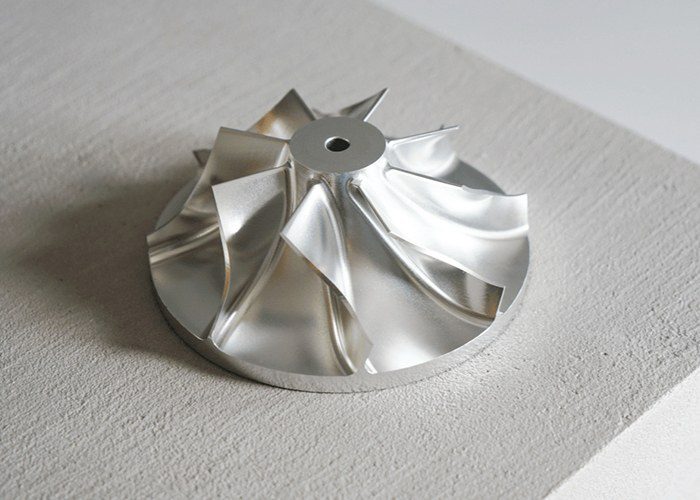
Off-the-shelf components rarely satisfy the unique demands of advanced engineering projects. Custom CNC machining empowers designers to break free from standardized catalogs, enabling geometries that optimize weight, strength, and fluid dynamics. Whether it’s a complex impeller with free-form surfaces or a lightweight bracket featuring internal lattice structures, the flexibility of CNC technology allows for the physical manifestation of virtually any 3D model. Furthermore, customization extends beyond shape; it encompasses material selection. High-precision machining is compatible with an exhaustive range of alloys—titanium, Inconel, stainless steel, aluminum—as well as high-performance polymers like PEEK and Torlon. This material versatility, combined with geometric freedom, gives engineers the confidence to innovate without compromising manufacturability.
Material Selection and Machining Strategies
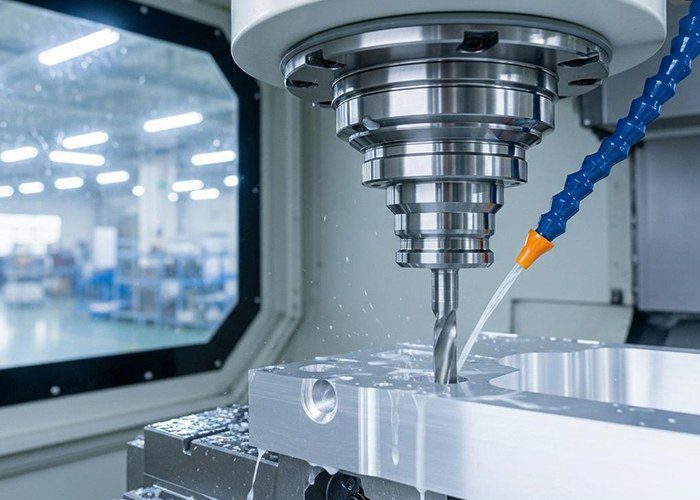
The choice of material fundamentally influences the machining strategy. For instance, titanium alloys, prized for their strength-to-weight ratio in aerospace, are notoriously difficult to machine due to their low thermal conductivity and high chemical reactivity at elevated temperatures. High-precision CNC machining counters these challenges through advanced cooling systems, specialized tool coatings (such as TiAlN or diamond-like carbon), and optimized cutting parameters that balance tool life with surface finish. Conversely, softer materials like aluminum permit higher feed rates but demand careful chip evacuation to avoid burr formation. A key hallmark of premium CNC services is their ability to develop a tailored machining protocol for each unique alloy and part geometry, ensuring that every feature—from micron-level bores to mirror-polished surface finishes—is realized exactly as specified.
The Role of Intelligent Quality Control
Achieving a dimension on a single part is one thing; maintaining that precision over a production run of thousands is an entirely different challenge. High Precision Custom CNC Machining integrates rigorous, in-process inspection methodologies to ensure consistency. Probes mounted within the machine can measure critical features while the part remains clamped, allowing for adaptive corrections that compensate for thermal expansion or tool wear. Post-machining, coordinate measuring machines (CMMs) and laser scanners validate dimensions against the original digital blueprint, generating detailed reports that provide full traceability. This closed-loop quality system is indispensable for regulated sectors such as medical devices and defense, where documented quality assurance is a non-negotiable regulatory requirement.
Industries Transformed by CNC Precision
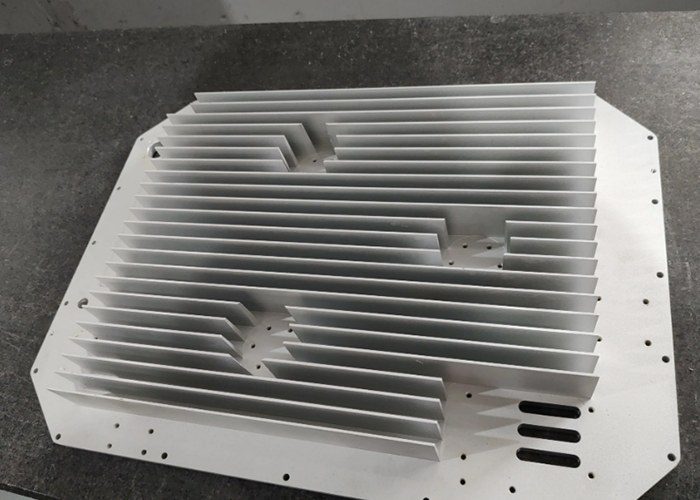
The impact of high-precision CNC machining ripples across diverse industries. In the medical field, it enables the production of patient-specific implants with osseointegrative textures and precise joint articulation, improving surgical outcomes and recovery times. In electronics, it creates heat sinks and housings with flawless thermal interfaces for next-generation semiconductors. The semiconductor industry itself relies on precision-machined chambers and wafer-handling components that operate in vacuum environments with nanometer-scale cleanliness requirements. Moreover, the rapidly evolving electric vehicle (EV) market depends on custom CNC parts for battery thermal management systems and high-efficiency powertrain components—areas where even slight deviations can reduce energy efficiency or compromise safety.
Overcoming Common Machining Challenges
Despite technological advances, high-precision machining presents persistent challenges. Tool deflection, vibration, and thermal distortion are perennial foes that must be mitigated through rigid machine structures, strategic workholding, and advanced path planning. Thin-walled parts are especially vulnerable to chatter, which degrades surface quality. Expert CNC manufacturers counter these issues by employing high-speed milling strategies, variable helix tools, and dynamic feed-rate adjustments. Additionally, they emphasize design for manufacturability (DFM) collaboration, consulting clients during the design phase to suggest subtle modifications that preserve functionality while dramatically simplifying production. This proactive problem-solving distinguishes elite machining vendors from ordinary job shops.
Sustainability and Future Horizons
The future of high-precision CNC machining is being shaped by the dual imperatives of sustainability and digitalization. Manufacturers are adopting eco-coolant solutions and minimum quantity lubrication (MQL) to reduce environmental impact. There is also a growing trend toward hybrid manufacturing—combining additive processes with subtractive CNC—to produce near-net shapes that require less material removal and energy. Meanwhile, the integration of artificial intelligence promises predictive maintenance and autonomous optimization of cutting parameters, further enhancing efficiency and consistency. As Industry 4.0 evolves, the smart factory will see CNC machines communicating in real-time with supply chain databases, adjusting schedules based on tool life or material availability, thereby creating a truly responsive production ecosystem.
Conclusion
High Precision Custom CNC Machining is far more than a manufacturing process; it is a strategic capability that fuels innovation and ensures reliability in the most demanding applications. By offering unparalleled accuracy, material flexibility, and the ability to turn virtual concepts into tangible reality, it empowers industries to push boundaries and solve complex engineering puzzles. As technology continues to advance, the commitment to precision—measured in microns, maintained through robust quality systems, and guided by skilled expertise—will remain the cornerstone of modern manufacturing excellence. For businesses seeking to thrive in a competitive global landscape, investing in high-precision CNC machining is not simply a choice; it is the key to unlocking a future of limitless potential.