
In the landscape of modern manufacturing, few processes have reshaped industrial capability as profoundly as CNC turned and milled metal parts. Computer Numerical Control (CNC) machining has evolved from simple automated cutting into a sophisticated discipline that combines turning and milling operations into seamless, highly efficient workflows. Today, turned and milled metal components form the structural and functional backbone of countless industries—from automotive powertrains to aerospace airframes, from surgical implants to semiconductor equipment.
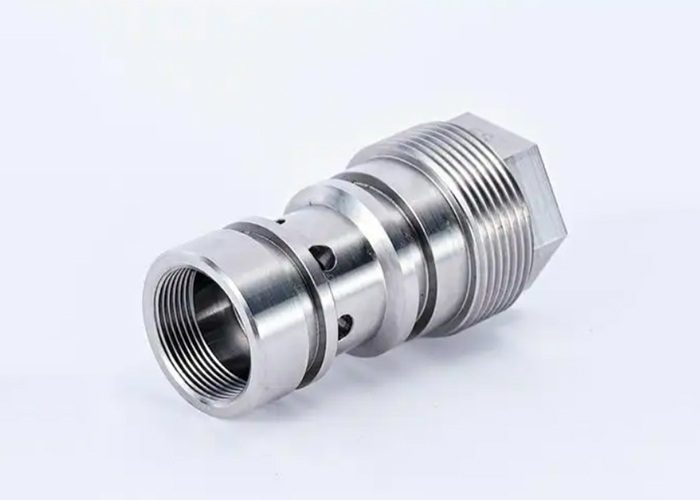
Understanding the Fundamentals: Turning and Milling
At its core, CNC turning and milling represent two distinct but complementary subtractive manufacturing methods. Turning involves rotating the workpiece against a stationary cutting tool, making it ideal for producing cylindrical and concentric features such as shafts, bushings, bearing seats, and threaded components. The workpiece spins around its central axis while a single-point cutting tool removes material to achieve the desired diameter, shoulder, groove, or taper. This process naturally excels at producing parts with rotational symmetry, and concentricity is straightforward because all critical features reference the spindle axis.
Milling, by contrast, rotates the cutting tool while the workpiece remains clamped in a fixed position. The machine’s axes move the workpiece and spindle to create the required relative motion, excelling at prismatic and freeform shapes—pockets, slots, bosses, planar faces, and sculpted 3D surfaces that turning alone cannot generate. Modern CNC mills are available in 3-, 4-, and 5-axis configurations, with 5-axis machining enabling the creation of more part features in a single operation.
The Rise of Mill-Turn Technology
The true revolution in CNC metal parts manufacturing lies not in turning or milling individually, but in their integration. Mill-turn machining—also known as turn-mill machining—combines both operations within a single machine tool, allowing for the production of complex parts with both rotational and prismatic features without transferring the workpiece between different machines. A mill-turn machine unifies the rotational workpiece handling of a CNC lathe with the versatile machining repertoire of a CNC mill, covering milling, drilling, tapping, and multi-axis contouring..
This integrated approach delivers transformative advantages. Components once requiring multiple setups and separate operations can now be machined on a single machine using one unified program. By eliminating repositioning operations, manufacturers significantly reduce concentricity errors and maintain tighter tolerances. Fewer machine changeovers lead to less downtime and increased productivity. The result is a manufacturing process that is more efficient, more predictable, and more controllable.
Precision in a Single Setup
Perhaps the most compelling advantage of CNC turned and milled parts production is the ability to complete all machining operations in a single setup. Precision cam manufacturing offers a perfect example: a cam is essentially a rotating part with a non-circular profile—its main body is shaft-like (suitable for turning), but the profile is a complex curve (requiring milling). Traditional processes required multiple machines and multiple setups, leading to datum conversion errors and phase inaccuracies. With mill-turn machining, all turning operations (shaft diameter, end face, grooves) and milling operations (cam profile) are completed in one setup under a single coordinate system. This eliminates transfer, waiting, and secondary alignment time while ensuring that phase relationships are precisely maintained by the machine tool’s multi-axis linkage.
The benefits extend beyond precision. Collapsing two or three setups into one removes non-cutting time—fixture building, queuing, transport, and re-clamping are all eliminated. This translates directly into reduced cycle times, lower unit costs, and increased machine utilization.
Materials and Capabilities
CNC turning and milling centers work effectively with a broad spectrum of metals. Common materials include aluminum, stainless steel, titanium, brass, bronze, copper, and various steel alloys. Each material offers distinct advantages: aluminum provides lightweight and corrosion-resistant properties; stainless steel delivers strength and hygienic suitability for medical and food-grade applications; titanium offers exceptional strength-to-weight ratio for aerospace and biomedical implants. Modern machines can handle bar stock from 3 mm to 150 mm in diameter, with lengths up to 250 mm and milling envelopes reaching 750×400×450 mm.
Critical Applications Across Industries
The versatility of CNC turned and milled metal parts makes them indispensable across virtually every advanced manufacturing sector. In the automotive industry, these processes are used for mass production of components such as turbocharger rotors and gearbox gear shafts, significantly shortening production cycles. The aerospace sector relies on turned and milled parts for critical flight components where tight tolerances and material integrity are non-negotiable. In medical device manufacturing, CNC machining produces biocompatible parts such as artificial joints and dental implants, with surface roughness controllable below Ra 0.8 μm. The energy sector, electronics industry, and hydraulic systems all depend on high-precision turned and milled components.
Quality Assurance and Precision Standards
Producing turned and milled metal parts at scale requires rigorous quality control. Modern facilities employ coordinate measuring machines (CMM) and calibrated metrology equipment to verify dimensional accuracy. In-process inspection, visual examination, and comprehensive dimensional checks ensure that every part meets specification. For high-precision applications, tolerances can be held to ±0.005 mm, with surface finishes reaching Ra 0.4 μm or better.
Market Outlook
The global market for CNC metal cutting services was valued at US$52.7 billion in 2024 and is projected to reach US$88.6 billion by 2031, growing at a compound annual growth rate of 7.7%. This growth reflects the increasing demand for high-precision components across automotive, aerospace, electronics, and healthcare sectors, driven by the adoption of advanced technologies like CNC machining, robotic automation, and Industry 4.0.
As manufacturing continues its march toward greater integration, automation, and precision, CNC turned and milled metal parts will remain at the forefront—enabling the complex, high-performance products that define the modern world.


