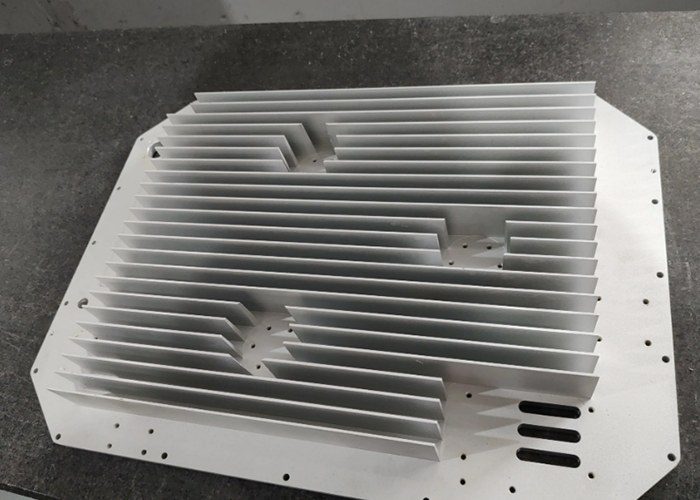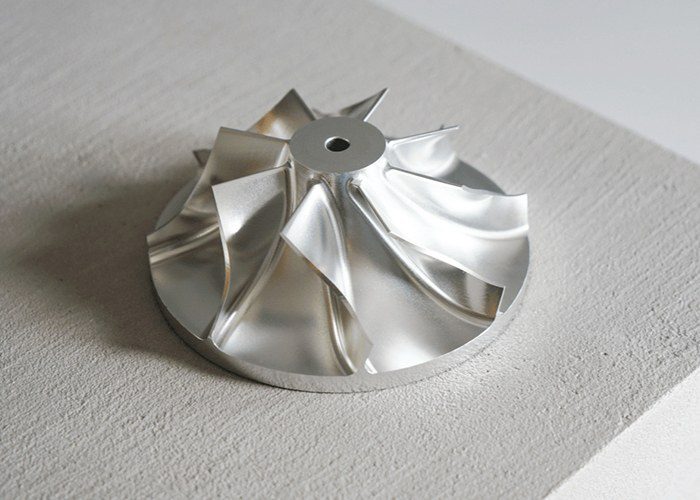
In the landscape of contemporary manufacturing, few processes are as fundamental—or as transformative—as high precision CNC turning. Often overshadowed by more glamorous additive manufacturing technologies, CNC turning quietly underpins the production of countless components that keep modern industry running. From the turbine blades that power commercial aircraft to the surgical instruments that save lives, high precision CNC turned parts are the unsung heroes of precision engineering.
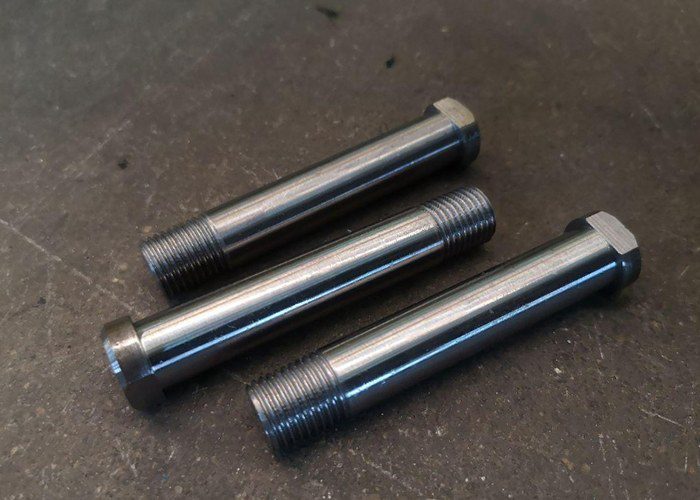
What Are High Precision CNC Turned Parts?
At its core, CNC turning is a subtractive manufacturing process in which a rotating workpiece is shaped by a stationary cutting tool under computer numerical control. The workpiece is secured in a chuck or collet and spun at controlled speeds while the cutting tool removes material to achieve the desired geometry. What distinguishes high precision CNC turned parts from conventional turned components is the level of accuracy, repeatability, and surface quality they deliver.
High precision turned parts—also known as Swiss turned components or precision CNC turned parts—are small, intricate components produced with exceptionally tight tolerances and smooth surface finishes. Modern CNC turning centers can achieve dimensional tolerances as tight as ±0.01 mm (10 microns) and in some cases even ±0.005 mm (5 microns), with surface roughness values reaching Ra 0.8 µm or better. To put this in perspective, ±0.01 mm is roughly one-tenth the thickness of a human hair—a level of precision that was unimaginable just a few decades ago.
The Technology Behind the Precision
Achieving such extraordinary accuracy requires more than just a capable machine. The production of high precision CNC turned parts integrates state-of-the-art machine architecture, digitally controlled process monitoring, and real-time adaptive control. Integrated sensor systems monitor each workpiece in real time, detecting tool wear and automatically adjusting feed and cutting parameters to maintain consistency throughout production runs.
Modern turning centers have evolved far beyond the simple two-axis lathes of the past. Today’s advanced machines incorporate multi-axis configurations, live tooling, dual spindles, and high-speed automation. Live tooling enables drilling, milling, tapping, and engraving to be performed in the same setup, eliminating the need for repeated workpiece handling and dramatically reducing cumulative tolerance stack-up. Multi-axis capabilities—including C-axis rotational control and Y-axis off-center movement—allow for the production of complex, asymmetric geometries that were once exclusively the domain of milling.
Materials and Applications
High precision CNC turned parts are manufactured from an extraordinary range of materials, each selected for specific performance requirements. Common materials include stainless steels, aluminum alloys, brass, copper, titanium, and high-performance plastics such as PEEK and PTFE. The choice of material depends on the application’s demands for strength, corrosion resistance, weight optimization, electrical conductivity, or biocompatibility.
These components power a vast spectrum of advanced industries.. In aerospace, precision turned parts are essential for turbine fittings, hydraulic connectors, and other rotational components that must withstand extreme temperatures and pressures while maintaining flawless performance. In the automotive sector, they are used in fuel systems, pumps, electric motor shafts, and transmission components, where precision directly impacts performance, safety, and fuel efficiency. The medical device industry relies on high precision turned parts for surgical instruments, orthopedic and dental implants, and implantable devices—applications where micron-level accuracy can literally be a matter of life and death. Electronics and industrial equipment manufacturing similarly depend on these components for connectors, miniature housings, and custom pins.
The Evolution of Precision: AI and Industry 4.0
The field of high precision CNC turning is undergoing a profound transformation driven by artificial intelligence and Industry 4.0 technologies. Far from experimental, AI in 2026 is now central to day-to-day machine operations and production workflows. AI-driven machining uses real-time sensor feedback to automatically adjust feeds, speeds, and toolpaths in response to vibration, load, or temperature changes as they occur. One recent study on aerospace-grade titanium turning achieved a mean absolute error of just 2.6 μm—representing 86.3% compensation effectiveness—using adaptive error compensation driven by deep reinforcement learning.
Digital twin technology has also matured from a buzzword into a production backbone. The 2026 digital twin integrates design, process engineering, machining, and inspection into a continuously updated model, with real machining data flowing back to refine accuracy. This enables a “first-time-right” manufacturing philosophy where defects are simulated and eliminated before steel ever meets the cutting tool.
At major industry events such as CCMT 2026 and IMTS 2026, manufacturers are showcasing AI-powered adaptive self-learning and real-time process optimization as standard features rather than fringe innovations. The Siemens Sinumerik ONE control system—adopted by leading machine builders like INDEX Corporation—exemplifies this shift, embedding AI deeply into a digital-native CNC architecture that spans from CAD and CAM through to production.
Market Outlook and Industry Trends
The global market for precision turned products is experiencing robust growth, reflecting the increasing demand for high-precision components across industries. The metal precision turned product manufacturing market is projected to grow from USD 104.11 billion in 2025 to USD 142.66 billion by 2031, registering a compound annual growth rate of 5.39%. The precision turned product manufacturing market as a whole is expected to reach USD 115.41 billion in 2026, growing at 6.3% CAGR.
Key trends driving this growth include the increasing adoption of CNC-based turning operations, rising demand for tight-tolerance components, growing use of multi-axis turning centers, and expansion of precision turned parts in automotive and aerospace applications. Soaring EV adoption is spurring a surge in demand for aluminum heat-sink pins, copper busbars, and high-precision motor shafts. Meanwhile, the medical device sector continues to fuel demand for micro-precision turned components, with Swiss-type turning playing a primary role in producing miniature implants and surgical instruments.
Conclusion
High precision CNC turned parts represent far more than a manufacturing process—they are the foundational technology upon which modern precision engineering is built. From the vehicles we drive to the aircraft we fly, from the medical devices that heal us to the electronics that connect us, these precisely machined components enable the performance, safety, and reliability that modern society demands. As AI, digital twins, and multi-axis automation continue to push the boundaries of what is possible, the future of high precision CNC turning promises even greater accuracy, efficiency, and capability—ensuring that these essential components will remain at the heart of manufacturing innovation for decades to come.