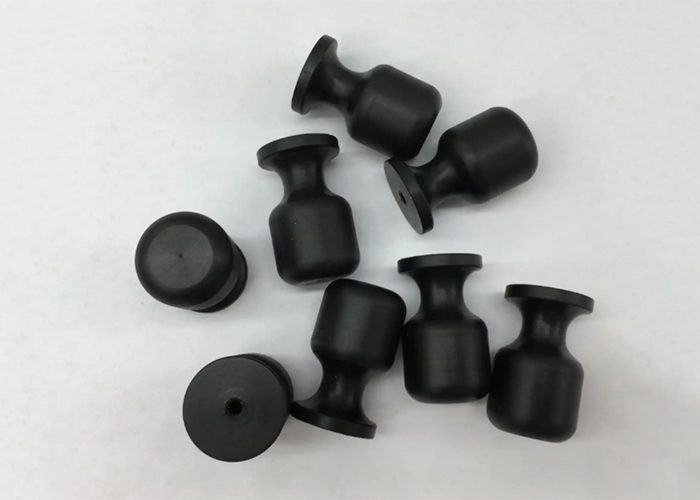
Stainless steel stands as one of the most versatile engineering materials in modern manufacturing. Its exceptional corrosion resistance, high mechanical strength, wear resistance, and attractive surface appearance make it indispensable across industries ranging from medical devices and food processing to aerospace, automotive, and marine engineering. Within this domain, CNC turned stainless steel parts represent the pinnacle of precision manufacturing—components produced through computer-controlled lathes that shape rotating stainless steel workpieces into intricate, high-tolerance geometries.
The Material Advantage and Its Challenges
The popularity of stainless steel in CNC turning is rooted in its remarkable properties. Alloys such as 303, 304, and 316 are commonly selected for their excellent mechanical and corrosion-resistant characteristics. Grade 303 offers enhanced machinability due to its sulfur content, making it ideal for fasteners and fittings. Grade 304, the most widely used austenitic stainless steel, provides a strong, non-magnetic, all-purpose solution for consumer and industrial applications. Grade 316, containing molybdenum, delivers superior corrosion resistance in harsh environments such as chemical processing and marine applications.
However, these same properties that make stainless steel so valuable also render it notoriously difficult to machine. Unlike carbon steels, austenitic grades possess exceptionally low thermal conductivity—roughly 50 to 60 percent lower than standard steel. During CNC turning, heat generated at the cutting zone cannot dissipate efficiently, concentrating around the cutting edge and causing temperatures that can exceed 800 degrees Celsius. This thermal concentration accelerates tool wear, shortens tool life, and increases the risk of thermal deformation.
Compounding this challenge is stainless steel’s pronounced tendency to work harden. As the cutting tool removes material, the surface layer rapidly becomes harder than the original material. This hardened layer increases cutting resistance during subsequent passes, accelerates tool wear, and can compromise machining stability. For the CNC machinist, these alloys are notorious “tool killers“—demanding careful strategy at every stage of the process.
Mastering the CNC Turning Process
Producing high-quality CNC turned stainless steel parts requires a meticulously orchestrated multi-step process. The journey begins with material selection, where engineers evaluate application requirements, environmental conditions, and desired finish to choose the optimal grade. Once selected, the stainless steel stock—typically in bar form—is loaded into a CNC turning center.
State-of-the-art CNC turning centers employ advanced technologies to achieve exceptional precision. Hydrostatic guides, drive-integrated tool turrets, and sensor-based process monitoring ensure consistent quality. Modern machines can produce turned parts with diameters up to 200 millimeters and lengths reaching 400 millimeters, achieving tolerances as tight as ±0.01 millimeters and surface roughness as fine as Ra 0.8 micrometers.
Programming lies at the heart of CNC turning. A programmer creates detailed instructions that guide the machine through every operation, specifying toolpaths, cutting speeds, feed rates, and depths. Advanced CAD/CAM software and simulation tools ensure accuracy and optimize production efficiency before any metal is cut.
Critical Considerations for Successful Machining
Given the inherent difficulties of machining stainless steel, several factors are critical to success. Cutting tool selection plays a decisive role—high-performance carbide inserts and wear-resistant coated tools typically provide the best machining performance. The choice between sharp “slicing” edges and reinforced honed edges must be carefully evaluated, as notch wear at the depth-of-cut line remains the “Achilles’ heel” of stainless turning.
Machining parameters must be meticulously optimized. Cutting speed directly influences machining temperature and tool life, requiring moderate speeds to prevent excessive heat accumulation. Feed rates and depth of cut must be balanced to minimize work hardening while maintaining productivity. Because stainless steel generates substantial frictional heat during machining, a robust cooling and lubrication strategy is essential—not merely for tool life, but as a fundamental requirement for achieving precision and surface integrity in CNC turning. Advanced strategies such as high-pressure coolant delivery and minimum quantity lubrication (MQL) are increasingly employed to manage thermal challenges.
Finishing and Quality Assurance
After machining, stainless steel turned parts undergo various finishing and surface treatment techniques to enhance appearance, durability, and functionality. Polishing, bead blasting, and passivation processes achieve smooth, clean surfaces. Passivation—treatment with nitric or citric acid—removes residual iron and forms a protective chromium oxide layer that preserves corrosion resistance. Electropolishing further improves surface finish while deburring and enhancing corrosion resistance.
Quality control is rigorous and comprehensive. Each component undergoes dimensional inspection, surface roughness testing, and functional verification. Automated inspection systems and certified procedures ensure every part meets the highest industry standards. Visual inspection detects surface defects, while precision measuring instruments verify dimensional accuracy.
Applications Across Industries
CNC turned stainless steel parts are indispensable across virtually every sector of modern industry. In aerospace, they are utilized in fasteners, valves, bushings, shafts, and structural members, each requiring excellent strength and corrosion resistance. In automotive manufacturing, they appear as engine components, chassis parts, hydraulic and pneumatic fittings. From surgical instruments to life-saving implants, the medical industry trusts precision stainless steel turned components, where uncompromising sterility and proven biocompatibility are non-negotiable. Food processing equipment, chemical plants, marine engineering, and energy systems all depend on these precision components.
The Future of Stainless Steel CNC Turning
The market for precision turned products continues to grow, projected to reach $142.66 billion by 2031. Industry 4.0 technologies are reshaping manufacturing through machine interconnectivity, real-time data exchange, and cyber-physical systems. AI-driven strategies—including adaptive parameters, predictive maintenance, digital twins, and automated quality control—enable manufacturers to achieve predictable, premium-quality outcomes. Cognitive CNC machines capable of learning from operational data and optimizing tool paths in real time represent the next frontier.
As manufacturing demands continue to rise, CNC turned stainless steel parts will remain at the forefront of precision engineering—combining the enduring strength of stainless steel with the relentless advancement of digital manufacturing technology.