In the vast landscape of modern manufacturing, few processes have proven as versatile, precise, and indispensable as CNC turning. From the engines that power our vehicles to the surgical instruments that save lives, CNC turned metal components are everywhere — often unseen, yet absolutely essential. This article explores what CNC turned metal components are, how they are made, the materials that shape them, and why they have become the cornerstone of precision engineering across countless industries.

Understanding CNC Turning
CNC (Computer Numerical Control) automates machining tools via pre-programmed digital commands, delivering exceptional precision. CNC turning is a subtractive manufacturing process in which a cylindrical workpiece rotates at high speed while a stationary cutting tool removes material to create the desired shape. In practical terms, a cylindrical bar of metal — typically aluminum, steel, or brass — is loaded into a lathe’s chuck and secured tightly. The spindle rotates the workpiece at speeds that can reach up to 4,000 RPM, while a cutting tool, guided by G‑code instructions, moves precisely along the X and Z axes to carve the part into its final geometry.
What distinguishes CNC turning from other machining processes is the fundamental motion: in CNC turning, the workpiece rotates; in CNC milling, the cutting tool rotates. This makes turning the ideal choice for producing cylindrical, conical, helical, and circular geometries — parts that are challenging or impossible to create efficiently through other methods.
Materials: The Foundation of Quality
The versatility of CNC turning is perhaps most evident in the breadth of materials it can accommodate. Carbon steel and alloy steel remain among the most commonly machined materials, offering an excellent balance of strength, toughness, and wear resistance for shafts, flanges, connectors, and industrial equipment components. Stainless steel is widely used in food processing, medical devices, and marine engineering due to its corrosion resistance, though it requires careful cooling strategies to manage work hardening. Aluminum alloys are prized for their lightweight, high strength, and excellent machinability, making them indispensable in aerospace and automotive applications. Beyond these, CNC turning readily handles brass, bronze, titanium, cast iron, and even engineering plastics and composites.
What Can Be Produced?
The range of components produced through CNC turning is vast. Rotational parts represent the largest category — shafts, sleeves, bushings, and threaded products all benefit from the process’s ability to maintain outstanding concentricity, roundness, and dimensional accuracy. Modern CNC lathes can efficiently produce external and internal threads, grooves, O‑ring seats, knurled textures, and complex stepped profiles. High‑precision functional components — such as medical connectors, surgical instrument shafts, and orthopedic implants — rely on CNC turning to achieve the exceptional dimensional accuracy and surface finish that patient safety demands.
The Advantages That Set CNC Turning Apart
Several core advantages explain why CNC turned metal components have become the default choice for so many applications.
Precision and Consistency: CNC turning routinely achieves tolerances as tight as ±0.01 mm, and in aerospace applications, tolerances of ±0.005 mm are verified. Unlike manual machining, where operator skill and fatigue introduce variability, CNC systems deliver identical parts across indefinite production runs.
Production Efficiency: For high‑volume production of round parts, turning is significantly more efficient than milling. Swiss‑type lathes can achieve production rates of 500 parts per hour. The automated nature of the process minimizes human error, reduces cycle times, and lowers per‑unit costs as volumes scale.
Superior Surface Finish: CNC turning produces surface finishes that additive manufacturing and casting processes cannot achieve on their own. Under optimal conditions, surface roughness values as low as Ra 0.284 μm are attainable.
Material Efficiency: The precision of CNC machining allows manufacturers to optimize their use of raw materials, reducing waste and lowering costs without compromising quality. Compared to casting, CNC turning delivers higher machining accuracy, better surface quality, and reduced risk of surface defects — critical advantages for precision mating components.
Industries That Depend on CNC Turned Components
CNC turned metal components are found in virtually every sector of advanced manufacturing.
In the automotive industry, they are essential for engine components, transmission assemblies, suspension parts, and braking systems. The process reduces manual operation errors and meets the industry’s strict requirements for complex structures and tight tolerances.
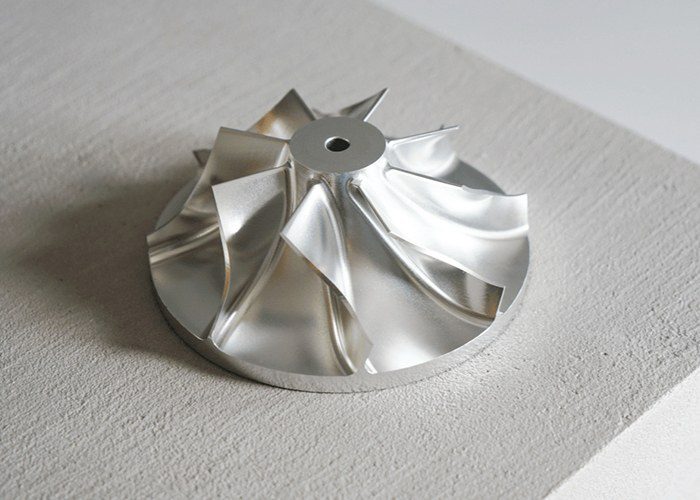
In aerospace, CNC turned parts — including landing gear components, turbine blades, hydraulic spool valves, and structural elements — must meet the highest standards of accuracy and repeatability. The industry’s demanding certifications, such as AS9100D, are a testament to the reliability of CNC‑turned components.
The medical device sector relies on CNC turning for surgical instruments, implants, and diagnostic equipment, often working with biocompatible materials such as stainless steel and titanium alloys. Manufacturers in this space operate under ISO 13485 certification, ensuring strict traceability and quality control.
Beyond these, CNC turned components are vital in industrial machinery, electronics, hydraulic systems, energy equipment, and robotics.
Quality Assurance: The Final Guarantee
The production of CNC turned metal components does not end when the machine stops. Every part undergoes rigorous quality checks to ensure full specification compliance. Modern inspection processes leverage coordinate measuring machines (CMMs), Keyence measuring systems, and statistical process control (SPC) to verify dimensions and surface finishes. Real‑time monitoring using inline measurement tools allows immediate correction of deviations, minimizing scrap rates and enhancing repeatability. Each component is backed by comprehensive documentation — including surface finish reports, hardness testing results, and, for critical applications, third‑party certification.
The Future of CNC Turned Components
The precision turned product manufacturing market is projected to grow from USD 96.7 billion in 2025 to USD 187.6 billion by 2034, reflecting a compound annual growth rate of 7.6%. This growth is driven by increasing adoption of advanced CNC technology, automation, and Industry 4.0 principles. Multi‑axis turning centers, fully automated production cells, and integration with digital manufacturing systems are pushing the boundaries of what is possible. Fully automatic CNC turning machines already hold 72% of the market share, and this segment is forecast to grow at the highest rate through 2031.
As industries continue to demand higher precision, faster turnaround times, and greater cost‑effectiveness, CNC turned metal components will remain at the forefront of manufacturing innovation. They are not merely parts — they are the precision‑engineered building blocks upon which modern technology is constructed.