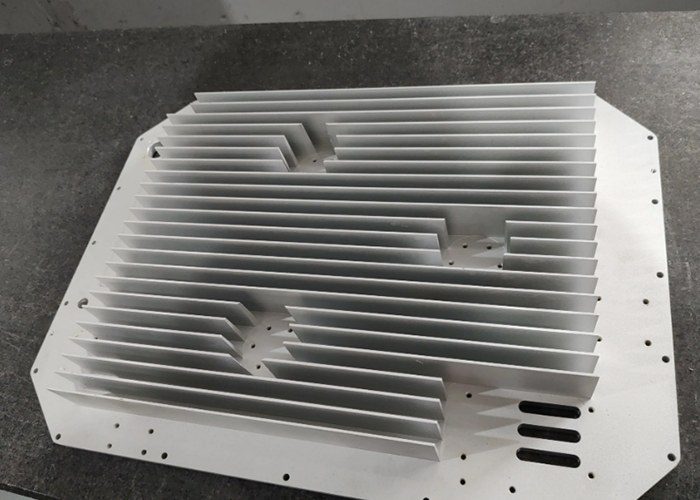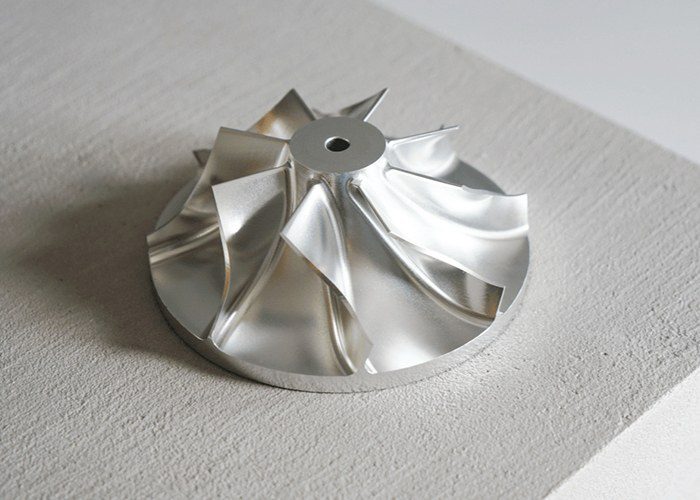
In today’s manufacturing landscape, precision is not a luxury—it is a necessity. High Precision CNC (Computer Numerical Control) services have emerged as the cornerstone of modern production, enabling industries to manufacture components with tolerances measured in microns rather than millimeters. From life-saving medical implants to mission-critical aerospace components, these services deliver the accuracy, consistency, and reliability that modern engineering demands.
What Defines High Precision CNC Services?
At its core, high precision CNC machining is a computer-controlled subtractive manufacturing process that removes material from a workpiece based on digital design instructions. What distinguishes high precision services from standard machining is the level of accuracy they achieve. While conventional machining might operate within tolerances of ±0.01 mm, high precision services routinely deliver tolerances of ±0.005 mm, with aerospace and medical-grade applications reaching ±0.002–0.003 mm and ultra-precision work achieving ±0.001 mm. Some specialized providers can even hold tolerances tighter than 0.0002 inches—an industry benchmark that few can consistently meet.
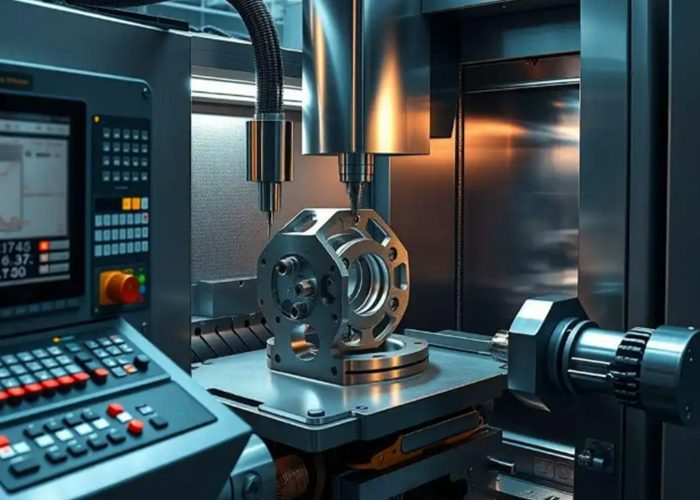
This level of precision is achieved through a combination of advanced equipment, sophisticated software, and rigorous process control. Modern CNC machining centers employ multi-axis configurations—3-axis, 4-axis, and 5-axis systems—that can produce complex geometries in a single setup, eliminating the errors that accumulate when parts are repeatedly re-fixtured. Live tooling capabilities allow drilling, milling, tapping, and engraving to be performed on the same machine, improving accuracy while slashing production time.
The Technologies Powering Precision
The foundation of high precision CNC services lies in the integration of digital control systems and high-precision toolpath algorithms. Advanced CAM (Computer-Aided Manufacturing) software generates optimized toolpaths that account for material behavior, tool deflection, and thermal expansion—factors that can introduce microscopic deviations if not properly managed.
Real-time process monitoring and high-resolution probing systems have become standard features in precision machining environments. These systems continuously verify part dimensions during production, allowing for immediate corrections if deviations are detected. Some facilities employ climate-controlled inspection rooms equipped with Coordinate Measuring Machines (CMM), laser scanning, and optical comparators to ensure every part meets specifications.
Material versatility is another hallmark of high precision CNC services. Leading providers work with an extensive range of materials, including aluminum, stainless steel, titanium, Inconel, nickel-based alloys, brass, copper, and engineering plastics. Achieving tight tolerances amplifies the inherent challenges of each material, necessitating deep expertise in customized tooling, optimal machining parameters, and precise thermal management.
Industries Transformed by Precision
High precision CNC services are indispensable across a broad spectrum of industries. In aerospace, they produce turbine blades requiring surface finishes below 0.4 µm Ra and positional accuracy of ±0.0002 inches to withstand extreme temperatures. Shafts, fittings, bushings, and turbine components are machined from exotic materials like titanium and Inconel with uncompromising precision.
The medical device industry relies on precision machining for surgical instruments, orthopedic implants, neurovascular components, and complex catheter tips. These parts are often machined from biocompatible materials including titanium, Nitinol, and PEEK, with micron-level accuracy that directly impacts clinical performance. The trend toward miniaturization and minimally invasive procedures has only increased the demand for micro-machining capabilities, with tools as small as 0.004 inches in diameter and micro-holes as small as 0.002 inches.
In automotive manufacturing, precision CNC services produce axles, fasteners, engine parts, and high-performance drivetrain components. The electronics sector benefits from miniature housings, connectors, and custom pins that require exacting dimensional control. Robotics, semiconductor, photonics, and high-performance instrumentation are additional sectors where microscopic variances can lead to functional failure.
Quality Assurance and Certification
Quality control is the backbone of high precision CNC services. Reputable providers implement ISO 9001:2015-certified processes and often hold industry-specific certifications such as AS9100 for aerospace and ITAR registration for defense applications. Comprehensive documentation—including quality reports, First Article Inspections (FAIs), and Certificates of Conformance—accompanies every shipment, ensuring complete traceability for regulated industries.
The Future of High Precision CNC Services
The precision machining market continues to expand rapidly, with global projections indicating sustained growth driven by technological advancement and increasing demand across industries. Several transformative trends are reshaping the sector. AI-native machining is moving from experimental pilots to integral daily operations, with real-time sensor feedback automatically adjusting feeds, speeds, and toolpaths in response to vibration, load, or temperature changes. Digital twins—living ecosystems that mirror the entire machining process—are becoming the production backbone, enabling virtual commissioning and kinematic validation before the first chip is cut.
Hybrid manufacturing, combining additive metal deposition with CNC cutting, is gaining traction in aerospace, energy, and medical sectors, solving challenges related to material waste and complex geometry. Sustainability is emerging as a core metric, with providers embracing energy-efficient machining strategies and sustainable technologies.
Conclusion
High Precision CNC services represent the convergence of mechanical excellence and digital intelligence. They enable manufacturers to tackle complex geometries, reduce lead times, and maintain stringent quality standards that were unimaginable just decades ago. As industries continue to push the boundaries of what is possible, the demand for precision will only grow. For engineers, product developers, and procurement professionals, partnering with a high precision CNC service provider is not merely a sourcing decision—it is a strategic investment in quality, reliability, and innovation.