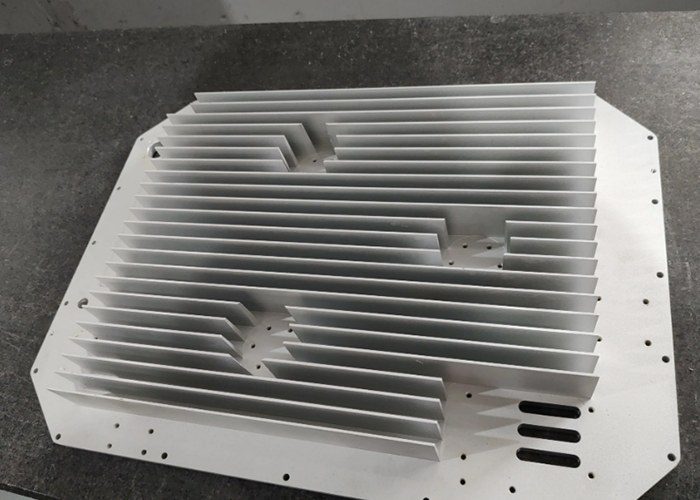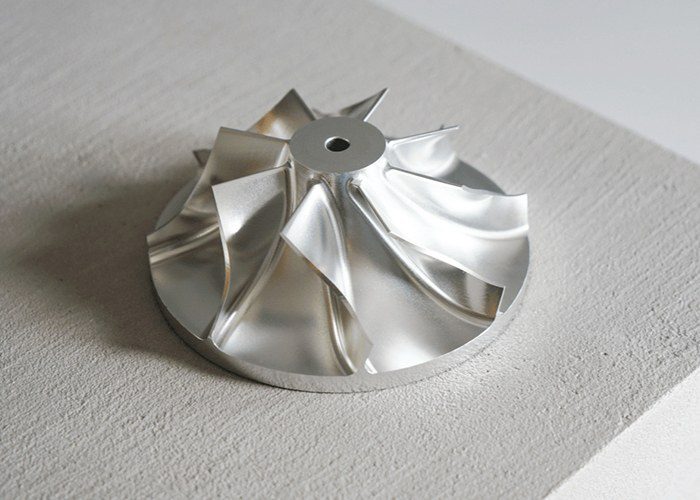
In the landscape of modern manufacturing, the difference between a simple part and a mission-critical component often boils down to microns—millionths of a meter. Achieving this level of exacting detail and repeatability is the domain of High Precision CNC Processing. Standing for Computer Numerical Control, CNC machining has been a cornerstone of industry for decades. However, the evolution toward “high precision” represents a quantum leap, pushing the boundaries of what is physically and mechanically possible. It is the engine behind the miniature medical implants, the durable gears in aerospace actuators, and the intricate connectors in consumer electronics that define our contemporary world.
Defining High Precision
Before delving into the intricacies, it is essential to define what “high precision” truly means in a machining context. While standard CNC machining might operate within tolerances of ±0.005 inches (0.127 mm), high precision machining operates in the realm of ±0.0001 inches (0.0025 mm) or even tighter. To put this in perspective, a human hair is roughly 0.003 inches wide. High precision machining can create features and maintain tolerances that are 30 times smaller than that. This is not merely about making small parts; it is about creating large parts with microscopically exact features or assembling complex systems where every component must fit together with absolute perfection.
The Technological Pillars of Precision
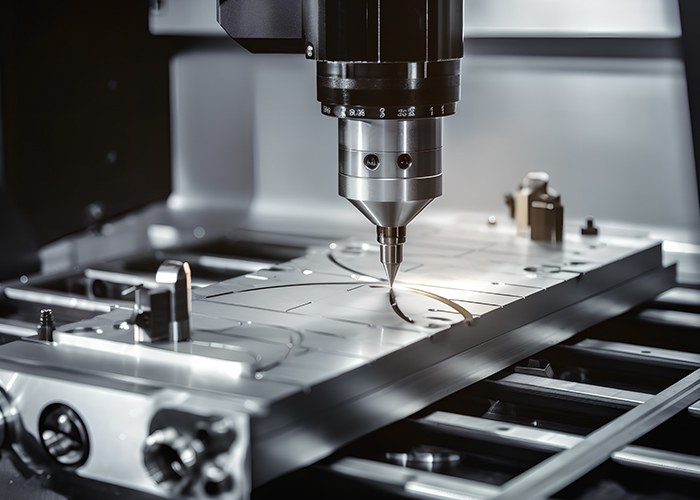
Achieving such exacting standards is not the result of a single innovation but a synergy of advanced technologies. The first pillar is the machine tool itself. High precision CNC machines, such as Swiss-type lathes and ultra-precision milling centers, are engineered for rigidity and stability. They are often constructed from materials with high thermal stability, like polymer concrete, to minimize expansion and contraction that can ruin a tight tolerance. They incorporate precision-ground ball screws, linear glass scales for real-time position feedback, and high-speed spindles that minimize vibration. A machine that vibrates cannot produce a smooth, accurate surface finish.
The second pillar is sophisticated control systems. While standard CNC machines follow a program, high precision machines utilize advanced servo motors and closed-loop control algorithms. These systems constantly monitor the position of the cutting tool relative to the workpiece, making micro-adjustments thousands of times per second to compensate for any deviation. This “look-ahead” functionality allows the machine to anticipate changes in direction and adjust speeds and feeds accordingly, preventing the marks or “chatter” that can occur at sharp corners or during complex contouring.
The third, and perhaps most critical, pillar is tooling and workholding. The cutting tools themselves must be precisely ground, often with specialized geometries and coatings like Titanium Aluminum Nitride (TiAlN) or Diamond-Like Carbon (DLC), to withstand the stresses of high-speed machining while maintaining a sharp cutting edge. Simultaneously, workholding—the method by which the raw material is held in place—must be flawless. Even a part shifting by a micron can render an entire production run useless. High precision machining often employs hydraulic or pneumatic chucks, vacuum chucks, or custom fixtures designed to hold parts with unwavering force without inducing distortion.
Applications Across Critical Industries
The demand for this level of accuracy is driven by industries where failure is not an option. In the aerospace sector, components like turbine blades, fuel injector nozzles, and landing gear parts must endure extreme temperatures, pressures, and stresses. A microscopic deviation in the cooling hole of a turbine blade can lead to catastrophic engine failure. High precision CNC processing ensures these parts meet their exact aerodynamic and structural specifications.
In the medical field, the trend toward minimally invasive surgery has created a need for impossibly small and complex devices. From the tiny screws used in spinal fusion to the articulated joints of surgical robots and the casing for pacemakers, these items must be biocompatible and function flawlessly inside the human body. The surface finish provided by high precision machining is also critical, as rough surfaces can lead to bacterial growth or rejection by the body.
The electronics industry is another major beneficiary. The connectors, housings, and heat sinks for our smartphones, laptops, and other devices are often produced in massive volumes using high precision methods. The need for thin walls, intricate shielding, and perfectly aligned connection points demands the repeatability and accuracy that only this technology can provide.
The Future of Ultra-Precision
As technology continues to advance, so too does the field of high precision machining. Several trends are shaping its future. Micro-machining is pushing the limits further, creating parts with features measured in the tens of microns. The integration of artificial intelligence (AI) and machine learning into CNC controls promises to create “self-optimizing” machines that can predict tool wear and adjust parameters in real-time to maintain perfect tolerances. Furthermore, the rise of hybrid manufacturing, which combines additive processes (3D printing) with subtractive CNC machining, allows for the creation of near-net-shape parts that are then finished to micron-level precision, offering unprecedented design freedom.
In conclusion, High Precision CNC Processing is far more than just cutting metal. It is a symphony of advanced mechanical engineering, sophisticated software, and material science. It is the invisible hand that crafts the critical components of our modern existence, ensuring that the devices and machines we rely on are safe, reliable, and capable of performing their intended functions with flawless accuracy. As industries continue to demand miniaturization and increased performance, the role of high precision CNC machining will only grow more vital, solidifying its place as a true pinnacle of modern manufacturing.