
In the realm of modern manufacturing, the difference between a visionary design and a functional product lies in the precision of execution. At the heart of this transformation are CNC Processing Parts. These components, manufactured through Computer Numerical Control (CNC) machining, are the silent workhorses behind every industry, from aerospace and automotive to medical devices and consumer electronics. Understanding what these parts are, how they are made, and why they are indispensable provides a window into the mechanics of the contemporary world.
What Are CNC Processing Parts?
CNC processing parts are custom-manufactured components created through a subtractive manufacturing process. Unlike additive processes like 3D printing, CNC machining starts with a solid block of material—metal, plastic, or composite—and removes layers to achieve the desired shape. This process is guided by digital instructions derived from Computer-Aided Design (CAD) models.
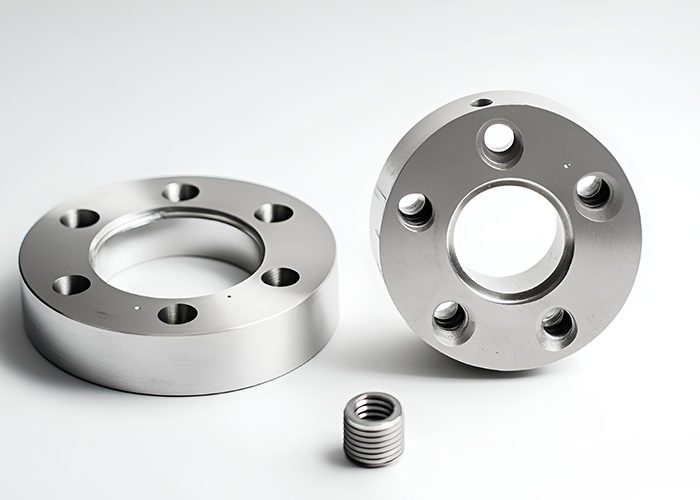
What sets these parts apart is their precision. CNC machines operate within tolerances often measured in microns. For context, a human hair is roughly 70 microns wide; high-precision CNC machining can achieve tolerances of ±0.005 mm, ensuring that every part fits exactly as intended within a complex assembly.
The Manufacturing Journey: From Code to Component
The creation of a CNC processing part is a meticulous journey that blends digital design with physical execution.
1. Design and Programming:
Everything begins with a CAD model. Engineers design the part, defining its geometry, structural requirements, and tolerances. This file is then imported into Computer-Aided Manufacturing (CAM) software. The CAM software acts as the translator, generating the specific code (typically G-code) that dictates every movement of the machine—the toolpath, spindle speed, feed rate, and coolant flow.
2. Machine Setup:
Before the magic happens, the machine must be prepared. This involves selecting the appropriate tools (end mills, drills, lathes) and securely fixturing the raw material. Precision during setup is critical; even a slight misalignment here can compromise the entire batch.
3. Machining Operations:
This is the core production phase. Depending on the part, several processes may be used:
- Milling: Utilizes rotating multi-point cutters to remove material, creating complex shapes like slots, cavities, and contours.
- Turning: The workpiece rotates at high speed while a stationary cutting tool shapes it, ideal for cylindrical components like shafts and bushings.
- Drilling and Boring: Creates and refines holes with extreme accuracy.
- EDM (Electrical Discharge Machining): Uses electrical sparks to erode material, perfect for hard metals and intricate details that traditional tools cannot reach.
4. Quality Control and Finishing:
After machining, parts undergo rigorous inspection using tools like Coordinate Measuring Machines (CMM) to verify they meet the strict specifications. Finally, secondary processes like deburring, anodizing, or polishing are applied to enhance durability and appearance.
Key Advantages in a Competitive Landscape
Why have CNC processing parts become the standard rather than the exception? The advantages are compelling:
- Uncompromising Precision and Repeatability: Once a design is programmed, the machine can produce thousands of identical parts with the exact same high quality. This consistency is vital for industries where failure is not an option.
- Geometric Complexity: Modern 5-axis machines can create incredibly complex geometries that would be impossible or prohibitively expensive to produce manually.
- Material Versatility: CNC machines can handle a vast array of materials. Aluminum and steel are common for structural parts, titanium for aerospace, stainless steel for medical instruments, and engineering plastics like PEEK and ABS for specialized applications.
- Scalability: CNC machining is equally effective for creating a single prototype to test a concept and for full-scale production runs, offering a seamless transition from development to market.
Applications Across Industries
The versatility of CNC processing parts means they are everywhere:
- Aerospace: Turbine blades, structural airframe components, and fuel system parts require the high-strength materials and exact tolerances that CNC machining provides.
- Medical: Surgical tools, orthopedic implants (knee and hip replacements), and custom prosthetics rely on the biocompatibility and precision of CNC machining.
- Robotics: Robot arms, joints, and end-effectors demand durability and perfect alignment for repetitive, precise motions. CNC machining delivers the necessary mechanical stability.
- Automotive: From engine blocks and transmission parts to custom brackets and suspension components, CNC machining ensures performance and safety.
The Future: Integration with Additive Manufacturing
Far from being obsolete, CNC machining is evolving. The future of manufacturing lies in hybrid approaches. While 3D printing is excellent for rapid prototyping and creating complex internal lattices, CNC machining remains the king of surface finish, material properties, and structural integrity. Often, a part might be printed for initial fit checks and then machined from solid metal for final production to ensure durability.
In conclusion, CNC processing parts represent the pinnacle of precision engineering. As technology advances toward smarter, AI-driven machines and even tighter tolerances, these components will continue to be the foundational elements upon which innovation is built, turning ambitious digital designs into tangible, high-performance realities


