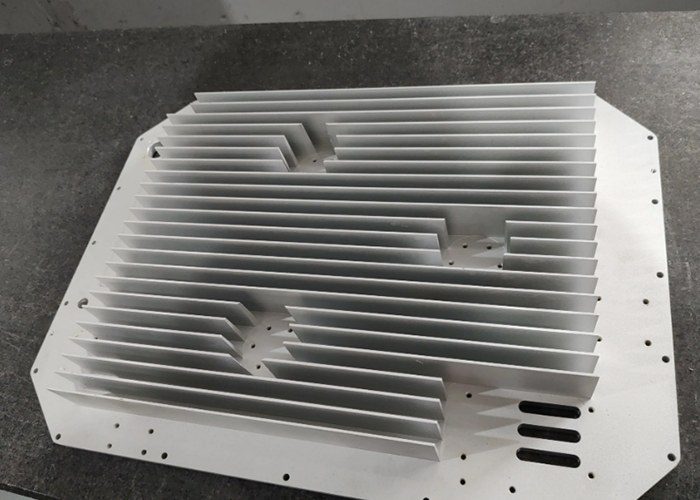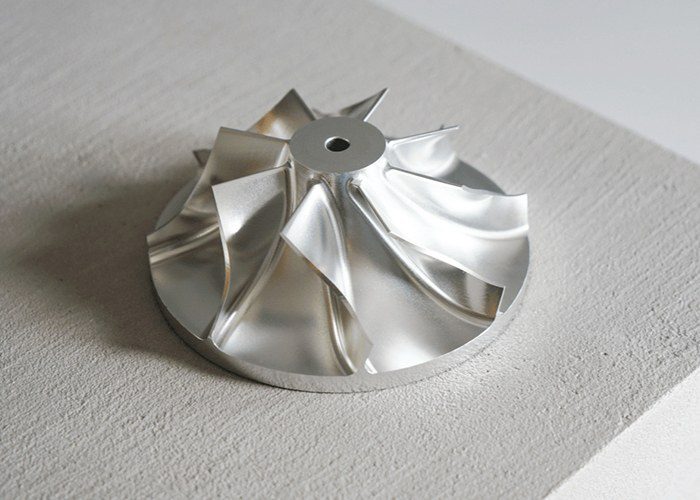
In the modern landscape of manufacturing, where tolerances are measured in microns and complexity is the norm, Computer Numerical Control (CNC) milling stands as a cornerstone technology. When applied to the production of mechanical components, CNC milling transcends simple shaping; it becomes an art form of precision engineering. This process, which utilizes computerized controls and rotating multi-point cutting tools to remove material from a workpiece, is integral to creating the parts that power our automobiles, aircraft, medical devices, and industrial machinery.
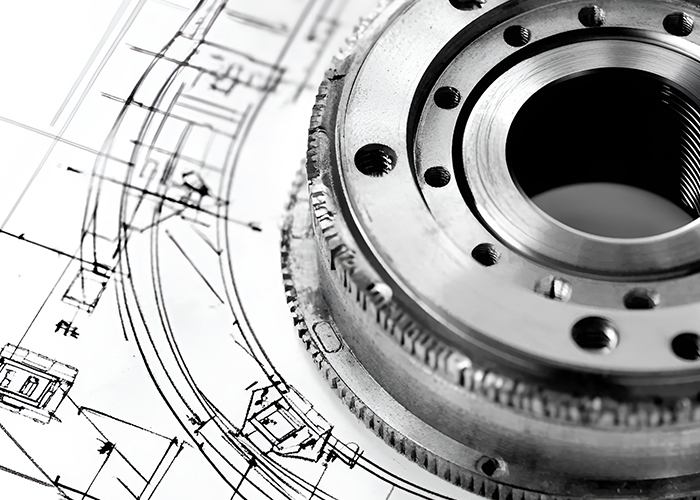
At its core, the creation of a CNC milled mechanical component begins not on the shop floor, but in the digital realm. Engineers utilize Computer-Aided Design (CAD) software to draft a 3D model of the desired part. This digital blueprint contains every detail, from the diameter of a mounting hole to the geometry of a complex gear tooth. This model is then converted into a language the machine can understand—G-code—through Computer-Aided Manufacturing (CAM) software. The G-code serves as a precise set of instructions, dictating every movement of the machine: the spindle speed, the feed rate, the path of the cutter, and the depth of each pass.
The versatility of CNC milling lies in its ability to work with a vast array of engineering materials. For structural applications requiring strength and durability, materials like aluminum (notably 6061-T6), steel (such as 1018 or 4140), and stainless steel are common choices. When weight is a critical factor, as in aerospace components, titanium and specialized aluminum alloys are employed. For parts requiring corrosion resistance or non-magnetic properties, brass and bronze are frequently selected. Beyond metals, the process is equally adept at machining engineering-grade plastics like Delrin (Acetal), Nylon, and PTFE, which are essential for bushings, insulators, and food-grade components.
The milling process itself is a subtractive ballet. The workpiece is securely mounted to the machine’s table, often within a precision vise or custom fixture. As the program runs, the cutting tool, rotating at thousands of revolutions per minute, engages the material. There are two primary types of CNC milling machines that dictate the complexity of components produced. 3-axis mills are the workhorses of the industry, moving the tool or the table along the X, Y, and Z linear axes. They are ideal for producing parts with flat surfaces, drilled holes, and straightforward 2.5D geometries. However, for the intricate, organic shapes required in modern mechanical design—such as impellers, complex manifolds, or parts with undercuts—multi-axis milling is required. 4-axis and 5-axis machines add rotational movement, allowing the tool to approach the workpiece from virtually any direction. This capability not only enables the creation of highly complex geometries in a single setup but also significantly improves surface finish and accuracy by eliminating the errors associated with repositioning the part.
The benefits of CNC milling for mechanical components are profound. Foremost is unwavering precision and repeatability. Once a program is proven, the machine can produce thousands of identical parts, each meeting the strict tolerances specified in the design. This consistency is the lifeblood of mass production and interchangeable assembly. Furthermore, the process offers exceptional design flexibility. A designer is not constrained by the limitations of manual machining; if they can draw it, a CNC mill can likely create it. This includes intricate pockets, thin walls, and complex curves that would be impossible to produce by hand. Finally, while the initial setup can be time-consuming, the efficiency of CNC milling for both prototyping and production runs is unmatched. It operates autonomously, often running 24/7 with minimal supervision, drastically reducing lead times.
In conclusion, CNC milling of mechanical components is far more than a manufacturing process; it is the critical link between digital innovation and physical reality. It empowers engineers to push the boundaries of design, select the optimal materials for an application, and produce parts with a level of precision that ensures reliability and performance. As industries continue to demand greater efficiency and complexity, the role of advanced CNC milling in shaping the future of mechanical engineering will only grow more vital.