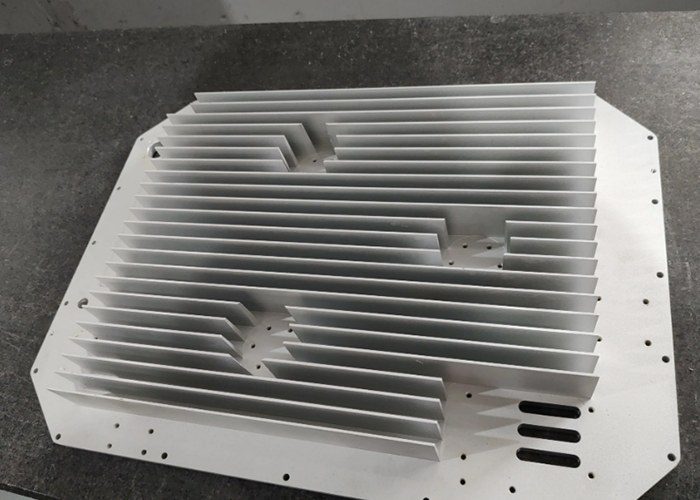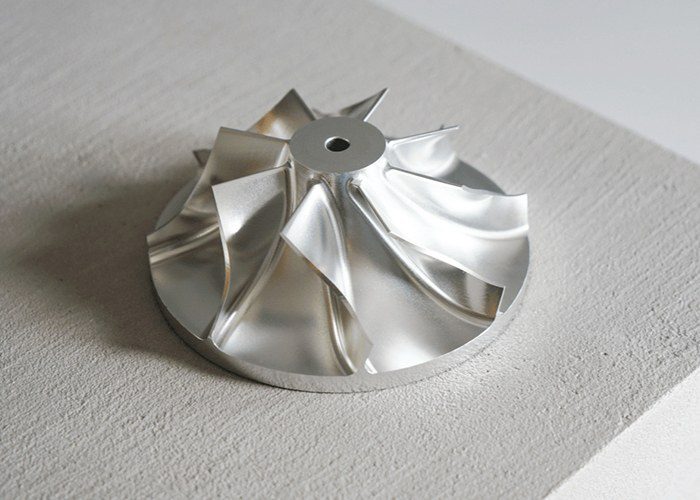
In the modern manufacturing landscape, Computer Numerical Control (CNC) milling machines stand as the workhorses of precision engineering. These sophisticated tools do not rely on manual operation but rather follow pre-programmed instructions to shape raw materials into complex finished products with tolerances as tight as a few microns. To appreciate how these machines achieve such remarkable accuracy, one must understand the individual components that work in harmony. Each part of a CNC milling machine, from the robust frame to the intelligent controller, plays a critical role in the subtractive manufacturing process.
The Foundation: Machine Frame and Worktable
Every CNC mill begins with its frame, which serves as the structural foundation. Typically made from vibration-damping materials like cast iron, the frame provides the rigidity necessary to withstand the significant cutting forces generated during machining. A rigid frame prevents deflection and absorbs vibrations, ensuring that the precision of the cutting tool is not compromised by the machine’s own movement. Mounted on this frame is the worktable—the surface where the workpiece is secured. Most tables feature standard T-slots that allow for versatile workholding solutions, such as vises, clamps, or custom fixture plates, to hold the material firmly in place during operation.
The Heart of the Machine: The Spindle Assembly
If the frame is the skeleton, the spindle is undoubtedly the heart of the milling machine. The spindle is a rotating assembly responsible for holding and driving the cutting tools at high speeds, often ranging from 10,000 to over 40,000 RPM. Powered by a main drive motor, the spindle transmits torque and rotational force to the tool, allowing it to cut through the workpiece material. The interface between the spindle and the tool is the tool holder—a precision component (often using standards like HSK or BT tapers) that ensures the cutting tool is held securely and concentrically. Without a stable and powerful spindle, consistent material removal is impossible.
The Motion System: Axes and Guideways
To create three-dimensional shapes, the cutting tool must move relative to the workpiece. This movement is facilitated by the axes system. In a standard 3-axis mill, motion occurs along the X (left/right), Y (forward/backward), and Z (up/down) axes. High-precision linear guideways and ball screws, driven by servo motors, convert rotational motion into precise linear travel. More advanced machines incorporate additional rotary axes—creating 4-axis and 5-axis configurations—which allow the tool or workpiece to tilt and rotate, enabling the machining of complex geometries like turbine blades in a single setup.
The Brain: The CNC Controller
The term “Computer Numerical Control” refers to the system that directs the machine’s actions: the CNC controller. This is the brain of the operation, typically a dedicated computer or industrial panel that interprets G-code—the programming language of CNC machining. The controller reads the code generated by CAM (Computer-Aided Manufacturing) software and translates it into electrical signals that command the servo motors to move the axes at specific speeds (feeds) and rotations (speeds). It also allows the operator to manually jog the machine, set reference points (zeroing), and monitor the machining process in real-time.
Supporting Roles: Accessories and Tooling
Beyond the core components, several auxiliary systems ensure efficient and reliable operation. The automatic tool changer (ATC) allows the machine to swap between different cutting tools—such as end mills, face mills, or drills—without operator intervention, drastically reducing cycle times. Coolant systems, whether flood or mist, are essential for lubricating cuts, managing heat, and flushing away chips. Furthermore, the machine relies on a vast array of cutting tools specifically designed for different operations. For instance, face mills excel at creating flat surfaces, while ball nose end mills are used for machining complex 3D contours.
In conclusion, a CNC milling machine is far more than a single device; it is an integrated system of precision components. From the rigid frame that ensures stability to the intelligent controller that dictates every move, and the powerful spindle that drives the tool, each part is indispensable. The quality of the final machined part depends entirely on the seamless interaction of these components, demonstrating that in the world of precision manufacturing, the whole is truly the sum of its meticulously engineered parts.