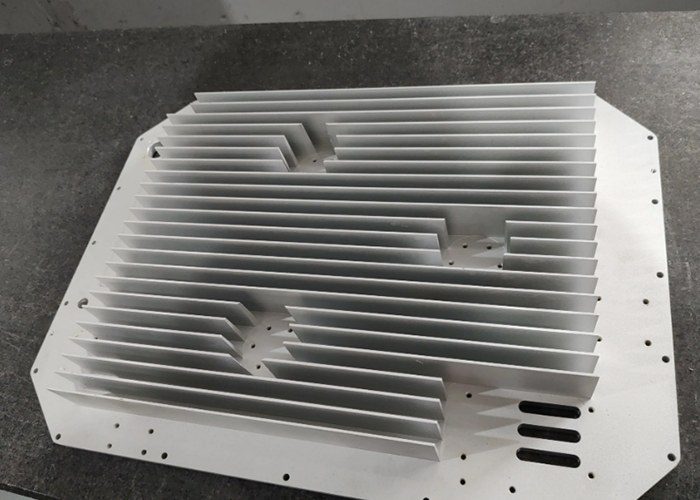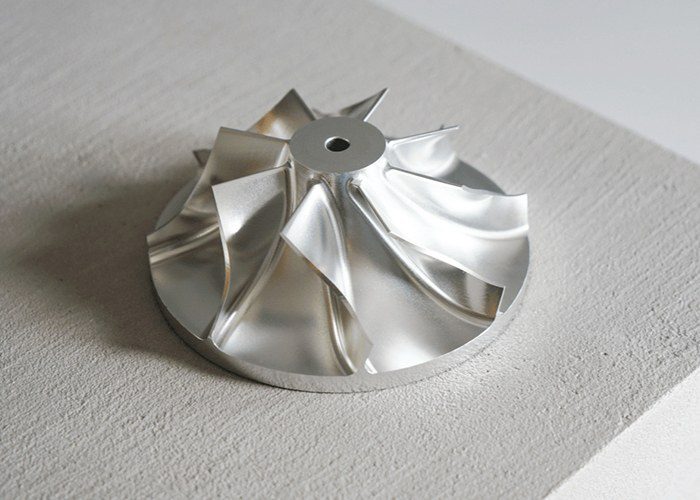
In an era defined by rapid technological advancement and individualized consumer expectations, the manufacturing sector is undergoing a profound transformation. At the heart of this evolution lies Custom Precision Manufacturing, a discipline that moves beyond the production of standardized parts to focus on creating components with exacting specifications, complex geometries, and unparalleled accuracy. This approach is not merely a service; it is a critical enabler of innovation across industries, from aerospace and medical devices to robotics and consumer electronics.
Defining the Discipline
Custom precision manufacturing is the process of producing components that are specifically designed for a unique purpose, differentiating itself from off-the-shelf or high-volume standardized methods. While standard parts are ubiquitous, the growing complexity of modern machinery and technology has fueled a demand for high-accuracy, high-complexity, and low-volume custom parts. This field caters to the “mass customization” trend, where the goal is to produce bespoke items with the efficiency and quality traditionally associated with mass production.
The core of this discipline is the ability to interpret digital designs—such as CAD files or engineering drawings—and transform them into physical parts that meet exact tolerances, sometimes as tight as ±0.0001 inches or even finer. This requires a deep understanding of materials science, mechanical engineering, and advanced machining processes.
The Technological Backbone
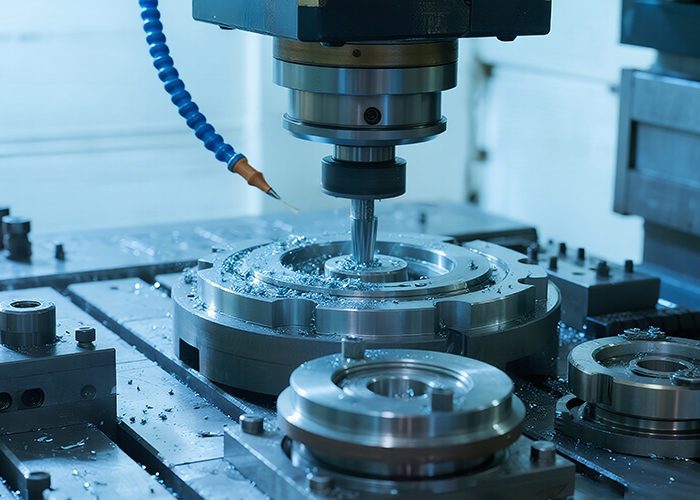
The capabilities of modern custom precision manufacturing are driven by a suite of advanced technologies. Computer Numerical Control (CNC) machining serves as a primary workhorse, utilizing multi-axis mills and lathes to carve parts from solid blocks of material with exceptional precision. For instance, 5-axis CNC machines can access a part from multiple sides in a single setup, reducing errors and enabling the creation of intricate, multifaceted structures.
Beyond subtractive methods, other techniques like electrical discharge machining (EDM) are employed for ultra-hard materials and fine features, while photo-chemical etching (PCE) offers a burr-free, stress-free alternative for producing complex 2D and 3D geometries in thin metals, a crucial capability for industries like medical and electronics. Furthermore, metal stamping and fabrication processes allow for high-efficiency production of parts ranging from delicate connectors to robust brackets.
The “Problem-Solving” Approach
What truly defines custom precision manufacturing is its problem-solving nature. Manufacturers in this space often act as “solution engineers,” tackling challenges that standard processes cannot. A client might need a robotic joint that is both lightweight and incredibly strong, or a connector pin for a train that must withstand massive pressure and sub-zero temperatures. This requires a collaborative approach, where engineers work closely with clients to select the optimal material—be it a high-performance polymer, a titanium alloy, or a specific grade of stainless steel—and the most effective production strategy. The process is iterative and flexible, allowing for rapid prototyping and design adjustments without the prohibitive costs and delays associated with traditional hard tooling.
Quality and the Human Element
While advanced machinery is essential, the expertise of skilled machinists and engineers remains the most critical asset. These professionals ensure that every cut, bend, and finish meets the highest standards. Rigorous quality control, often adhering to certifications like ISO 9001:2015, is integrated throughout the production process. This includes in-process inspections, post-machining measurements using coordinate measuring machines (CMM), and meticulous documentation, which is particularly vital for regulated sectors like aerospace and medical technology.
Moreover, the final step often involves specialized post-processing finishes. Techniques like anodizing, powder coating, or polishing are applied not only for aesthetics but also to enhance performance, providing corrosion resistance, improved thermal characteristics, or reduced friction.
The Future Landscape
Looking ahead, the field is poised for further disruption. Innovations like polymorphic manufacturing, which uses reconfigurable pins to create instant, tool-less molds, promise to slash costs and lead times for low-to-medium volume custom parts, making mass customization more economically viable than ever before. As supply chains become more regionalized and industries demand greater agility, custom precision manufacturing will continue to be the vital link between a bold idea and a functional, high-performance reality. It is the art and science of making the impossible manufacturable.