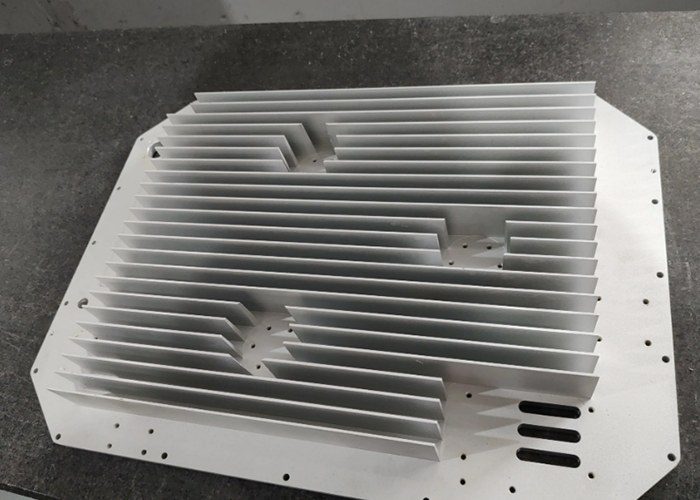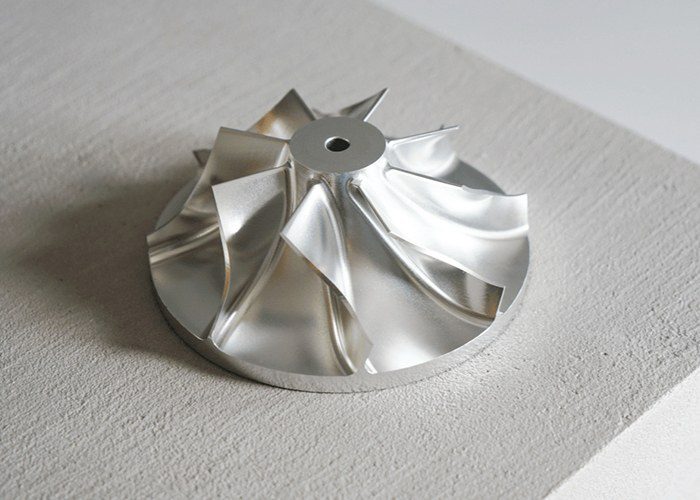
In the world of manufacturing, there is a distinct line between producing a part that simply fits and producing one that performs with micron-level accuracy in mission-critical applications. On one side lies conventional machining—reliable, effective, and cost-efficient for a vast range of products. On the other lies CNC Swiss Precision Machining, a subtractive manufacturing process so precise that it has become the gold standard for industries where failure is not an option: medical implants, aerospace components, and complex electronic connectors.
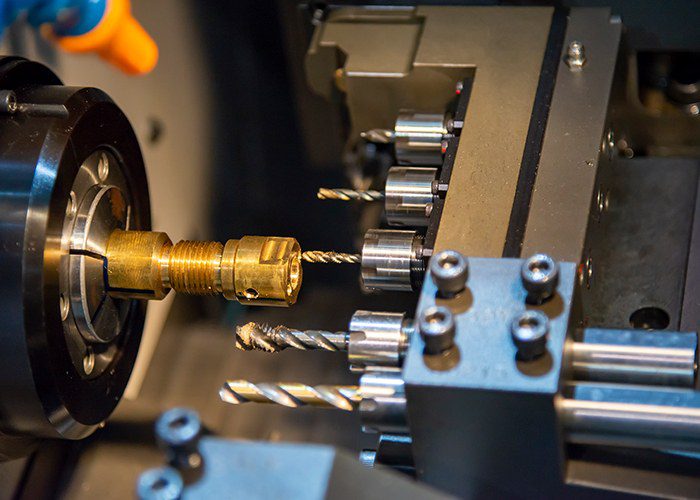
To the uninitiated, a CNC Swiss-style lathe might look like just another automated machine tool. But beneath its enclosure lies a feat of mechanical ingenuity that solves one of machining’s oldest problems: how do you cut a long, thin, and intricate part without it bending or chattering under pressure?
The “Guide Bushing” Revolution
The magic of Swiss machining begins with a single, critical component: the guide bushing. In a traditional CNC lathe, the workpiece extends from a spinning chuck like a diving board. When a cutting tool applies pressure to a slender piece of metal—say, a rod with a diameter of 2mm and a length of 40mm—the material deflects. It vibrates, wobbles, and “chatters,” ruining surface finish and dimensional accuracy.
Swiss-type machines flip this dynamic on its head. Rather than the material extending unsupported toward the tool, the bar stock is pushed through a guide bushing, which supports the material immediately adjacent to where the cutting takes place. Imagine trying to cut a cooked spaghetti noodle versus a uncooked one held firmly at the exact point of the knife. The guide bushing provides that rigidity, allowing machinists to achieve tolerances as tight as ±0.0005 inches (or even approaching ±0.001 mm on specialized equipment).
Swiss Turning vs. Conventional CNC Turning
While both processes involve rotating stock and removing material, the philosophical difference between Swiss and conventional turning is profound. In a conventional lathe, the part rotates, and the cutting tool moves along its surface to shape it. In a Swiss machine, the part is stationary relative to the tool as it slides out of the bushing. This “sliding headstock” design allows for the efficient production of parts with a length-to-diameter ratio exceeding 7:1—parts that would be impossible to machine accurately on standard equipment.
Furthermore, modern CNC Swiss machines are rarely just lathes. They are multi-axis machining centers. Equipped with live tooling and secondary spindles (often called sub-spindles or counter-spindles), these machines can perform milling, drilling, tapping, and slotting in a single setup. The sub-spindle picks up the part from the main spindle, allowing the machine to cut the “back side” of the component without a second operation. This eliminates human error, reduces lead times, and ensures geometric consistency across every feature.
Applications: Where Precision is Non-Negotiable
It is no coincidence that the industries driving the adoption of CNC Swiss machining are those saving lives and exploring the frontiers of human technology.
- Medical Devices: The human body is unforgiving. Bone screws, spinal implants, and dental components must be flawless. They are often made from titanium or high-performance polymers like PEEK, materials that are difficult to machine but biocompatible. Swiss machines produce the micro-threads and polished surfaces required for osseointegration (the fusing of bone to metal).
- Aerospace and Defense: In hydraulic systems, fuel nozzles, and guidance systems, weight is minimized, and reliability is maximized. The ability to machine tough alloys like Inconel and stainless steel with absolute repeatability makes Swiss machining indispensable for mission-critical flight hardware.
- Electronics and Telecommunications: As devices shrink, the connectors and pins inside them must follow suit. Swiss machines excel at producing the tiny, intricate contact pins and sockets that populate the circuit boards of modern electronics.
The Modern Integration: Digital Meets Mechanical
While the mechanical principles of Swiss machining have been around for decades (evolving from old cam-operated screw machines), the “CNC” aspect has unlocked a new realm of possibility. Today, Swiss machining is deeply integrated with digital manufacturing ecosystems.
Advanced CAD/CAM software allows engineers to simulate tool paths, detect collisions, and optimize cutting strategies before a single chip is made. This is particularly vital for prototyping, where design iterations happen rapidly, and lengthy retooling delays are unacceptable. Once a program is verified, the precision of the CNC system ensures that the one-thousandth part is identical to the first.
Moreover, the industry is moving toward “lights-out” manufacturing. By integrating robotic automation and palletization, shops can run Swiss machines 24/7, meeting high-volume demands while maintaining the tight tolerances that human operators might struggle to hold consistently during late-night shifts.
Conclusion
CNC Swiss Precision Machining is more than just a manufacturing process; it is the bridge between the designer’s vision and physical reality. It allows engineers to specify geometries that were once considered impossible—long, slender, complex shafts with micrometer-level accuracy. As industries continue to demand miniaturization and higher performance, the role of the Swiss-type lathe will only grow. It remains a perfect example of how a clever mechanical solution (the guide bushing), when combined with digital precision, can solve the most difficult engineering challenges of our time.