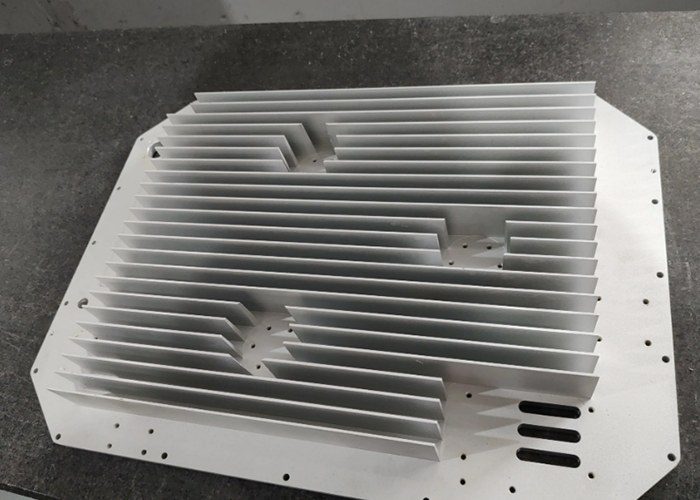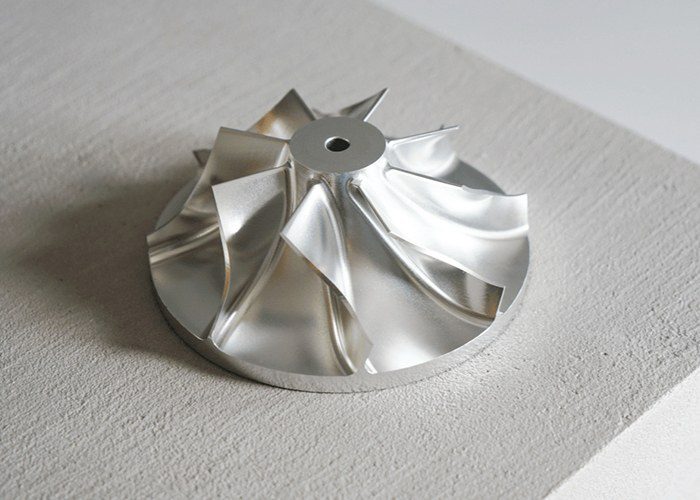
In the modern manufacturing landscape, the CNC Milling Machine stands as a titan of precision and automation. Standing for Computer Numerical Control, these machines have revolutionized how we produce parts, from simple brackets to complex aerospace components. Unlike manual milling, where a human operator directs every movement, a CNC mill follows a pre-programmed sequence of instructions with micron-level accuracy. This capability is not the result of magic, but the harmonious integration of dozens of individual components, each with a critical role. To truly understand how a CNC mill transforms a digital design into a physical object, one must first understand its anatomy.
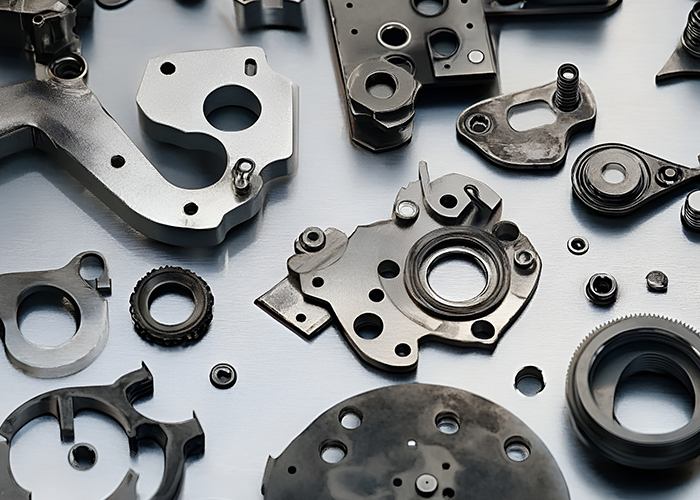
At its core, a CNC milling machine is a system of controlled motion and robust material removal. Its parts can be broadly categorized into the structural framework, the motion control system, the spindle and tooling, and the control interface. Here is a detailed exploration of the key components that make these machines the workhorses of the industry.
The Foundation: Structural Components
The machine’s structure is its skeleton, providing the rigidity necessary to withstand the tremendous cutting forces without flexing or vibrating. Any deflection in the structure translates directly to inaccuracies in the finished product.
- Machine Base and Column: The journey of precision begins at the very bottom. The base is a heavy, often cast-iron structure that sits on the floor. Its immense weight serves to dampen vibrations and provide a stable foundation for the entire machine. Rising vertically from the base is the column, another robust casting. On a vertical milling machine, the column houses the spindle and motor, while on a horizontal machine, it supports the spindle and gearbox. The T-slots on the base allow for the secure mounting of the machine to the floor or a sub-plate.
- The Saddle and Knee (or Bed): In many vertical mills, particularly the “knee mill” style, the saddle is mounted on top of the knee and moves in and out (typically the Y-axis). The knee itself moves vertically (Z-axis) along the column. However, in modern “bed mill” designs and most VMCs (Vertical Machining Centers), the bed is a fixed, rigid structure. The saddle moves on precision ways along the bed (Y or X-axis), and the table moves on the saddle (X or Y-axis). This bed-type construction offers superior rigidity compared to the knee-type design.
The Motion System: Achieving Precise Movement
This is where raw power meets microscopic precision. The motion system is responsible for moving the workpiece and the cutting tool with absolute accuracy along the machine’s axes.
- Guideways (Ways): These are the precision surfaces that guide the movement of the table, saddle, and knee. They are the “rails” of the machine.
- Dovetail Ways: Common in older or smaller machines, these are ground flat and V-shaped surfaces that are manually scraped for fit. They require lubrication and are susceptible to stick-slip at low speeds.
- Linear Guides (Linear Motion Guides): Found on most modern CNC machines, these use recirculating ball bearings running on hardened and ground steel rails. They offer very low friction, high precision, and the ability to handle heavy loads at high speeds, making them ideal for modern, fast machining.
- Ball Screws: This is arguably the most critical component in the motion system. A ball screw is a precision screw that uses ball bearings in the nut to reduce friction. As the screw turns, the nut (attached to the table or saddle) moves linearly with almost no backlash. This converts the rotary motion of the motor into the precise linear motion required for cutting. The “preloaded” design of ball screws eliminates the slop found in traditional Acme screws, ensuring that every rotation of the motor translates directly into a defined distance of travel.
- Servo Motors and Drives: The muscles behind the motion are the servo motors. These are high-performance motors that use feedback devices (encoders) to constantly report their position and speed back to the CNC control. The control can then instantly adjust the power to the motor to correct any errors. This closed-loop system is what allows a CNC machine to maintain its programmed path even under a varying cutting load. Stepper motors, a simpler open-loop alternative, are found on smaller, less expensive machines.
The Heart of Material Removal: Spindle and Tooling
If the motion system is the nervous system, the spindle is the heart. It is the component that actually holds and rotates the cutting tool.
- The Spindle: The spindle is a precision shaft, supported by high-quality bearings, that rotates at high speeds. It is driven by a motor, either directly, via a gearbox (for high torque), or through a belt drive. The spindle’s performance is defined by its power (horsepower) and its speed range (RPM). Modern spindles can reach speeds of 10,000 to 30,000 RPM or more, enabling the use of small tools for fine detail and high-speed machining of aluminum. The spindle’s taper—most commonly CAT, BT, or HSK—is the precisely machined socket that holds the tool holder.
- Tool Holders: The tool holder is the interface between the spindle and the cutting tool. It must grip the tool (drill, end mill, etc.) tightly and concentrically. The tool holder is inserted into the spindle, and a mechanism (like a drawbar or power drawbar) pulls it firmly into the taper, creating the rigidity needed for accurate cutting. Common types include end mill holders, collet chucks (like ER collets), and drill chucks.
- Automatic Tool Changer (ATC): In a manual mill, changing tools is a time-consuming process. A CNC machining center is defined by its Automatic Tool Changer. This is a mechanical arm or a carousel that grabs the current tool from the spindle, places it back into a storage magazine, retrieves the next required tool, and inserts it into the spindle. This process, often taking only a few seconds, allows the machine to run unattended and complete complex parts requiring dozens of different tools.
The Brain: The Control System
All the powerful mechanics are useless without a brain to orchestrate them.
- The Machine Control Unit (MCU): This is the computer and the interface. It consists of the display, the keyboard, and often a manual pulse generator (a wheel for manual jogging). The MCU reads the G-code (the programming language of CNC) and interprets it.
- The Controller: The controller is the hardware and software that executes the code. It sends signals to the servo drives, telling them how far and how fast to move. It also monitors inputs from various sensors (like limit switches to prevent over-travel) and sends commands to auxiliary functions like the coolant pump. Popular industrial controllers are made by Fanuc, Siemens, Haas, and Heidenhain.
Supporting Cast: Auxiliary Systems
A CNC mill is more than just its main parts. It relies on supporting systems for reliable operation.
- Coolant System: Machining generates immense heat. The coolant system uses a pump to deliver a high-pressure stream of coolant (a mix of water and soluble oil) to the cutting interface. This cools the tool and workpiece, lubricates the cut, and flushes away chips.
- Chip Auger/Conveyor: In a production environment, the volume of metal chips can be overwhelming. A chip conveyor automatically removes the swarf from the machine’s enclosure, depositing it into a bin and keeping the work area clean.
- Enclosure: Modern CNC mills are enclosed in clear polycarbonate or safety glass shields. This enclosure protects the operator from flying hot chips and coolant, and it contains the mess inside the machine’s working area.
In conclusion, a CNC milling machine is a masterpiece of mechatronic engineering. From the rigid iron base that absorbs vibration to the lightning-fast servo motors and the precise ball screws, each part is a critical link in the chain of production. The seamless interaction between the structural, motion, cutting, and control systems is what empowers manufacturers to create the complex, accurate, and repeatable parts that define our modern world. Understanding these parts is the first step toward mastering the art and science of CNC machining.