
In an era defined by miniaturization, complex geometries, and zero tolerance for failure, High Precision CNC (Computer Numerical Control) Machining has emerged as the silent sentinel of modern industry. From the intricate components of a pacemaker to the critical turbine blades of a jet engine, this technology is the backbone of production where “close enough” is not an option. Achieving accuracy in the micron and sub-micron range transforms raw materials into functional masterpieces, enabling the technological leaps we see in aerospace, medical, robotics, and electronics.
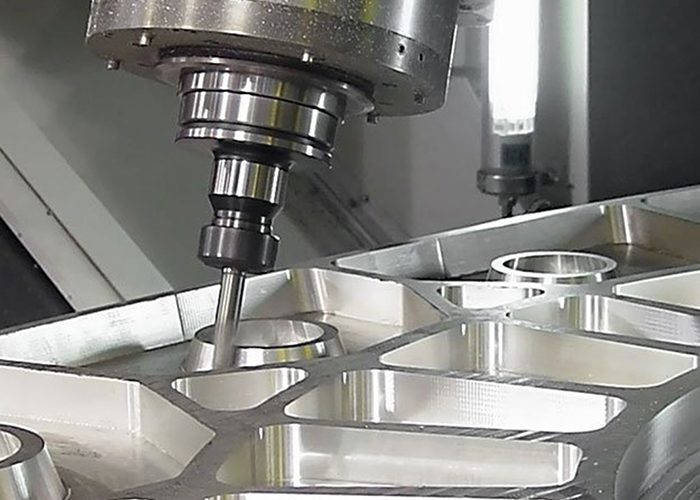
The Core of Accuracy: What Defines High Precision?
While standard CNC machining typically operates within tolerances of ±0.005 inches (about 127 microns), high precision CNC machining pushes the boundary into the realm of ±0.0001 inches (2.5 microns) or even tighter. For perspective, a human hair is about 75 microns in diameter. High precision machining can carve features smaller than a bacterium. This is achieved through a symbiotic relationship between ultra-stiff machine platforms, advanced servo-drive systems, and high-resolution feedback loops. Every component of the machine—from the linear guides to the ball screws—must be thermally stabilized and vibration-dampened to ensure that the cutting tool follows the digital blueprint with near-atomic fidelity.
The Key Pillars of Performance
Three critical elements define the capability of high precision CNC systems: Stiffness, Stability, and Sensing.
- Mechanical Stability: High precision machines are often constructed from polymer concrete or heavy cast iron to absorb harmonic vibrations. Thermal management is paramount; as machine components heat up, they expand. Advanced systems employ coolant-chilled ballscrews and enclosed temperature-controlled environments to maintain geometric consistency.
- Advanced Tooling and Spindles: To cut accurately at the micro-level, spindles must rotate at extremely high speeds—often exceeding 40,000 RPM—with minimal runout (wobble). Diamond-tipped or carbide micro-tools allow for the creation of channels, holes, and contours that are invisible to the naked eye.
- Metrology Feedback: What distinguishes high precision from standard machining is the integration of “in-process” probing. Lasers and touch probes measure the part while it is still in the machine, automatically compensating for any tool wear or thermal drift. This closed-loop system ensures that the final product adheres to the Geometric Dimensioning and Tolerancing (GD&T) specified by the engineer.
Industries Shaped by Precision
Without this technology, modern breakthroughs would remain on the drawing board.
- Aerospace: Flight safety relies on fuel injection systems and hydraulic actuators with microscopic clearances. A variance of a few microns can lead to turbulent airflow or component fatigue.
- Medical: Surgical robots, orthopedic joint replacements, and dental implants require bio-compatible surfaces machined to exact contours. The human body does not tolerate mechanical misalignment, making precision a health necessity.
- Electronics: The semiconductor industry depends on high precision machining for wafer chucks and connectors. As chip densities increase, the fixtures holding silicon wafers must be flatter than a wavelength of light.
The Challenges and The Future
Despite its capabilities, high precision machining is not without hurdles. The primary barrier is cost—both for the initial capital equipment and for the controlled environment required. Furthermore, it demands a highly skilled workforce. Unlike conventional machining, operators cannot rely on touch or sound to adjust cuts; they must interpret complex data streams and compensate for environmental factors like barometric pressure or humidity.
Looking forward, the industry is converging with Artificial Intelligence and Hybrid Manufacturing. AI algorithms now predict tool wear before a micron is lost, scheduling tool changes during optimal cycles. Hybrid machines combine 5-axis CNC milling with additive manufacturing (laser metal deposition), allowing for the creation of near-net shapes that are then finished to precision tolerances. Additionally, the rise of Ultrasonic-assisted machining is allowing previously “un-machinable” brittle materials like ceramics and glass to be carved with high precision.
Conclusion
High Precision CNC Machining is more than a manufacturing process; it is the enabler of the invisible infrastructure of the 21st century. As products continue to shrink in size but expand in complexity, the demand for machines that can sculpt matter at the microscopic level will only intensify. For engineers and manufacturers, mastering this discipline is no longer a competitive advantage—it is the baseline requirement for innovation. In the race to build smaller, faster, and more reliable technology, precision is the ultimate currency.


