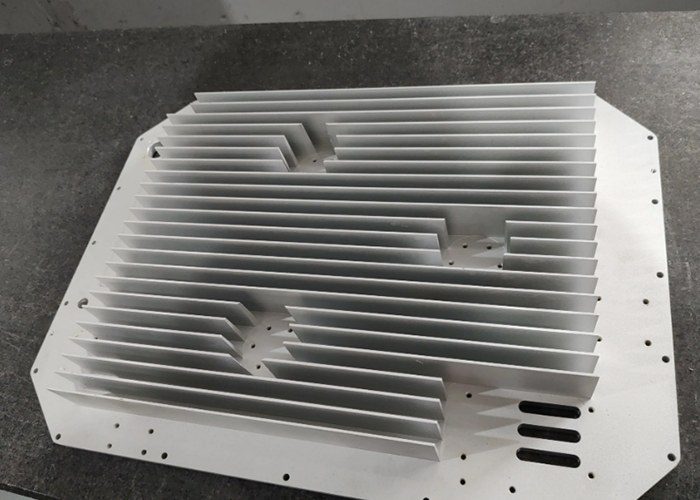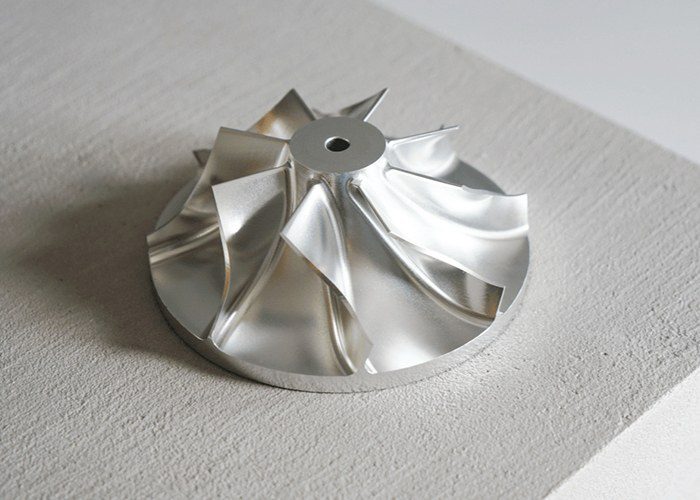
In the heart of modern manufacturing, where the margin for error evaporates into microns and the demands of technology stretch the limits of the physically possible, exists a realm of quiet intensity: the high-precision CNC machining shop. This is not merely a factory floor; it is a laboratory, an atelier of metal and polymer, where engineering ambition is translated into tangible, flawless reality. Here, the term “high precision” is not a boast but a fundamental creed, governing every flicker of machine light and every decision in a relentless pursuit of perfection often measured in millionths of a meter.
The atmosphere itself distinguishes such a facility. There is a hushed, clean-room-like quality, a world away from the stereotypical gritty machine shop. Temperature and humidity are meticulously controlled, not for comfort, but to combat the natural expansion and contraction of materials—a thermal drift that could spell catastrophe for tolerances routinely holding within ±0.0005 inches (0.0127 mm) or tighter. The air is still, filtered to keep microscopic contaminants from settling on a critical aerospace component or a biomedical implant. This environmental mastery is the first, silent promise of precision.
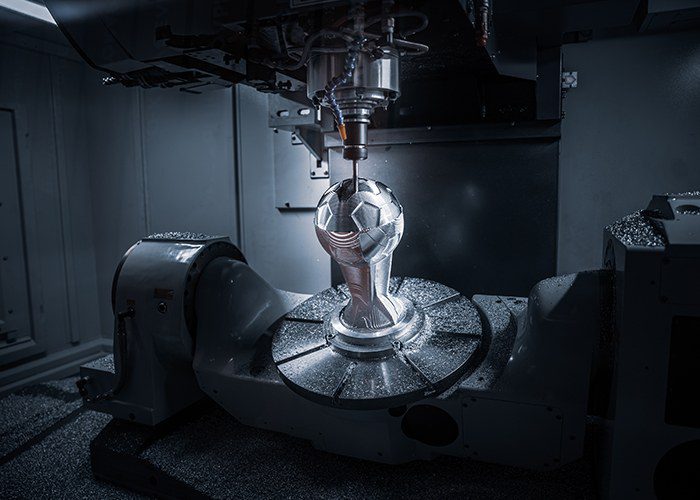
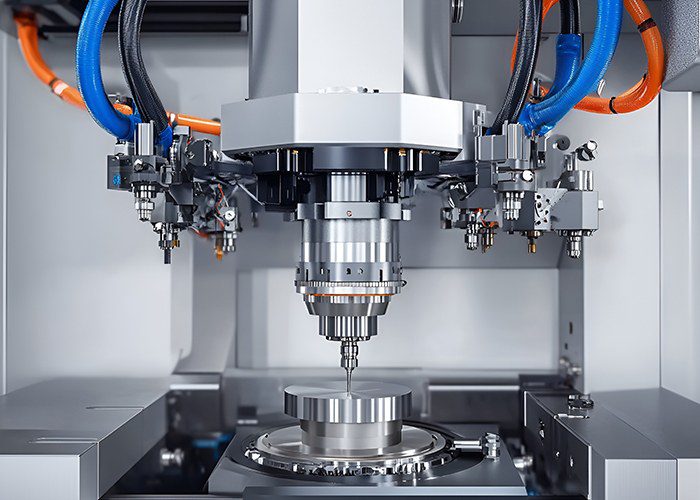
At the core of this capability sits not just any machinery, but the pinnacle of CNC technology. Multi-axis machining centers—5-axis, often 7-axis or more—stand like monolithic sculptures of potential. These are not simple cutting tools; they are robotic choreographers of motion. Their spindles, whisper-quiet and balanced to near perfection, spin at breathtaking speeds, while linear guides and ball screws of extraordinary grade move with a frictionless, deterministic grace. The machine’s structural rigidity is paramount, a fortress against the very forces of cutting that could induce vibration, the arch-nemesis of surface finish and dimensional integrity. Every vibration-damping concrete foundation and every kilogram of polymer composite in the frame serves one purpose: absolute stability.
Yet, the most sophisticated machine is merely a precise brute without its guiding intellect. In the high-precision shop, the CAM (Computer-Aided Manufacturing) programming is an exercise in deep strategy and foresight. Programmers are metallurgists and physicists, crafting toolpaths that consider heat dissipation, tool deflection, and chip evacuation with scientific rigor. They employ techniques like trochoidal milling and high-speed machining to maintain constant tool engagement, preserving tool life and surface integrity. The code they write is a meticulous playbook for perfection, often simulating every cut in a virtual environment long before a single piece of raw material—be it aerospace-grade titanium, medical stainless steel, or advanced engineering plastic—is ever secured in a vise.
The true sentinels of precision, however, are the metrology systems. This is where claims are verified and trust is forged. Beyond standard calipers and micrometers, the shop floor features coordinate measuring machines (CMMs) with touch-trigger probes scanning components with point-cloud accuracy. Optical comparators project magnified profiles against ideal overlays, while laser scanners and white-light interferometers capture surface topography in stunning detail, revealing variances invisible to the human eye. Crucially, these measurement tools themselves reside in a metrology lab, regularly calibrated against national standards. The process creates a closed loop of verification: machine, measure, adjust, confirm. It is a philosophy of relentless self-auditing.
The applications that demand this level of investment are those where failure is not an option. Surgeons do not question the fit of a custom orthopedic knee implant; satellite gyroscopes cannot afford unbalanced components; the fuel injector in a next-generation jet engine must seal perfectly at extreme pressures and temperatures. The high-precision machining shop serves as the silent, indispensable partner to innovators in aerospace, defense, medical technology, semiconductor capital equipment, and advanced optics. They manufacture the components that enable technological leaps—the hermetic connectors for deep-sea probes, the waveguides for quantum computing, the injector nozzles for hydrogen fuel cells.
Ultimately, a true high-precision CNC machining shop is defined by a culture, not just a catalog of equipment. It is a culture obsessed with detail, where a technician’s certification is as scrutinized as a mill’s calibration, where every surface plate is treated with reverence, and where the ultimate satisfaction lies not in volume shipped, but in a first-article inspection report with every feature in the green. It is a partnership built on absolute trust, where clients provide complex designs for nascent technologies and receive back not just parts, but perfected physical manifestations of their vision. In a world increasingly dependent on miniature, powerful, and reliable technology, these workshops are the unseen foundation, mastering the art of the imperceptible to build the future, one micron at a time.