
In the vast landscape of modern manufacturing, where innovation is often measured in leaps of miniaturization and soaring complexity, a quiet revolution is taking place. At its heart lies the pursuit of an attribute so fundamental that it transcends mere specification to become the very currency of trust: accuracy in the realm of CNC micro-turning parts. This is not simply about making small things; it is about redefining the possible at scales where a micron is a vast distance and perfection is the only acceptable standard.
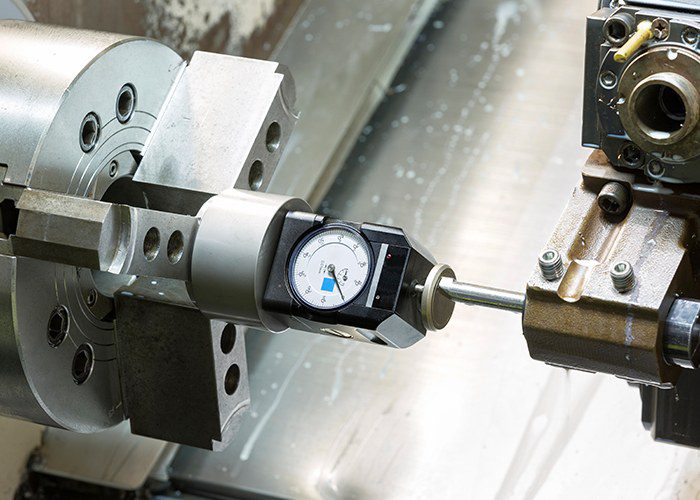
Micro-turning, a subset of precision machining, involves the fabrication of components with diameters often less than 1 millimeter and features measured in micrometers. Unlike conventional machining, where forces and tolerances operate in a familiar realm, micro-turning ventures into a domain where material behavior changes, cutting forces must be exquisitely controlled, and environmental factors like thermal drift become formidable adversaries. Here, CNC (Computer Numerical Control) technology is not just an asset but an absolute necessity, providing the digital backbone for replicating intricate designs with relentless consistency. However, the mere application of CNC does not guarantee success. The true differentiator, the element that separates functional prototypes from mission-critical components, is accuracy.
Accuracy in this context is a multidimensional paradigm. It encompasses:
- Dimensional Accuracy: The faithful adherence to specified diameters, lengths, and geometries. A deviation of even 5 microns (0.005 mm) on a 0.3mm diameter pin can render it useless for a critical medical device.
- Geometric Accuracy: This refers to the perfection of form—roundness, cylindricity, concentricity, and surface finish. In micro-fluidic devices or optical alignment pins, for instance, imperfect roundness can disrupt fluid dynamics or light transmission catastrophically.
- Positional Accuracy: The precise location of features like holes, grooves, or threads relative to each other and to datum points. This is paramount in miniaturized connectors or surgical tool tips where alignment is everything.
Achieving this tripartite accuracy demands a symbiotic relationship between advanced technology and meticulous craftsmanship. The journey begins with ultra-precision CNC lathes, often housed in temperature-controlled cleanrooms to mitigate thermal expansion. These machines are equipped with high-frequency spindles that maintain stability at extraordinary rotational speeds, and linear motors that provide smooth, nanometer-resolution movement. The cutting tools themselves are marvels of material science—micro-grain carbide or diamond-tipped instruments, sometimes with cutting edges so small they are inspected under scanning electron microscopes.
Yet, the most sophisticated machine is only as good as its command. This is where digital prowess meets physical execution. Advanced CAM (Computer-Aided Manufacturing) software is used to generate toolpaths that account for the minute deflections and unique cutting dynamics at the micro-scale. Strategies like “slow tool servo” or “fast tool servo” turning are employed to create complex freeform surfaces with sub-micron accuracy. Furthermore, in-process metrology systems—often using non-contact laser probes—can provide real-time feedback, allowing for closed-loop corrections that ensure the final part matches the digital blueprint not just in theory, but in tangible reality.
The implications of such accuracy are profound and far-reaching. In the medical industry, it enables the production of minimally invasive surgical instruments, neurovascular stents, and components for implantable drug-delivery pumps, where biocompatibility and flawless function are synonymous with patient safety. The aerospace and defense sectors rely on accurate micro-turned parts for guidance systems, inertial sensors, and fuel injection nozzles, where performance under extreme conditions is non-negotiable. In telecommunications, the alignment ferrules for fiber-optic connectors demand astonishing geometric accuracy to prevent data loss. Meanwhile, research and scientific instrumentation pushes the boundaries further, requiring custom micro-components for particle focusing, micro-reactors, and space exploration rovers.
However, the pursuit of ultimate accuracy is a path fraught with challenges. Material grain structure can become a significant variable; machining a brass part might mean cutting across individual grains, leading to unpredictable tool wear and surface irregularities. Chip formation and removal at the micro-scale require novel solutions to prevent recutting and surface damage. Each new material—from medical-grade polymers to exotic superalloys—presents a fresh puzzle for the process engineer to solve.
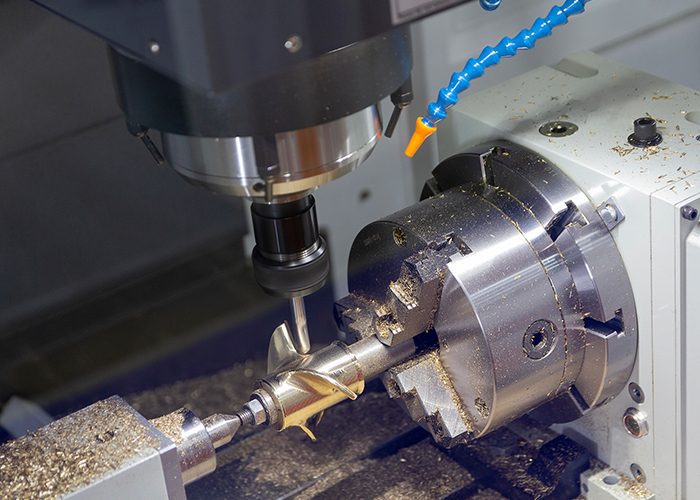
The future of accurate CNC micro-turning is being shaped by trends like the integration of Artificial Intelligence (AI) and Machine Learning (ML). These technologies promise predictive analytics for tool wear, adaptive control systems that self-optimize cutting parameters in real-time, and even AI-driven design for manufacturability, ensuring parts are conceived for peak accuracy from the outset. The convergence with additive manufacturing (hybrid manufacturing) also offers exciting possibilities, where near-net-shape parts are 3D printed and then finished to ultra-precise tolerances via micro-turning.
In conclusion, accuracy in CNC micro-turning is far more than a number on a quality control sheet. It is the silent guardian of reliability in an increasingly miniaturized world. It represents the culmination of mechanical engineering, materials science, digital intelligence, and human expertise. As industries continue to demand smaller, stronger, and more complex components, the ability to machine with unwavering accuracy will remain the cornerstone of innovation. The parts may be microscopic, but their impact on technology, health, and exploration is, and will continue to be, monumental. This unseen revolution, measured in microns and driven by precision, is quietly building the backbone of our technological future.


