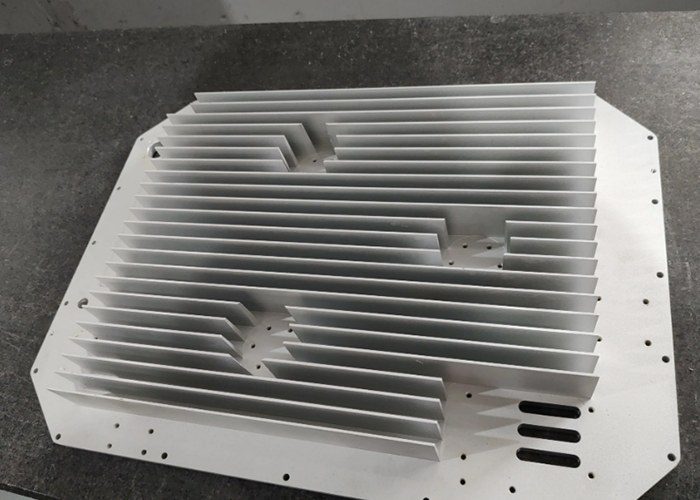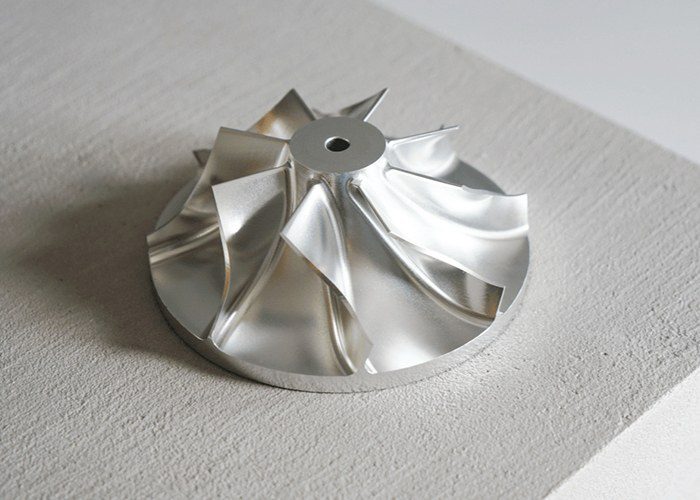
In the grand narrative of human fabrication, our story has always been one of addition—building up from clay, stone, and timber. The advent of Computer Numerical Control (CNC) turning and milling, however, represents a profound philosophical and practical shift: the age of intelligent subtraction. This is not merely a manufacturing process; it is a dialogue between digital intent and physical material, a ballet of spinning tools and precision that carves the imagined from the solid real.
At its core, CNC machining is a process of controlled removal. It begins not on the shop floor, but in the virtual realm of Computer-Aided Design (CAD). Here, a part is born as a perfect digital twin, defined to micrometric tolerances. This geometry is then translated, via Computer-Aided Manufacturing (CAM) software, into a set of instructions—a G-code program. This code is the scripture, and the CNC machine its devoted acolyte, interpreting each line to command the movement of cutting tools with inhuman fidelity. This seamless bridge from the abstract digital model to the tangible object is the first hallmark of its uniqueness, rendering traditional drafting and manual machining almost archaic.
While often mentioned together, turning and milling are distinct dances within this ballet, each with its own choreography.
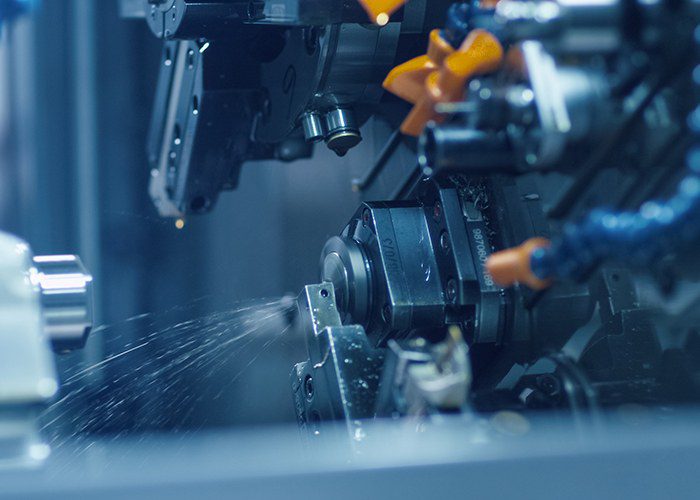
CNC Turning is the art of rotation. The workpiece—a rod of metal, plastic, or composite—is secured in a chuck and spun at high velocity. A stationary, single-point cutting tool is then precisely fed along its lengths and diameters. It is a process of revelation, akin to a potter centering clay, but with diamond-like precision. Turning excels at creating axi-symmetric parts: engine shafts, hydraulic pistons, ornate balusters, and elegant connectors. Its genius lies in its efficient removal of material to uncover continuous, perfect cylindrical or conical forms. The modern CNC lathe, often equipped with driven tools and secondary spindles (turning centers), can mill cross-holes or drill off-axis features without unclamping the part, blurring the lines between the two disciplines.
CNC Milling, in contrast, is the art of orchestrated movement. Here, the workpiece is typically stationary, and a multi-fluted, rotating cutter dances around it along three, four, or five axes. This liberates geometry from the constraints of symmetry. A milling cutter can plunge, contour, pocket, and surface, sculpting everything from the flat face of a manifold to the complex, organic contours of a prosthetic bone implant or a mold for a composite airframe. The 5-axis mill, the zenith of this technology, tilts and rotates the cutting tool or workpiece dynamically, allowing it to approach the material from virtually any angle. This capability to create profoundly complex, free-form geometries from a solid block is its unique superpower.
What truly makes modern CNC turning and milling “unique,” however, transcends their technical capabilities. It is their role as the nexus of the Fourth Industrial Revolution. These processes are no longer isolated. They are integrated with in-process probing for automated quality control, connected to factory-wide networks for real-time monitoring, and fed by automated pallet systems and robots for lights-out production. They speak the language of IoT, contributing data to digital twins that simulate, predict, and optimize the entire production lifecycle.
Furthermore, their precision enables the “democratization of perfection.” A prototype machined in a workshop in Berlin can be an exact geometric duplicate of one produced in a high-volume factory in Seoul, with the same digital file ensuring consistency. This has revolutionized fields from aerospace, where every gram and micron counts, to biomedical engineering, where patient-specific implants are now routine.
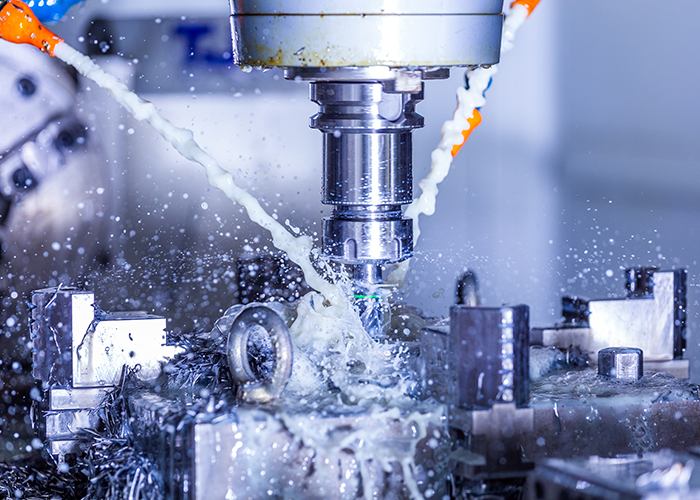
Ultimately, CNC turning and milling represent a mature and sophisticated kind of magic. They are the modern alchemists, not seeking to transform lead into gold, but to transform raw material into perfected, functional form through the application of digital intelligence and mechanical precision. They stand as a testament to a new kind of craftsmanship—one where human creativity is amplified by digital tools, and the artistry lies in the code, the setup, and the profound understanding of how to subtract everything that is not the essential part. In the silent, swift movement of the cutter, we see the future of making: not built up from fragments, but revealed, with exquisite accuracy, from the heart of the material itself.