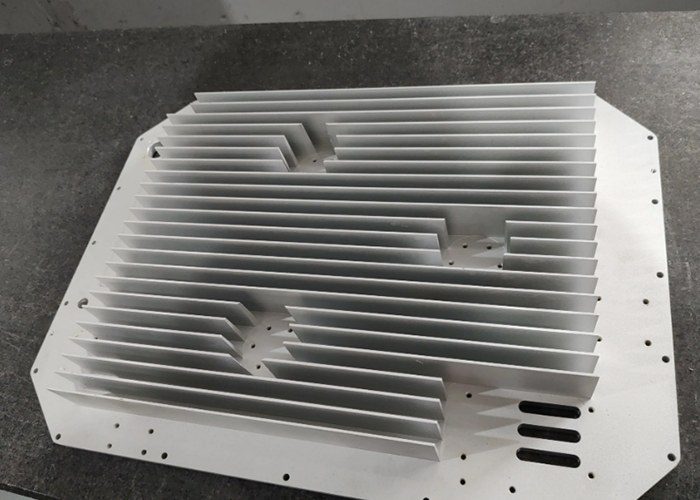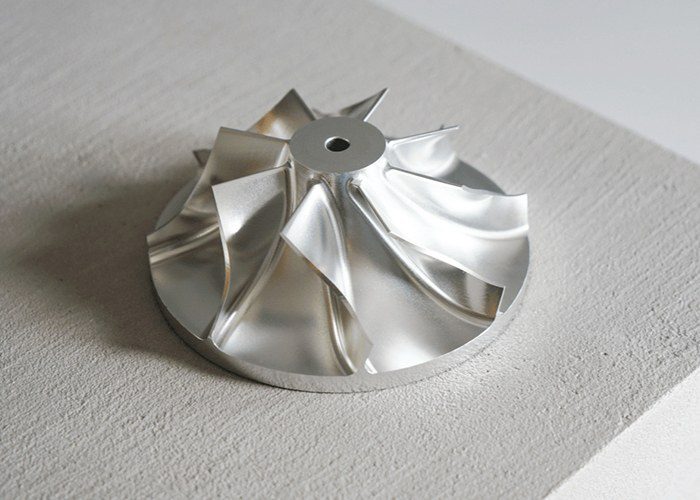
In the heart of modern industry, far from the flashy headlines of Silicon Valley, a quieter, more foundational revolution hums with relentless precision. This is the domain of CNC (Computer Numerical Control) production machining, the unsung architect of the physical world. It is not merely a manufacturing process; it is the critical bridge between digital design and tangible reality, a discipline where raw materials are transformed into intricate, high-tolerance components with a blend of computerized intelligence and mechanical artistry.
At its core, CNC production machining is the automated control of machine tools—mills, lathes, grinders, routers—by a computer executing a pre-programmed sequence of commands. This simple definition belies its profound impact. Before CNC, skilled machinists manually operated levers and wheels, their expertise irreplaceable but inherently limited by human scale and consistency. CNC shattered those barriers. By translating a 3D CAD (Computer-Aided Design) model into a coded language (G-code), the process dictates every movement of the cutting tool with microscopic fidelity. This digital thread—from concept to code to component—ensures that the ten-thousandth part is as flawless as the first, enabling mass production with a level of precision once reserved for master craftsmen working on singular pieces.
The true power of CNC production machining lies in its extraordinary versatility and capability. It is the go-to method for creating parts that demand extreme accuracy, complex geometries, and repeatability across high volumes. From the aluminum unibody of a smartphone, machined to tolerances finer than a human hair, to the complex fuel injection nozzles in a jet engine, drilled with microscopic holes for optimal combustion, CNC is the enabling technology. It works indifferently on a vast material palette: metals like titanium and stainless steel, engineering plastics, composites, and even wood. Multi-axis CNC centers, with tools that rotate and approach the workpiece from five or more directions, can sculpt forms that are impossible with any other method, all while maintaining surface finishes smoother than glass.
This technological prowess makes CNC the backbone of advanced industries. The aerospace industry counts on it for critical lightweight, high-strength components. The medical sector depends on it for sterile, biocompatible implants and surgical instruments. Automotive innovation, in both traditional and electric vehicles, is driven by precisely machined transmission parts, battery housings, and braking components. Even the semiconductor industry, itself a pinnacle of miniaturization, uses ultra-precision CNC to create the wafer-handling equipment. In essence, any product that requires reliability, complexity, and scale is touched by CNC machining.
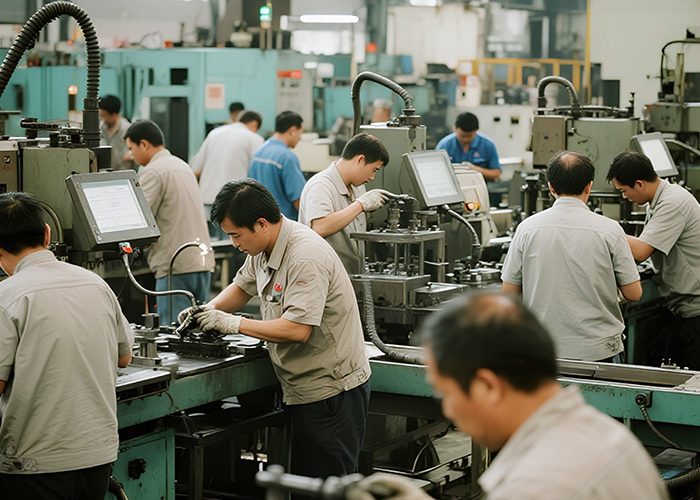
However, to view CNC solely through a lens of cold automation is to miss a crucial element. Modern production machining represents a profound synergy between human intellect and machine execution. The process begins and ends with human expertise: mechanical engineers design the part, CAM (Computer-Aided Manufacturing) programmers strategize the toolpaths, optimizing for speed, tool life, and finish, and machinists set up the machines, select the tools, and monitor the entire process. They are the conductors of this silent symphony, interpreting the data, solving unforeseen problems, and ensuring the orchestra of motors, spindles, and cutters performs in perfect harmony. The role has evolved from manual labor to one of technical oversight, data analysis, and continuous process improvement.
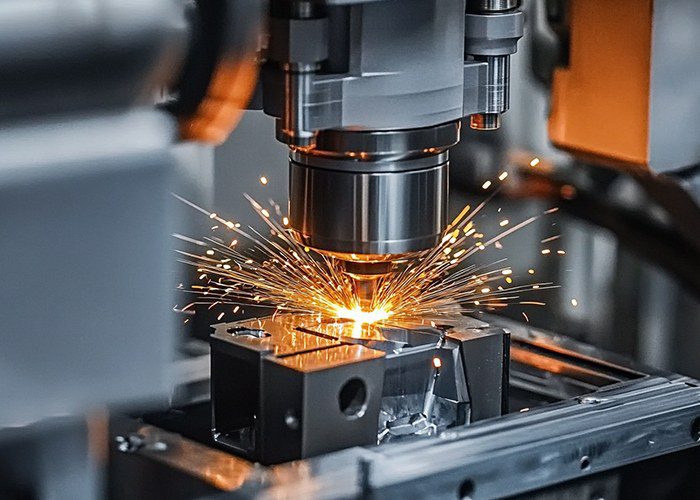
Looking forward, CNC production machining is not static. It is rapidly converging with the trends shaping Industry 4.0. Smart factories integrate CNC machines with IoT sensors, providing real-time data on tool wear, vibration, and temperature, enabling predictive maintenance and minimizing downtime. Adaptive machining technologies allow the machine to “feel” and adjust its cuts in real-time. Furthermore, the rise of additive manufacturing (3D printing) is not a replacement but often a complement; hybrid machines that can both add and subtract material are emerging, offering unprecedented freedom in manufacturing.
In conclusion, CNC production machining is far more than a technical process; it is a fundamental pillar of contemporary civilization. It is the disciplined, precise, and scalable method that turns innovative ideas into reliable, high-performance objects. It empowers other technological leaps, from renewable energy systems to life-saving medical devices. In its computerized cadence and unwavering repeatability, we find the hidden rhythm of progress—a silent symphony playing in factories worldwide, quietly shaping the very fabric of our modern world.