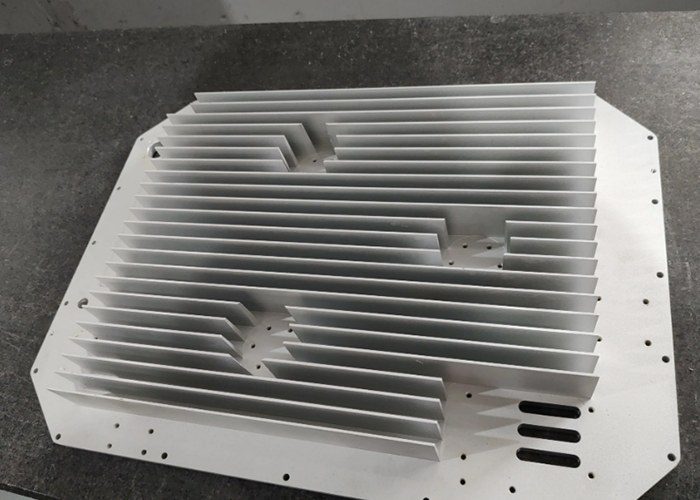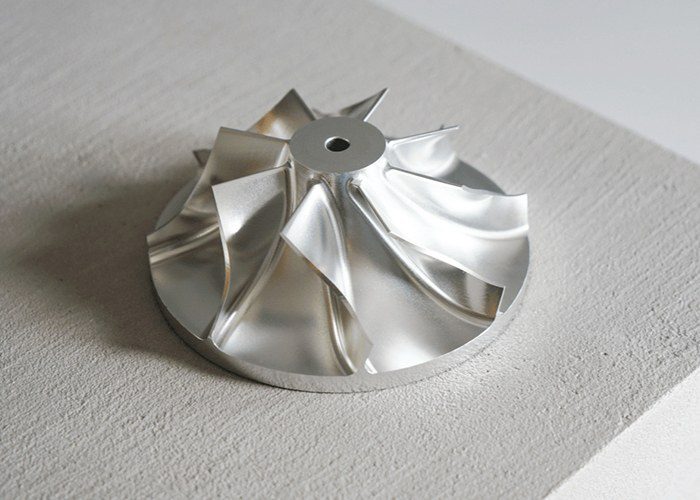
In an era where technological innovation drives every facet of industry, the demand for components manufactured with extreme accuracy has never been greater. High precision CNC (Computer Numerical Control) machining parts represent the pinnacle of subtractive manufacturing, enabling the production of complex components with tolerances measured in microns. From aerospace turbines to life-saving medical implants, these precision-engineered parts are the unsung heroes that make modern engineering possible.
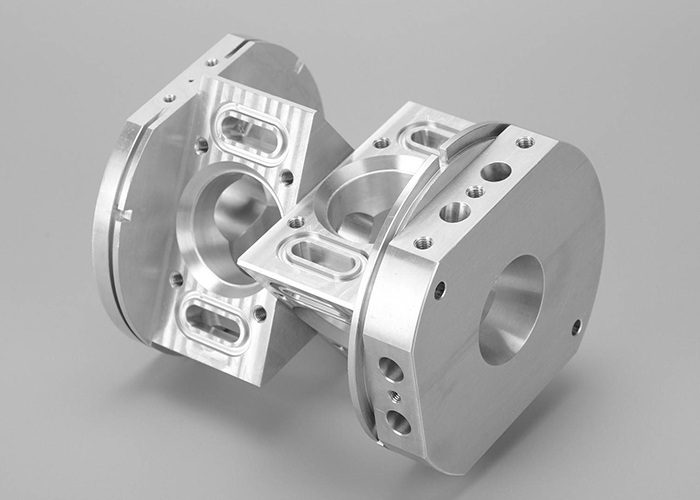
Defining High Precision CNC Machining
Precision CNC machining is a subtractive manufacturing process that uses computer-controlled machines, specialized tools, and advanced software to remove material from a workpiece with extraordinary accuracy. Unlike conventional machining, which focuses on shaping parts to general specifications, precision machining achieves tolerances within the single-digit micron range—often as tight as ±0.01 mm or even ±0.001 mm for ultra-precision applications. For CNC specialists, precision transcends marketing jargon—it is the uncompromising discipline of holding tolerances to 0.01 millimeters or better, cycle after cycle.
The distinction between standard and precision CNC machining is significant. Standard CNC operations typically produce tolerances of approximately 0.12 to 0.2 mm, while precision machining can achieve tolerances as close as 0.0025 mm. Such accuracy is non-negotiable in industries where the slightest margin of error jeopardizes performance, safety, and regulatory standing.
The Pillars of Precision
Achieving micron-level accuracy requires more than high-end equipment. Achieving this demands the meticulous orchestration of three critical pillars: the machine, the tooling, and the environment. Rigidity serves as the cornerstone—a stiff frame effectively absorbs harmful oscillations, curtailing chatter that would jeopardize surface quality and dimensional precision. High-quality cutting tools are equally important, as they resist deflection and ensure the cutting edge remains exactly on the path dictated by the CNC program.
Perhaps the most overlooked factor is thermal stability. Because metals expand and contract with temperature shifts, a workshop without climate control introduces constant dimensional drift. For tight-tolerance parts, a mere few-degree thermal shift can induce expansion beyond allowable limits. This is why leading precision machining facilities operate in temperature-controlled environments.
Geometric Dimensioning and Tolerancing (GD&T) further underpins precision manufacturing. Engineering drawings for high-accuracy components rely on GD&T symbols to define complex geometric relationships—not just linear dimensions, but positions of runout, parallelism, and true position. Mastering these constraints ensures that precision components fit and function correctly within larger assemblies.
The 5-Axis Revolution
One of the most transformative advancements in high precision CNC machining is the evolution from 3-axis to 5-axis technology. Whereas conventional 3‑axis systems are limited to linear motion along the X, Y, and Z axes, 5‑axis machining incorporates two additional rotary axes, thereby enabling full five‑degree‑of‑freedom operation. This capability allows manufacturers to complete complex geometries in a single setup—a major advantage for precision engineering.
Every time a part is moved or re-fixtured, there is a risk of losing a few micrometres of accuracy, as it is nearly impossible to align a part perfectly twice. By eliminating repeated workpiece repositioning, 5-axis machining fundamentally prevents cumulative positioning errors, achieving positioning accuracy stable within 0.005 mm. The results speak for themselves: in aero-engine blade manufacturing, 5-axis machining achieves a 99% pass rate compared to 85% with 3-axis technology.
Industries Transformed by Precision
High precision CNC machining parts are indispensable across a diverse range of industries. In aerospace and defense, they are used to produce turbine blades, satellite components, gyroscopes, and fuel system parts. These components must withstand extreme temperatures, pressures, and stresses, making precision non-negotiable.
The medical device industry represents another critical application. From surgical instruments and orthopedic implants to microfluidic devices and neurovascular components, precision machining delivers the micron-level accuracy and biocompatible material compatibility that patient safety demands. As medical technology trends toward miniaturization and minimally invasive procedures, the importance of high-precision machining continues to grow.
The automotive sector relies on precision CNC machining for engine components, transmission parts, fuel injectors, and chassis elements. The technology’s efficiency in handling complex geometries and high-volume production ensures that automotive components are both cost-effective and of superior quality. Electronics, semiconductor manufacturing, optics, and the oil and gas industry similarly depend on precision-machined components to meet stringent quality standards.
The Future: Industry 4.0 and Beyond
The precision machining landscape is being reshaped by Industry 4.0 technologies. In AI-driven machining, real-time sensor data enables closed-loop adaptive control over feeds, speeds, and toolpaths, instantaneously compensating for variations in vibration, load, and temperature. This dynamic response delivers enhanced surface consistency, markedly reduces tool wear rates, and minimizes disruptive production interruptions. Digital twins—living digital models that mirror the entire machining process—are becoming the production backbone, enabling virtual commissioning and clash detection long before the first chip is cut.
The global market for precision machining reflects this momentum. Valued at approximately USD 126.99 billion in 2025, it is projected to reach USD 224.13 billion by 2034. CNC machining accounts for nearly 75-80% of total operations, reflecting strong automation and digital manufacturing adoption.
High precision CNC machining parts are more than manufactured components—they are enablers of progress. As technology continues to advance, the pursuit of ever-greater accuracy, efficiency, and intelligence in CNC machining will remain at the heart of industrial innovation, shaping the products and possibilities of tomorrow.