
In an era where uniqueness and precision dominate manufacturing demands, custom CNC machining stands as a testament to technical advancement. From aerospace components that must endure extreme conditions to medical implants that demand flawless surface finishes, custom made CNC machined parts have become indispensable across virtually every industry. This article explores what makes these components so vital, how they are produced, and why they represent the future of precision manufacturing.
What Are Custom CNC Machined Parts?
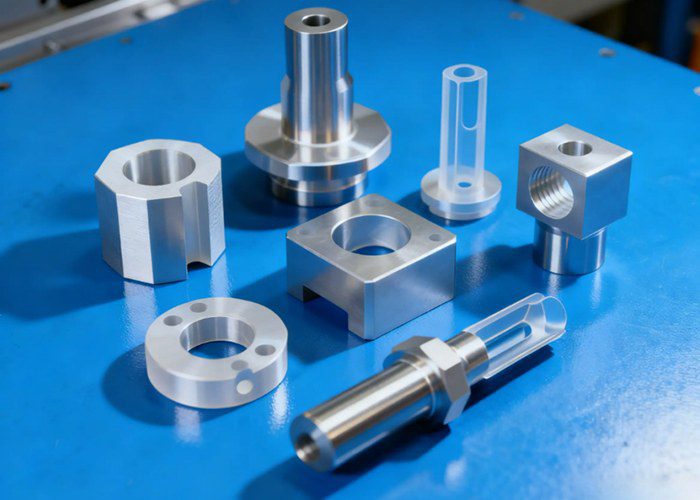
Custom CNC machined parts are components manufactured through computer numerical control processes, where pre-programmed software dictates the movement of factory tools and machinery. Unlike mass-produced standardized parts, these components are tailored exactly to a client’s specifications, extending to dimensions, shapes, materials, and finishes. The process is subtractive, meaning material is removed from a solid block—or billet—through precision cutting, milling, turning, drilling, or grinding until the final shape emerges.
The journey begins with a CAD (Computer-Aided Design) model, which is translated into a CAM (Computer-Aided Manufacturing) program that directs the CNC machine. This digital workflow ensures that every part perfectly matches the original design, regardless of complexity. Advanced simulation tools now allow engineers to visualize potential issues before production begins, significantly reducing costly errors and material waste.
Unmatched Advantages
The primary benefit of custom CNC machining is its ability to produce parts that meet exacting specifications. CNC machines can achieve extremely tight tolerances—often down to microns—ensuring that each component performs reliably in its intended application. This level of precision is critical in industries like aerospace, medical, and automotive, where even minor deviations can impact performance and safety.
Material versatility is another standout advantage. CNC machining works with an extensive range of materials, from aluminum, stainless steel, and titanium to engineering plastics like PEEK, nylon, and ABS. This flexibility allows engineers to select materials with specific properties—strength, corrosion resistance, thermal stability, or biocompatibility—to meet functional, mechanical, or aesthetic requirements.
The technology also excels at producing complex geometries. Multi-axis CNC machines—including 3, 4, and 5-axis systems—can create intricate shapes, curves, and undercuts that would be challenging or impossible using traditional methods. Modern turning centers can produce parts with contours, grooves, and asymmetric features in a single automated process.
From Prototyping to Production
Custom CNC machining bridges the gap between prototyping and full-scale production. For product developers, creating a machined prototype allows design validation before committing to expensive tooling or molds. Small-batch CNC machining delivers precise parts in quantities ranging from 10 to 1000 units without costly tooling or excess stock, making it ideal for design validation, pilot runs, and specialized components.
The on-demand manufacturing model has further revolutionized the industry. Instead of building inventory based on forecasts, parts are made when they are ordered. This reduces inventory investment, enables low-minimum-quantity orders, and allows design changes without scrapping committed production batches. For custom CNC machined parts, enclosures, brackets, and other engineered components, this model offers faster iteration and better responsiveness to real demand.
Industry Applications
The applicability of custom CNC machining spans virtually every sector. In aerospace, it produces lightweight, high-strength components for aircraft—engine parts, landing gear, and structural components that must withstand extreme pressure and temperature. The automotive industry relies on CNC machining for precision parts like engine blocks, transmission components, and suspension systems. Medical device manufacturers use it to create surgical instruments, orthopedic implants, and prosthetics with intricate details and precise tolerances. Consumer electronics, robotics, and industrial equipment all depend on custom machined components for enclosures, heat sinks, sensor housings, and gear systems.
Quality Assurance
Quality control is paramount in custom CNC machining. Modern facilities employ rigorous inspection processes, including First Article Inspection (FAI), Coordinate Measuring Machine (CMM) testing, and dimensional inspection reports. In-process quality checks and automated optical inspection systems help detect defects early, minimizing waste and ensuring consistency. Many manufacturers hold certifications such as ISO 9001, AS9100D, and IATF 16949, demonstrating their commitment to quality and traceability.
The Future of Custom CNC Machining
The custom machining services market continues to grow robustly, valued at USD 26.84 billion in 2025 and projected to reach USD 39.45 billion by 2032. Emerging trends include increased automation and smart factory integration, the rise of five-axis machining, advanced software for toolpath optimization, and the integration of additive manufacturing with CNC processes. Sustainability is also becoming a core focus, with manufacturers adopting energy-efficient components, eco-friendly coolants, and material optimization strategies to reduce waste.
Conclusion
Custom made CNC machined parts represent the intersection of precision engineering, advanced manufacturing, and responsive supply chain practices. They enable innovation by turning ambitious designs into tangible, high-performance components. Whether for a one-off prototype, a small-batch production run, or a critical aerospace component, custom CNC machining delivers the accuracy, consistency, and material versatility that modern industry demands. As technology continues to evolve, these precision components will remain the quiet heroes behind exceptional performance across every sector of manufacturing.


