In an era defined by digital transformation, artificial intelligence, and space exploration, there exists a quiet, unassuming workhorse that makes it all possible: the high precision CNC machined part. While software and algorithms grab headlines, it is the physical components—crafted with tolerances measured in microns—that translate digital concepts into tangible reality. These parts are the unseen backbone of modern industry, enabling everything from the safe landing of a Mars rover to the stable beating of a human heart via a pacemaker.
The Definition of Precision
To understand the significance of high precision CNC (Computer Numerical Control) machining, one must first appreciate the scale of its accuracy. While conventional machining might operate within tolerances of a thousandth of an inch, high precision machining delves into the realm of microns—where a single micron is one-millionth of a meter. At this level of precision, environmental factors such as temperature fluctuation, machine vibration, and even the humidity of the workshop floor can dramatically alter the outcome of a finished part.
The process involves subtractive manufacturing, where raw material—typically metal or high-grade engineering plastic—is systematically removed by cutting tools under computer guidance. However, the sophistication lies not in the removal of material, but in the orchestration of the removal. Multi-axis CNC machines, capable of moving tools along five or more axes simultaneously, can create complex geometries that were once deemed impossible. These machines, guided by G-code generated from CAD/CAM software, operate with a level of consistency that human hands could never replicate.
The Core Components of Precision
Achieving such extraordinary accuracy is not the result of a single factor, but a synthesis of superior engineering. The machine tool itself is often constructed from polymer concrete or heavy cast iron to dampen vibrations. The spindles, which hold the cutting tools, rotate at speeds exceeding 40,000 RPM, and are often cooled by internal refrigerants to prevent thermal expansion.
The cutting tools themselves are equally sophisticated. Often made from solid carbide or polycrystalline diamond (PCD), they are engineered to withstand immense heat and friction while maintaining a sharp edge. Furthermore, the role of the workpiece holder, or fixture, is critical. In high precision work, even the force used to clamp a part can deform it, ruining the final tolerance. As such, specialized workholding solutions are often custom-designed for each specific part.
Perhaps the most unsung hero of the process is the coolant system. In high-precision machining, cutting fluid is essential not merely for heat dissipation, but for reducing friction at the cutting interface, flushing away fine swarf that could compromise surface integrity, and maintaining thermal equilibrium to preserve strict dimensional tolerances.
Applications Across Critical Sectors
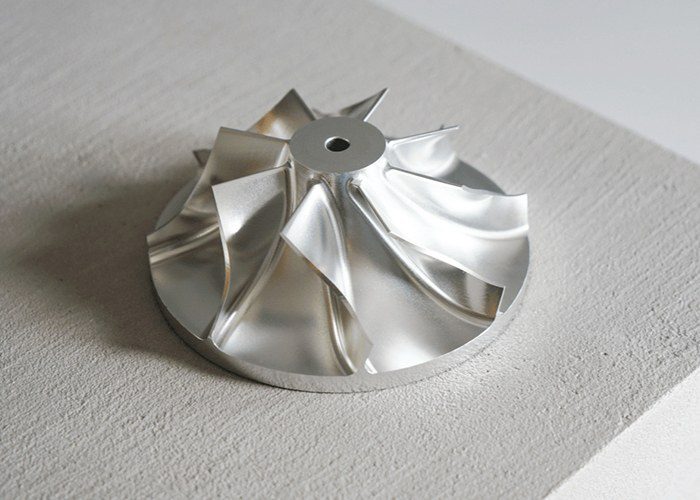
The necessity of these parts extends into nearly every facet of high-stakes engineering. In the aerospace sector, the demand for “critical” parts—those whose failure would result in catastrophic loss—requires the highest levels of scrutiny. Turbine blades, structural airframe components, and landing gear fittings must be machined to exacting standards to withstand extreme G-forces and temperature variances.
In the medical field, high precision machining is a matter of life and death. Orthopedic implants, such as knee and hip replacements, must be machined to match a patient’s anatomy precisely. Surgical instruments, robotic surgical arms, and the housings for implantable defibrillators all require a surface finish so smooth that it resists bacterial adhesion.
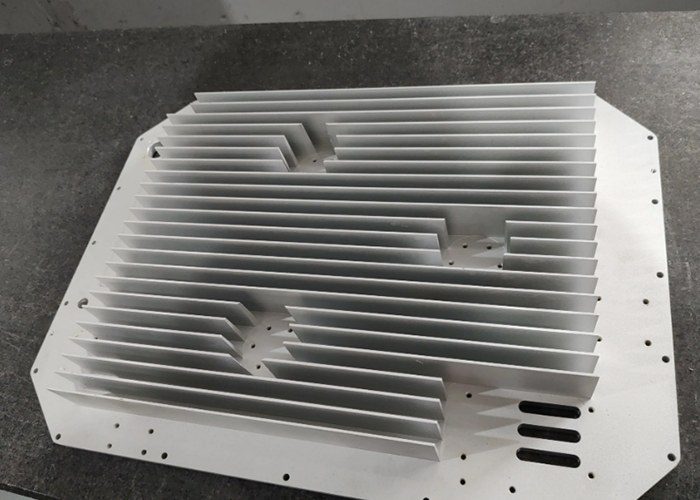
The automotive industry, particularly with the shift toward electric vehicles (EVs), has renewed its reliance on precision machining. The complex heat sinks required for power electronics, the intricate casings for electric motors, and the high-pressure fuel injectors for internal combustion engines all rely on this process. Similarly, the energy sector relies on precision machined components for oil drilling and the intricate valves and rotors used in hydroelectric and nuclear power generation.
The Future: The Convergence of AI and Automation
As we look toward the future, the field of high precision machining is undergoing a quiet revolution. The integration of Artificial Intelligence (AI) and the Internet of Things (IoT) is turning machines from passive tools into active sensors. Modern machines are equipped with probes that can measure a part while it is still on the machine, allowing for “adaptive machining.” If a tool wears down, the machine adjusts its path in real-time to compensate, ensuring that the first part off the line is as perfect as the ten-thousandth.
Furthermore, the advent of “lights-out manufacturing”—where factories operate without human intervention—is becoming a reality. Automated pallet systems and robotic loading arms allow machines to run 24/7. This is complemented by hybrid manufacturing, where 3D printing (additive manufacturing) is used to create a near-net shape, which is then finished to high precision using conventional CNC methods, combining the design freedom of printing with the accuracy of machining.
Quality Assurance and Metrology
However, the process does not end with the cutting of metal. Quality assurance in high precision machining is a discipline in its own right. The finished part is subjected to rigorous inspection using coordinate measuring machines (CMMs), laser scanners, and surface profilometers. In high-stakes industries, traceability is key; every cut and measurement is logged, creating a digital twin of the manufacturing process. This commitment to documentation ensures that if a part fails, engineers can trace back to the exact batch of material and the specific tool used at that moment.
Conclusion
High precision CNC machined parts represent the intersection of art and engineering. They are the silent soldiers in the machinery of progress, often overlooked but absolutely essential. As we push the boundaries of physics and engineering—attempting to land on Mars, cure terminal diseases, or transition to sustainable energy—the need for parts that can withstand the harshest environments while maintaining atomic-level accuracy will only grow. The craftsmen of the 21st century may not wield hammers and anvils; they wield digital code and carbide end mills, but their goal remains the same: to create a flawless object from a raw block of metal, proving that precision is not just a measurement, but a mindset.