
In an era defined by mass production and interchangeable parts, the quiet revolution of custom machined metal components often goes unnoticed. Yet, these precisely engineered pieces are the unsung heroes of virtually every advanced industry—from aerospace and medical devices to robotics, energy, and automotive racing. Unlike off-the-shelf standard fasteners or generic brackets, custom machined components are born from a specific need: a unique geometry, an exotic alloy, a microscopic tolerance, or a surface finish that must withstand extreme fatigue. They represent the intersection of art and arithmetic, where a block of raw metal is transformed into a functional masterpiece through subtractive manufacturing. This article explores the processes, materials, advantages, and future trajectories of custom machined metal parts, revealing why they remain indispensable in a world increasingly tempted by additive printing.
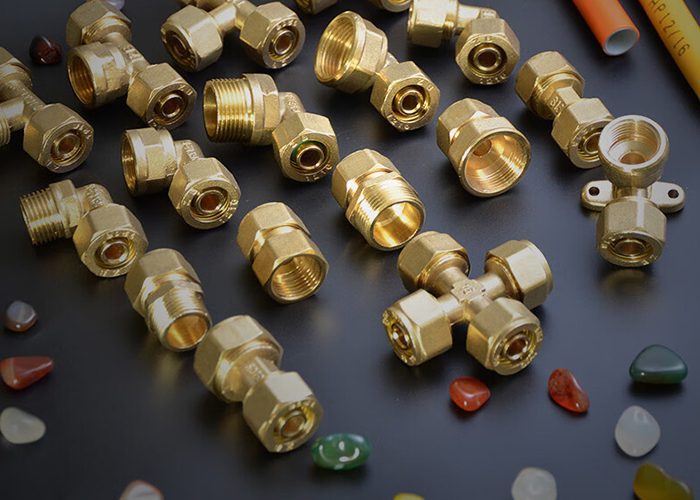
The Craft and Science of Subtractive Manufacturing
At its core, custom machining is the systematic removal of material to achieve a desired shape. The modern machine shop is a symphony of Computer Numerical Control (CNC) mills, lathes, grinders, and electrical discharge machines (EDM), all guided by CAD/CAM software that translates a digital blueprint into toolpaths accurate to within a few microns. Turning processes spin the workpiece against a stationary cutting tool, ideal for cylindrical shafts and bushings. Milling, conversely, rotates multi‑edged cutters to carve complex pockets, slots, and contoured surfaces. For ultra‑hard materials or intricate cavities, EDM uses electrical sparks to erode metal with no mechanical force, preserving delicate details. What distinguishes custom work from production runs is agility: setups are reconfigured, tooling is selected for each unique job, and first‑article inspections are meticulous. This flexibility enables batch sizes ranging from a single prototype to several hundred pieces, each mirroring the original with unwavering consistency.
Materials That Define Performance
The choice of raw stock is as critical as the machining itself. Custom components are rarely made from plain carbon steel; instead, engineers specify alloys tailored to their environment. Stainless steels (303, 316, 17‑4 PH) offer corrosion resistance and strength for marine and food‑processing applications. With their superior strength-to-weight ratio, Titanium Grades 5 and 23 set the industry standard for both aerospace fasteners and critical orthopedic implant applications. Inconel and Hastelloy, superalloys that retain toughness at red‑heat temperatures, dominate turbine blades and chemical reactor internals. Aluminum 7075 and 6061 provide lightweight machinability for automotive and drone frames. Even copper alloys and brass are chosen for their electrical conductivity and antimicrobial properties. Each material imposes different cutting speeds, feed rates, and coolant strategies; a skilled machinist knows that the same end mill that glides through aluminum will dull instantly in hardened tool steel. Thus, material science and machining knowledge are inseparable partners in delivering a component that not only fits but also survives its service life.
The Competitive Edge of Customization
Why invest in custom machining when standard parts are cheaper and readily available? The answer lies in optimisation. Off‑the‑shelf components force designers to compromise – a bracket may be too heavy, a gear tooth profile suboptimal, or a housing lacks the necessary mounting holes. Custom machining liberates engineering creativity. It allows for topological optimisation, where material is placed only where stresses are highest, reducing weight without sacrificing safety. It enables integration: a single multi‑functional part can replace an assembly of several stamped and welded pieces, slashing inventory, assembly time, and failure points. Tolerances of ±0.005 mm ensure that moving parts mesh with zero play, increasing efficiency and reducing vibration. Moreover, custom machining excels in low‑volume production, where the cost of injection molds or casting dies would be prohibitive. For R&D departments, the ability to iterate rapidly – machining a revised prototype overnight – accelerates innovation cycles. In essence, custom parts are not a luxury; they are a strategic investment in performance, reliability, and product distinctiveness.
Diverse Applications Across Industries
The footprint of custom machined metal components is truly ubiquitous. In aerospace, landing gear struts, hydraulic actuators, and engine mounts are machined from forgings with stringent traceability, because a single flaw can have catastrophic consequences. In medical technology, surgical instruments, spinal rods, and dental implant abutments are custom‑finished for each patient, often requiring mirror‑like surfaces to promote osseointegration. The semiconductor industry relies on ultra‑clean vacuum chambers and wafer handling end‑effectors made from low‑outgassing aluminium or stainless steel. Motorsport teams machine gearbox casings and suspension uprights from billet aluminium to shave every gram while maintaining torsional rigidity. Even everyday consumer products—high‑end audio turntables, camera lenses, and luxury watch cases—owe their tactile perfection to precision machining. Each application demands not only geometric accuracy but also surface integrity: compressive residual stresses, controlled roughness, and absence of micro‑cracks. This breadth of use underscores the versatility of custom machining as a manufacturing pillar.
Quality Assurance and the Human Element
While CNC machines operate autonomously, the human factor remains paramount. Programming, tool selection, fixturing, and in‑process gauging require seasoned judgment. Modern shops employ coordinate measuring machines (CMMs), laser interferometers, and surface profilometers to verify every critical dimension. Statistical process control (SPC) tracks trends in real time, flagging any drift before a part goes out of tolerance. Yet, beyond the instruments, it is the machinist’s ear that detects a dull tool, the inspector’s eye that spots a faint scratch, and the engineer’s intuition that questions a drawing’s ambiguity. Custom machining is a high‑stakes dialogue between designer, programmer, operator, and quality engineer. This collaborative ecosystem ensures that the final component not only meets the blueprint but also embodies the unspoken requirements of manufacturability and cost‑effectiveness. As ISO 9001 and AS9100 certifications become baseline, traceability from raw melt to final shipment is non‑negotiable, especially in regulated sectors.
The Future: Hybrid and Smart Machining
Looking ahead, custom metal component manufacturing is evolving at breakneck speed. Hybrid machines that combine additive deposition with subtractive finishing are emerging, allowing near‑net shapes to be built layer‑by‑layer and then milled to final precision—saving material and enabling internal cooling channels impossible by drilling alone. Digital twins, where a virtual replica of the machine and workpiece simulates cutting forces and thermal expansion, help programmers optimise paths before a chip is ever cut. Artificial intelligence algorithms are beginning to suggest feed‑rate adjustments based on real‑time spindle loads, extending tool life and surface quality. Meanwhile, sustainability pressures are driving the adoption of minimum quantity lubrication (MQL) and recycling of metal swarf. The custom shop of 2030 will be less a noise‑filled factory and more a data‑driven clean room, yet the fundamental mission remains unchanged: to deliver a single, perfect piece of metal that enables something greater—a safer aircraft, a more precise scalpel, a cleaner engine, or simply a beautifully functioning mechanism. Custom machined metal components are not obsolete; they are more relevant than ever, because in a world of commoditisation, the unique still commands a premium.
Conclusion
From the first manual lathes of the Industrial Revolution to today’s five‑axis machining centres, the craft of creating custom metal parts has continually adapted while preserving its essence: solving problems through material removal. These components are the silent enablers of progress, embodying the specific demands of engineers who refuse to settle for “good enough.” As industries push boundaries—higher temperatures, lighter structures, longer lifetimes—the demand for bespoke machined solutions will only intensify. The next time you board an aircraft, undergo a medical procedure, or simply admire a fine mechanical watch, remember that inside lies a constellation of custom‑machined metal components, each one a testament to human ingenuity and the relentless pursuit of precision. In a throwaway age, they stand as durable monuments to quality, crafted not for the many, but precisely for the one.


