
In an era where product differentiation often hinges on performance, reliability, and aesthetic quality, custom CNC milled metal parts have emerged as a cornerstone of modern manufacturing. From the sleek chassis of a consumer electronics device to the critical load-bearing brackets of an aerospace vehicle, these precision-engineered components enable industries to push the boundaries of what is physically possible. Computer Numerical Control (CNC) milling represents a subtractive manufacturing process that transforms solid blocks of metal—known as billets—into intricately detailed components with micron-level accuracy. This article explores the technology, materials, applications, and future trends that make custom CNC milled metal parts indispensable across the global industrial landscape.
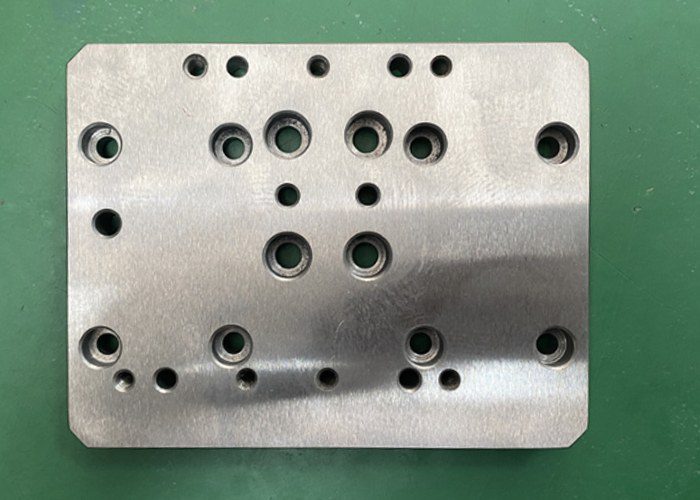
The Technology Behind the Precision
At its core, CNC milling is a computer-controlled cutting process. A rotating spindle head with cutting tools systematically removes material from a stationary workpiece, guided by instructions generated from computer-aided design (CAD) and computer-aided manufacturing (CAM) systems. Modern CNC milling machines are available in 3-axis, 4-axis, and 5-axis configurations, with 5-axis machining offering the ability to produce highly complex geometries in a single setup while reducing lead times and eliminating fixturing errors.
The precision achievable through CNC milling is remarkable. Standard CNC milling can hold tolerances as tight as ±0.02mm, while advanced 5-axis machining centers can achieve ±0.005mm. This pinpoint accuracy ensures that even the most complex geometries adhere perfectly to their digital blueprints. Surface finishes can range from Ra 1.6µm in the as-machined state to as smooth as Ra 0.4µm with grinding, making these components suitable for applications where friction, wear, and sealing integrity are critical.
Materials: The Foundation of Performance
One of the greatest strengths of custom CNC milling is its compatibility with a vast array of metals. CNC mills work exceptionally well with aluminum, brass, bronze, copper, steel, stainless steel, titanium, and zinc alloys. Each material brings distinct properties to the finished part.
Aluminum—particularly aerospace grades such as 6061-T6, 7075-T6, and 2024—is prized for its excellent strength-to-weight ratio, corrosion resistance, and outstanding machinability. Stainless steels (including 303, 304, and 316) deliver exceptional strength and long-term durability in demanding environments. Titanium, while notoriously hard on cutting tools, offers an unparalleled combination of strength, light weight, and biocompatibility. This material versatility allows engineers to select the optimal metal for each application’s specific performance requirements.
Key Advantages of Custom CNC Milled Parts
The benefits of choosing custom CNC milled metal parts extend far beyond precision. First and foremost is design freedom. When producing custom components, clients have the freedom to define dimensions, tolerances, and materials that suit their exact requirements. This flexibility allows engineers to experiment with new forms, optimize weight, or integrate multiple functions into a single component.
Consistency is another hallmark of CNC milling. The inherent automation of CNC machinery facilitates highly accurate motion control while virtually removing the risk of human error. As a result, manufactured components exhibit exceptional fidelity to design parameters and minimal dimensional scatter. Such repeatability ensures predictable functionality during both testing and assembly, and proves particularly critical when transitioning from initial prototyping to mass production exceeding 100,000 units.
Material integrity also sets CNC milled parts apart. Since billets are solid metal with a homogenous composition, there are no weak points caused by casting voids or welds. The resulting components offer superior mechanical strength and durability compared to parts produced through alternative methods.
Applications Across Critical Industries
Custom CNC milled metal parts find applications across virtually every sector of modern industry. In aerospace, they are used for structural components, engine mounts, fuselage frames, and precision brackets. These applications demand the tightest tolerances and the highest levels of quality assurance, often requiring certifications such as AS9100D.
The automotive industry relies on CNC-milled components for everything from high-performance engine parts to electric vehicle battery enclosures. In the medical field, CNC machining produces surgical instruments, implant components, and custom surgical fittings using biocompatible metals. The robotics industry uses CNC-milled aluminum and steel parts for frames, arms, gear housings, and end-effectors—components that must withstand repetitive, high-precision motions.
Even consumer electronics, lighting, and drone manufacturing depend on precision-machined aluminum components. As one industry insider sums it up, “Aluminum is everywhere—from the laptop in your bag to the EV in your driveway.
The Future of Custom CNC Milling
The custom CNC machining market continues to grow rapidly. Valued at approximately USD 30 billion in 2025, it is projected to reach nearly USD 48 billion by 2032, driven by demand across aerospace, automotive, medical, and robotics sectors.
Several trends are reshaping the industry. Artificial intelligence is moving from experimental pilots to integral daily machine control, using real-time sensor feedback to adjust feeds, speeds, and toolpaths automatically. Digital twins—virtual replicas of the entire machining process—are enabling manufacturers to simulate, validate, and optimize production before the first chip is cut. Hybrid manufacturing, which combines metal additive deposition with CNC cutting, is gaining traction as a way to reduce material waste and produce geometries impossible to achieve through conventional methods alone.
Sustainability is also becoming a core metric, with material recycling—particularly of titanium and nickel alloys—becoming standard practice. Large-format CNC machining now enables production of parts up to 34 feet in length, opening new possibilities for heavy equipment, energy generation, and infrastructure projects.
Conclusion
Custom CNC milled metal parts represent the convergence of digital precision, material science, and manufacturing excellence. They enable engineers to transform digital designs into physical reality with accuracy measured in microns, consistency measured in thousands of parts, and performance measured in years of reliable service. As AI, digital twins, and hybrid technologies continue to evolve, the capabilities of CNC milling will only expand—ensuring that this foundational manufacturing process remains at the heart of industrial innovation for decades to come.


