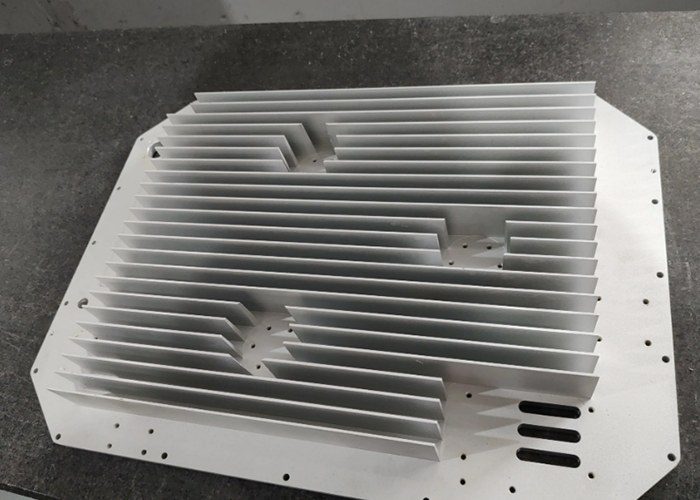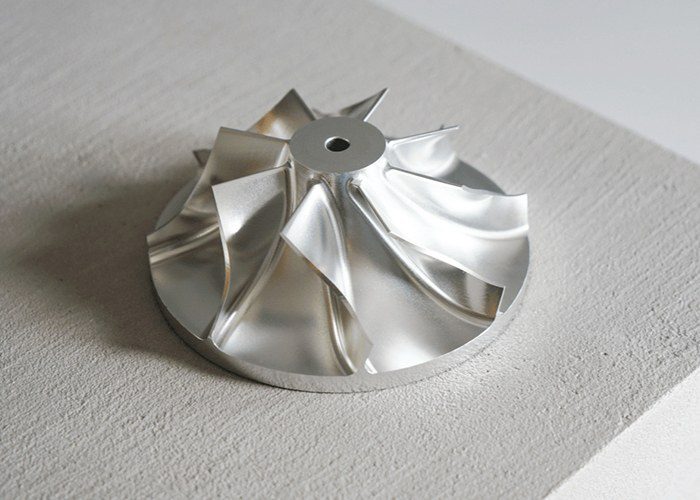
Drilling is a fundamental hole-making process that primarily removes material through the rotary cutting motion of a drill bit. Common equipment includes drilling machines (such as bench drills, upright drills, and radial drills), lathes, boring machines, or milling machines. It achieves an accuracy of IT13 to IT11 and a surface roughness Ra of 50–12.5 μm. Consequently, it is often employed for applications with lower precision requirements, such as bolt holes and lubricant passage holes. The process is characterized by challenges in chip evacuation and a tendency to mar the surface, making it frequently used as a preliminary operation for high-precision hole machining.
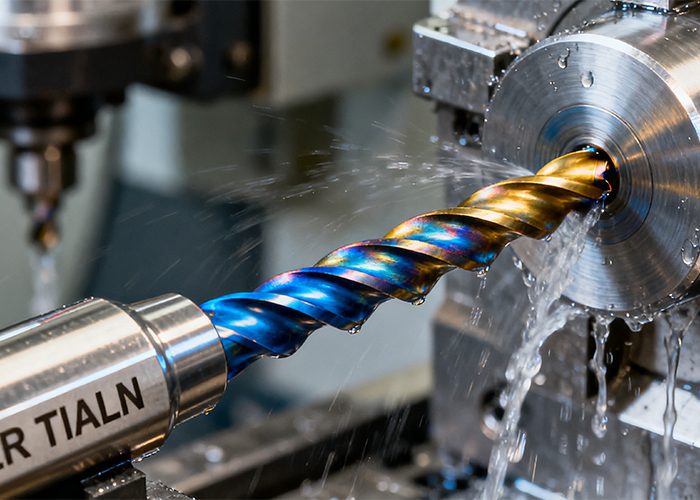
Introduction
The drilling motion consists primarily of the rotary cutting movement of the drill bit, resulting in relatively low machining accuracy.
Processing Method
The machining process of creating holes in solid material using a drill bit is termed drilling. As one of the basic hole-making methods, drilling is typically performed on drilling machines or lathes, but can also be done on boring or milling machines.
The drilling machine is the primary equipment for hole-making. On drilling machines, twist drills are predominantly used. When drilling on a lathe, the workpiece rotates while the tool performs the feed motion. In contrast, on a drilling machine, the workpiece remains stationary while the tool rotates as the primary cutting motion and simultaneously moves axially for feeding. Therefore, drilling machines are suitable for machining holes in workpieces without a symmetrical axis of rotation, especially for multi-hole machining, such as on parts like casings and frames. Besides drilling, operations like core drilling, reaming, spot facing, and tapping can also be performed on drilling machines, as illustrated in Figure 1 below.
Process Characteristics of Drilling
- The two cutting edges of a twist drill are symmetrically distributed on both sides of the axis. During drilling, the radial cutting forces balance each other, making the drill less prone to deflection compared to single-point tools.
- The depth of cut during drilling reaches half the hole diameter, resulting in a high metal removal rate.
- The drilling process is semi-enclosed. The drill bit extends into the workpiece hole and occupies significant space. The chips are wide and often spiral-shaped, while the flutes of the twist drill have limited capacity. Consequently, chip evacuation is difficult, and the machined hole wall is frequently scratched due to chip friction, leading to a relatively high surface roughness Ra value.
- Cooling conditions during drilling are poor, and cutting temperatures are high. This limits cutting speeds and hinders productivity improvement.
- Drilling is a roughing operation. Its economical machining accuracy ranges from IT13 to IT11, with a surface roughness of Ra 50–12.5 μm. It is generally used for holes with low requirements (e.g., bolt clearance holes, lubricant passage holes) or as a pre-processing step for high-precision holes.
Drilling Tools
Center Drill
Center drills are used for machining center holes on the end faces of shaft-type parts. They come in three types, as shown in the figure below. For center holes with diameters d = 1–10 mm, Type A is typically used, suitable for workpieces not requiring multiple setups or where the center hole is not retained. For workpieces with long process sequences or higher accuracy requirements, Type B is generally employed to protect the 60° centering cone from damage, making it suitable for workpieces requiring multiple installations. The R-type center drill reduces the contact area between the center hole and the center, minimizing friction and improving positioning accuracy.
Twist Drill
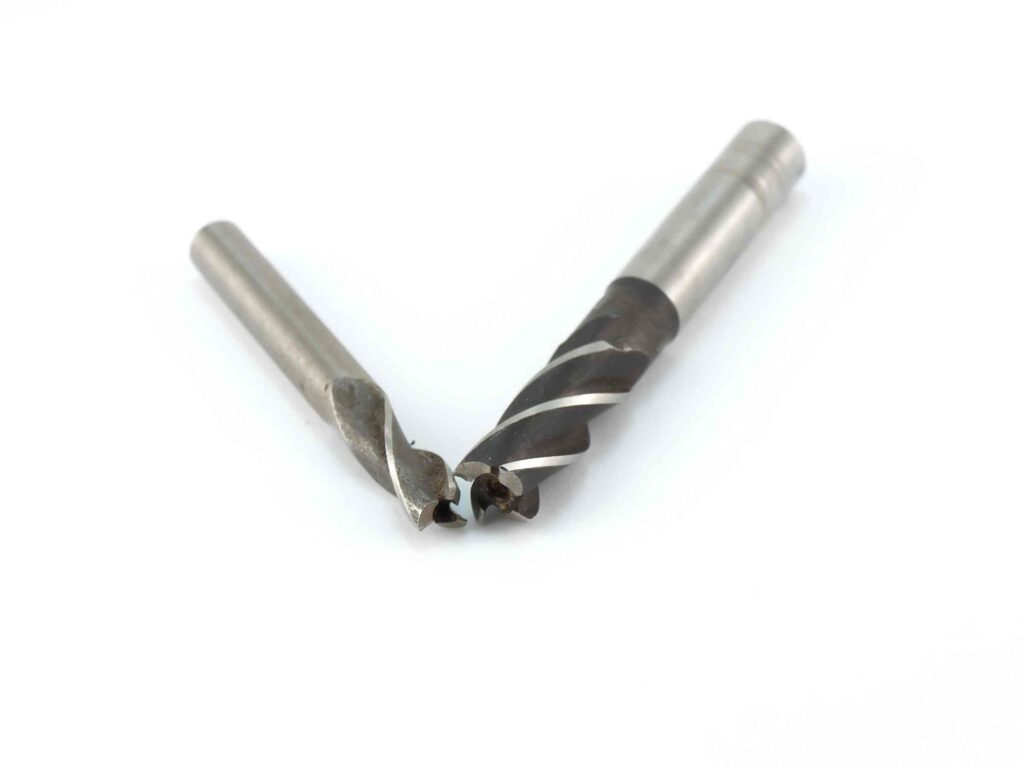
The structure of a standard twist drill. Twist drills are primarily used for drilling holes in workpieces, and their structure follows relevant standards. A standard twist drill typically consists of the body, shank, and neck, as shown in Figure 1-41.
- Body (Working Part): The body features two symmetrical helical flutes for chip accommodation, evacuation, and cutting fluid delivery. It includes the cutting part and the guide part.
- The front end is the cutting part, responsible for the main cutting action. A twist drill has two symmetrically distributed cutting parts on either side of its axis, as shown in Figure 2. The two helical flute surfaces are the rakes faces. The two curved surfaces at the drill’s tip are the flank faces. The intersection line of the two flank faces is the chisel edge. The intersection line between a rake face and a flank face is a main cutting edge.
- The rear portion is the guide part, which acts as a backup to the cutting part and guides the drill during feed. It includes the minor cutting edges, the first minor flank (margin), the second minor flank, and the helical flutes.
- Shank: The shank is the clamping part of the twist drill, serving both for connection and torque transmission during cutting. Shanks are either tapered (Morse taper) or straight. Drills with diameters larger than Φ12 mm usually have tapered shanks, while smaller drills have straight shanks.
- Neck: This is the transition section between the body and the shank. It acts as a grinding relief during the drill’s manufacturing process. Typically, the drill diameter and material grade are marked here. For manufacturing convenience, small-diameter straight-shank drills often lack a distinct neck.
Core Drill / Boring Drill
The machining method of enlarging a pre-existing hole in a workpiece using a tool like a core drill is called core drilling or boring. It is a further machining step performed on holes that have been previously drilled, cast, or forged, aiming to increase the diameter and improve accuracy. For small holes requiring high precision and smooth surfaces, core drilling is often used as a semi-finishing operation after drilling. Core drills come in various types, as shown in Figure 3, including solid taper-shank core drills, inserted-blade sleeve-type core drills, and carbide indexable core drills.
The machining allowance for core drilling is much smaller than for drilling. It can serve as a pre-processing step before reaming or as the final operation for holes with moderate accuracy requirements. As shown in Figure 4, core drills possess the following structural characteristics:
- Good Guidance: Similar to twist drills but with shallower and narrower flutes, core drills often have 3 or 4 cutting edges on the body. This increases productivity and the number of cutting edges, thereby enhancing the tool’s guiding and finishing action during operation, improving machining quality and ensuring more stable cutting.
- High Rigidity: Since the depth of cut in core drilling is small, ap = (D-d)/2, and chip volume is low, the flutes can be made shallow and narrow. This allows for a substantially thicker web, greatly increasing the tool’s rigidity.
- Favorable Cutting Conditions: The cutting edges of a core drill do not need to extend to the center, eliminating the chisel edge and its adverse effects. Axial force is reduced, allowing for higher feed rates and increased productivity. Additionally, lower chip volume facilitates smoother chip evacuation, reducing the risk of scratching the machined surface.
Due to these reasons, core drilling achieves higher accuracy than drilling, with an economical machining accuracy of IT11 to IT10 and a surface roughness of Ra 6.3–3.2 μm. It can also partially correct axis deviation of the original hole, resulting in better geometric accuracy.
Application
Hole drilling is frequently required on various machine parts, making drilling a widely used process. However, due to its relatively low accuracy (generally below IT10), high surface roughness (Ra > 12.5 μm), and relatively low productivity, drilling is primarily employed for rough machining. This includes holes with low precision and finish requirements, such as screw holes, oil holes, and tap drill holes. Nevertheless, for holes demanding high accuracy and surface finish, drilling also serves as an essential preparatory operation.