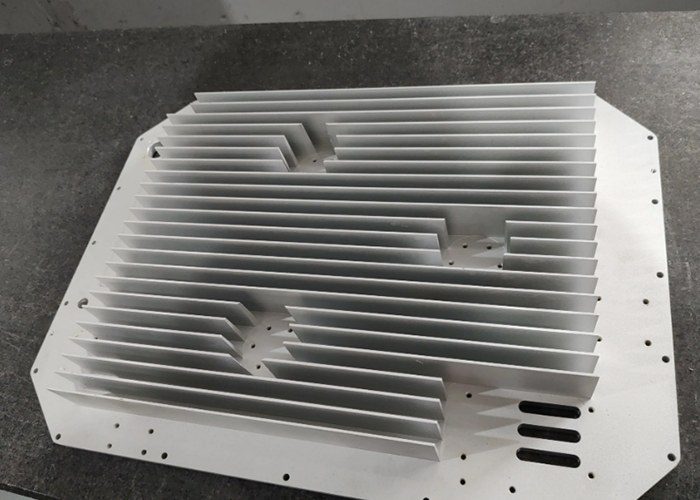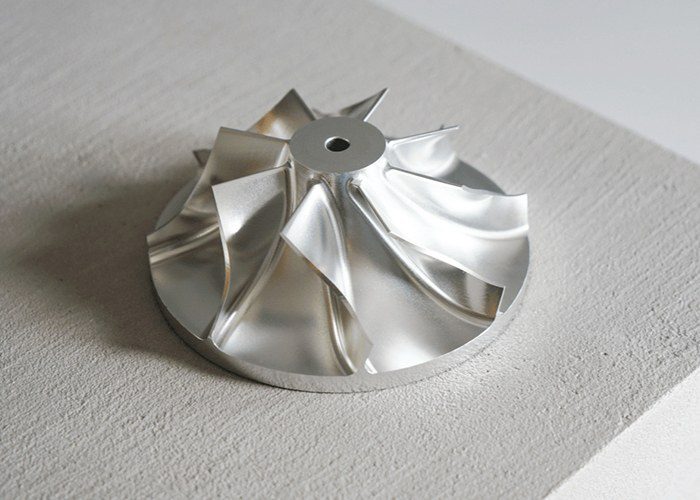
In the vast ecosystem of modern manufacturing, few processes are as quietly essential as customized metal parts machining. While much of the public’s attention gravitates toward flashy innovations like 3D printing or collaborative robotics, the unassuming art of cutting, milling, turning, and grinding metal remains the true backbone of industries ranging from aerospace to medical devices. Customized metal parts machining is not merely about removing material—it is a sophisticated dance of precision, metallurgy, and digital intelligence, where each component tells a story of problem-solving and engineering excellence.
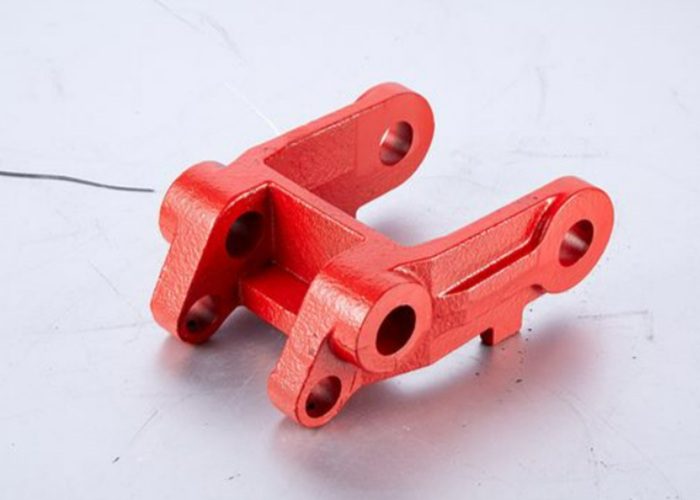
At its core, customized metal parts machining refers to the subtractive manufacturing process of shaping metal workpieces into highly specific geometries according to client-defined specifications. Unlike mass production, where uniformity is the holy grail, customized machining thrives on variation—producing quantities as low as a single prototype or as high as several thousand bespoke units. This flexibility makes it indispensable for industries that demand performance over volume: a surgical implant must fit a unique patient’s anatomy, a turbine blade must withstand extreme thermal gradients, and a robotic arm joint must mesh perfectly with proprietary actuators.
The journey of a customized metal part begins not on the shop floor, but in the digital realm. Modern machining relies heavily on Computer-Aided Design (CAD) and Computer-Aided Manufacturing (CAM) software. Engineers translate physical requirements into precise 3D models, which are then converted into toolpaths—the intricate routes that cutting tools will follow. This digital thread is where customization truly starts; every radius, tolerance, and surface finish is negotiated, simulated, and optimized before any metal meets a cutter. Advanced simulation software even predicts thermal deformation and tool deflection, allowing machinists to preemptively adjust parameters, thereby reducing costly trial-and-error cycles.
Once the digital design is locked, physical production begins. The choice of machining process is dictated by geometry, material, and production volume. CNC milling, with its multi-axis capabilities, carves complex contours and cavities, making it ideal for engine blocks and mold inserts. CNC turning, on the other hand, excels at cylindrical components like shafts, bushings, and fasteners. For ultra-hard materials such as titanium or Inconel—common in aerospace—electrical discharge machining (EDM) or laser cutting may be employed, as traditional tools would dull or fracture. Each process requires a deep understanding of cutting speeds, feed rates, coolant application, and tool coatings, often making the machinist’s expertise as valuable as the machinery itself.
Material selection is another pivotal dimension of customization. While steel and aluminum dominate general engineering, specialized applications demand exotic alloys that offer corrosion resistance, biocompatibility, or high-temperature stability. Customized machining must account for each material’s machinability—its tendency to work-harden, its thermal conductivity, and its chip-formation behavior. A poorly chosen cutting parameter can ruin a $5,000 blank of aerospace-grade titanium in seconds, underscoring why process knowledge is non-negotiable.
Perhaps the most understated yet critical aspect of customized machining is surface finishing and tolerance control. In high-performance sectors, a deviation of a few microns can mean the difference between a perfectly sealed hydraulic system and a catastrophic leak. Modern machining centers, equipped with in-process probing and closed-loop feedback, can achieve tolerances as tight as ±5 micrometers. Post-machining treatments—such as anodizing, passivation, plating, or heat treatment—further enhance durability, aesthetics, and functional properties, tailored precisely to the part’s end-use environment.
The economic and strategic value of customized metal parts machining cannot be overstated. For product developers, it offers a low-risk pathway to prototyping, allowing rapid iteration of designs without committing to expensive hard tooling. For maintenance and repair operations (MRO), it provides a lifeline—enabling the reproduction of obsolete components for legacy machinery, thus extending asset life and reducing downtime. In the context of supply chain resilience, local custom machining shops have emerged as strategic buffers against global logistics disruptions, offering lead times measured in days rather than months.
Looking ahead, the field is undergoing a quiet revolution driven by Industry 4.0 technologies. Smart machining centers now embed sensors that monitor tool wear, spindle vibration, and thermal growth in real time, feeding data back to predictive maintenance algorithms. Hybrid machines that combine additive and subtractive capabilities are blurring traditional boundaries, allowing repairs of high-value components by depositing material and then finishing it to exact dimensions. Meanwhile, digital twins—virtual replicas of physical machines and processes—enable machinists to simulate entire production runs virtually, optimizing cycle times and reducing energy consumption before a single chip is formed.
Yet, for all its technological sophistication, customized metal parts machining remains fundamentally a human-centric craft. The most advanced 5-axis machine is only as effective as the programmer who codes it, the operator who monitors its subtle acoustic changes, and the quality inspector who interprets measurement data with seasoned intuition. As veteran machinists retire, the industry faces a generational skills gap, prompting renewed investment in apprenticeship programs and STEM education. It is a reminder that behind every precision component lies not just a machine, but a mind that understands metal, motion, and method.
In conclusion, customized metal parts machining is far more than a manufacturing service—it is an enabling discipline that turns engineering imagination into tangible reality. Whether it is a one-off implant that saves a life, a bespoke fitting that keeps a refinery running, or a prototype that leads to the next breakthrough technology, customized machining occupies an irreplaceable niche in the industrial landscape. As digital tools continue to augment human skill, and as materials science pushes boundaries further, one thing remains certain: the demand for perfectly crafted, application-specific metal components will only grow, ensuring that this timeless trade evolves, but never fades.