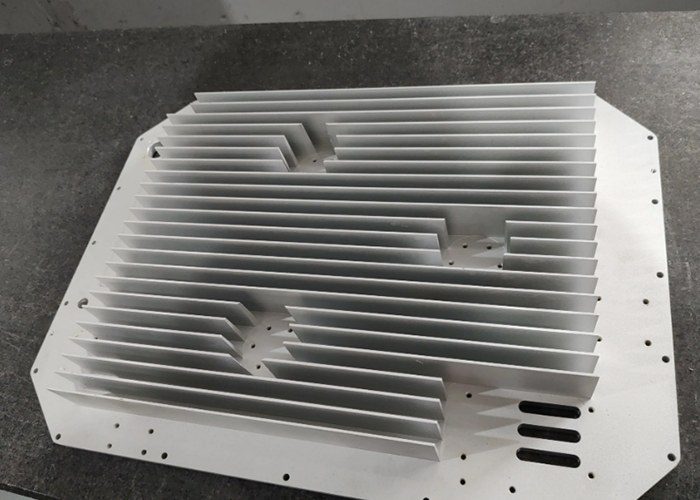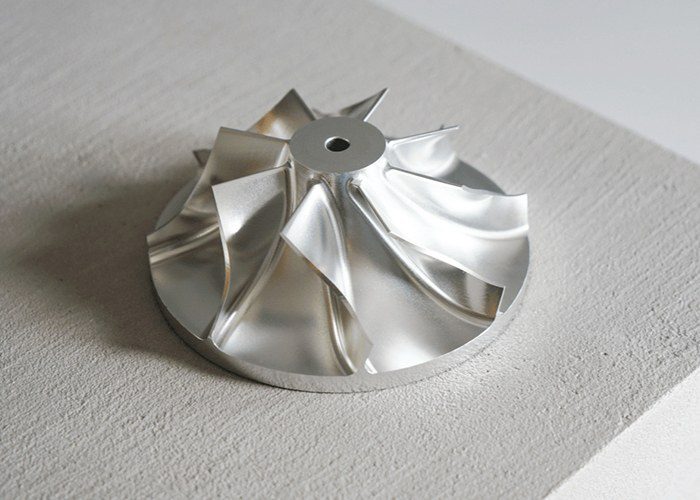
In the rapidly evolving landscape of modern manufacturing, precision and efficiency are paramount. Among the various CNC machining technologies available, 4-axis CNC machining has emerged as a powerful solution that bridges the gap between basic 3-axis milling and the high complexity of 5-axis systems. This article explores the capabilities, advantages, applications, and strategic value of 4-axis CNC machining services.
Understanding 4-Axis CNC Machining
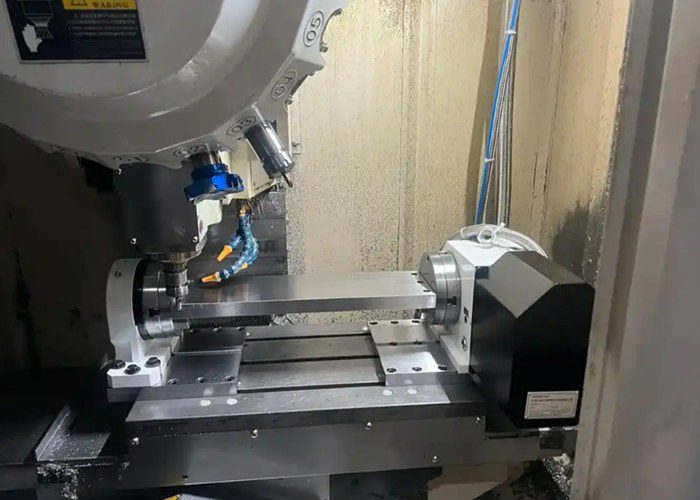
4-axis CNC machining is a subtractive manufacturing process that operates along four axes of motion—the standard X, Y, and Z linear axes, plus a fourth rotational axis, typically referred to as the A-axis, which rotates the workpiece around the X-axis. This additional degree of freedom is what fundamentally distinguishes 4-axis machining from conventional 3-axis systems. The workpiece is secured in a rotary table or trunnion mounted on the machine bed, and the CNC controller can rotate this table to programmed angular positions.
4-axis machining operates in two primary modes. Indexed 4-axis machining, also known as 3+1 milling, uses the rotational axis as an indexer. The machine rotates the workpiece to a predetermined angle, locks it in place, and then executes standard 3-axis linear toolpaths. This approach is ideal for prismatic components with features distributed across multiple faces. Continuous 4-axis machining, by contrast, keeps the A-axis interpolating in real time during the cut, coordinated with the X, Y, and Z axes simultaneously. This mode is essential for geometries that wrap around the part, such as cam lobes, helical flutes, and spiral grooves.
4-Axis vs. 3-Axis and 5-Axis Machining
To appreciate the value of 4-axis machining, it is helpful to understand where it fits within the CNC machining spectrum. A 3-axis machine moves the cutting tool along X, Y, and Z linear directions while the workpiece remains stationary. While effective for many parts, 3-axis machining requires multiple setups and manual repositioning to access different faces of a component. Each time a part is removed from a fixture and re-clamped, error is introduced—and across tight tolerances, small errors become big problems.
4-axis machining solves this by keeping the part in a single controlled setup, using rotary indexing instead of manual repositioning, and maintaining consistent datum relationships across features. The result is improved feature-to-feature accuracy, reduced tolerance stack-up, and better repeatability. Setup reductions of 60–70% are common, with accuracy improvements reaching 40% or more.
Compared to 5-axis machining, which adds a second rotational axis, 4-axis systems offer a more cost-effective and accessible solution. While 5-axis machines excel at producing complex compound 3D contours and undercuts, they are significantly more expensive and harder to program. 4-axis machining is often the preferred choice when geometry is indexed rather than continuous, when multi-side access is required without compound angles, and when cost and programming simplicity are priorities.
Key Benefits of 4-Axis CNC Machining Services
The adoption of 4-axis CNC machining services delivers substantial improvements across several dimensions. Enhanced flexibility allows for the machining of complex geometries that would be challenging or impossible with a 3-axis machine. Improved precision is achieved through the ability to approach the workpiece from additional angles, with smaller positional tolerances and superior alignment capabilities. Increased efficiency results from reduced setups and repositioning, leading to faster production cycles and lower overall manufacturing costs. Better surface finish is produced through consistent spindle speed and feed rate adjustments combined with workpiece rotation—particularly critical in industries where surface integrity is paramount. Finally, expanded material capabilities allow 4-axis CNC mills to handle a wide range of materials, from plastics to titanium and stainless steel.
Industrial Applications
4-axis CNC machining services are extensively utilized across multiple industries. In aerospace, they are essential for producing turbine blades, aircraft structural parts, and engine housings where high precision and intricate geometries are required. In the automotive sector, they manufacture engine components and complex drivetrain parts. The medical device industry relies on 4-axis machining for surgical tools and implant components where precision and detail are critical. Additional applications include consumer product components, electronics enclosures, molds, and shafts. Common features machined on 4-axis systems include slots, holes, engraving, contours around curved parts, radial bolt patterns, off-axis cross-drilled fluid ports, and keyway flats on shafts.
The Role of CAD/CAM Integration
Modern 4-axis machining relies heavily on CAD/CAM software integration. CAM systems such as Mastercam, Fusion 360, and Siemens NX translate 3D CAD models into G-code programs that coordinate axis movements, feed rates, spindle speeds, and tool changes. Advanced CAM platforms support multiple 4-axis machining approaches, including indexed positioning, wrapped toolpaths for cylindrical geometry, and simultaneous 4-axis motion.
Choosing the Right 4-Axis Machining Service Provider
When selecting a 4-axis CNC machining service provider, several factors warrant consideration. Look for providers with proven capabilities in your industry, robust quality certifications (such as ISO 9001:2015), and the technical expertise to handle both prototyping and production runs. The ideal partner should offer comprehensive services including milling, drilling, boring, tapping, and thread milling within a single system, and should demonstrate a commitment to meeting specifications consistently—run after run.
Conclusion
4-axis CNC machining services represent a strategic manufacturing solution that delivers the ideal balance of capability, precision, and cost-effectiveness. By adding rotational motion to traditional 3-axis milling, 4-axis systems enable manufacturers to produce complex, multi-face components with fewer setups, tighter tolerances, and superior surface finishes. For industries ranging from aerospace to medical devices, 4-axis CNC machining has become an indispensable technology—one that continues to drive innovation and efficiency in modern production environments.