
In modern manufacturing, few processes have reshaped production capabilities as profoundly as CNC lathe machining. What began as a simple method for creating cylindrical components has evolved into a sophisticated, multi-axis manufacturing solution that serves industries from aerospace to medical devices. CNC lathe machining services now represent the gold standard for precision turning, offering manufacturers the ability to produce complex parts with micron-level accuracy, exceptional repeatability, and remarkable efficiency.
Understanding CNC Lathe Machining
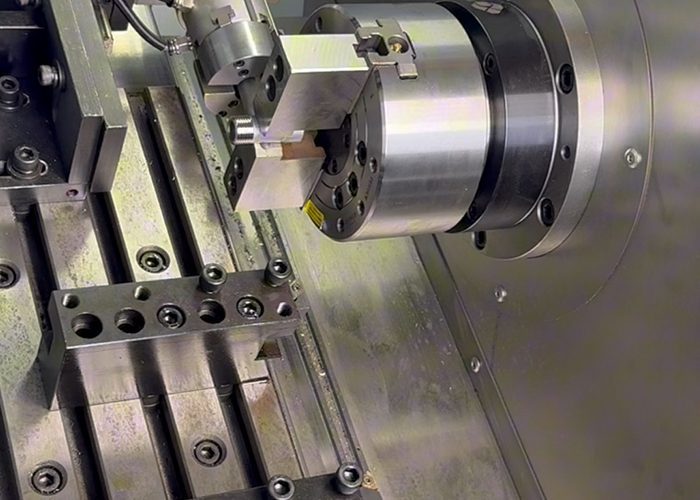
At its core, CNC (Computer Numerical Control) lathe machining is a subtractive manufacturing process in which a rotating workpiece is shaped by stationary cutting tools guided by computer programming. Unlike conventional manual lathes that require skilled operators to control every movement, CNC lathes execute pre-programmed sequences with minimal human intervention. The process begins with a digital design created in CAD software, which is then translated into G-code—the machine language that directs every aspect of the machining operation. This digital control eliminates the variability inherent in manual machining, ensuring that every part produced is virtually identical to the last.
The Evolution from Traditional Turning
Modern CNC turning centers have come a long way from their origins in simple cylindrical shaping. Traditional two-axis lathes were effective for symmetrical, round parts but limited in their capabilities. Today’s advanced machines incorporate multi-axis configurations, live tooling, and high-speed automation that dramatically expand what is possible. The integration of live tooling enables drilling, milling, tapping, and engraving operations to be performed in a single setup—eliminating the need for secondary machining operations and reducing both cycle times and handling errors. With C-axis and Y-axis control, modern turning centers can produce complex geometries with off-center features, non-cylindrical contours, and intricate patterns that would have been impossible with conventional equipment.
Precision and Capabilities
The precision achievable through CNC lathe machining is truly remarkable. Advanced CNC lathes can achieve tolerances as tight as ±0.005 mm, with some high-end systems reaching micron-level accuracy. This level of precision is essential for industries where component failure is not an option—aerospace fittings, medical implants, and critical automotive parts all depend on the accuracy that only CNC turning can provide. Modern machines incorporate real-time monitoring systems that detect tool wear, vibration, and temperature fluctuations, maintaining optimal machining conditions throughout production runs. The result is consistent quality across thousands of parts, with surface finishes that often eliminate the need for secondary finishing processes.
Materials and Applications
CNC lathe machining services work with an extensive range of materials, making them versatile enough to serve virtually every manufacturing sector. Common metals include steel, stainless steel, aluminum, brass, titanium, copper, and specialized alloys such as Inconel and Hastelloy. Engineering plastics like nylon, ABS, PEEK, and Delrin are also regularly machined, offering lightweight, corrosion-resistant alternatives for specialized applications.
The applications of CNC turning span nearly every industry. In aerospace, CNC-lathed components include shafts, fittings, bushings, turbine components, and hydraulic connectors that must meet stringent performance and reliability standards. The automotive industry relies on CNC turning for axles, fasteners, engine parts, and countless other rotational components. Medical device manufacturers turn to CNC lathes for surgical tools, orthopedic implants, and custom prosthetic joints that require flawless function and biocompatible finishes. Electronics, defense, robotics, oil and gas, and industrial automation all depend on precision-turned components.
Economic Advantages
Beyond technical capabilities, CNC lathe machining services deliver substantial economic benefits. Automation reduces labor costs, as skilled operators can manage multiple machines simultaneously. Cycle times are significantly shorter than manual operations, with some CNC lathes demonstrating production speeds up to 60% faster than traditional methods. Material waste is minimized through precise control, and setup times are dramatically reduced, allowing for quick changeovers between different part configurations. The scalability of CNC turning—from single prototypes to high-volume production runs—makes it an ideal solution for manufacturers at any stage of growth.
The Future of CNC Turning
The CNC lathe machining industry continues to evolve rapidly. By 2026, five-axis machines are expected to account for over 35% of new CNC lathe purchases, with a single five-axis setup capable of replacing three separate three-axis operations—reducing cycle time by 40-60% while improving surface finish and eliminating positional errors. The global CNC lathe machine market, valued at approximately USD 5.44 billion in 2025, is projected to grow at a compound annual growth rate of 6.10%. With CNC lathes already commanding 61.23% revenue share in the broader lathe machines market, their dominance is only expected to increase.
As manufacturers continue to demand higher precision, faster throughput, and greater flexibility, CNC lathe machining services will remain at the forefront of industrial production. The combination of advanced multi-axis capabilities, intelligent automation, and comprehensive material compatibility ensures that CNC turning will continue to enable the innovations that drive modern manufacturing forward—producing the components that power our vehicles, protect our health, and explore the frontiers of technology.


