
In an era defined by mass production and automation, the demand for Customized Metal Parts Machining stands as a testament to the enduring value of precision, flexibility, and engineering excellence. While standard, off-the-shelf components dominate many supply chains, the true heartbeat of innovation—particularly in aerospace, medical devices, robotics, and high-performance automotive sectors—relies on parts that are machined to exact, often unique, specifications. This article delves into the intricacies of customized machining, exploring its processes, strategic importance, and the technological advancements that are redefining the boundaries of what is possible.
The Core Processes: From Blueprint to Physical Reality
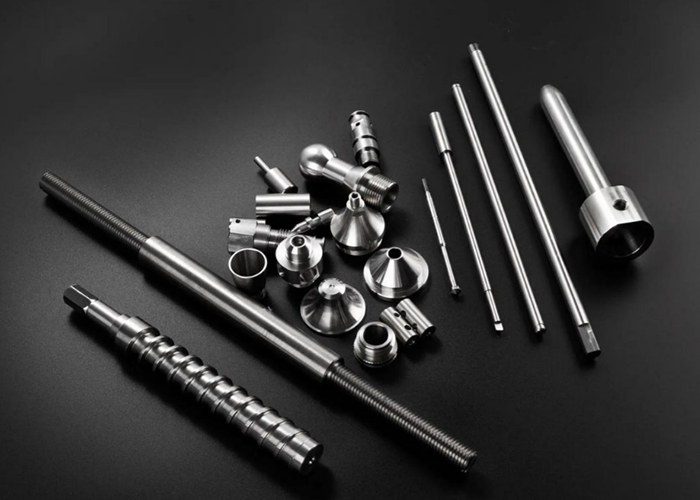
Customized metal parts machining is not a single process but a sophisticated suite of subtractive manufacturing techniques. The journey from a digital design to a physical component typically begins with Computer Numerical Control (CNC) machining. CNC milling, turning, and multi-axis machining allow manufacturers to translate complex 3D models (often from CAD software) into precise toolpaths that guide cutting tools to remove material from a solid block or billet.
For components requiring extreme hardness and complex geometries, Electrical Discharge Machining (EDM) is often employed. This process uses electrical sparks to erode material, making it ideal for intricate cavities and sharp internal corners that traditional cutting tools cannot reach. Similarly, Wire EDM offers the ability to cut thick plates with unparalleled straightness and finish. The selection of the correct process—or a combination of them—is a strategic decision based on the material, required tolerances, production volume, and surface finish requirements. Materials commonly machined include stainless steel, aluminum, titanium, brass, and high-temperature superalloys like Inconel, each presenting unique challenges regarding tool wear, heat generation, and chip control.
The Strategic Advantage of Customization
Why do leading manufacturers invest heavily in customized machining instead of opting for readily available standard parts? The answer lies in performance optimization. In a high-performance engine, a custom-machined piston can shave grams of weight while withstanding immense pressure, directly increasing efficiency and power output. In the medical field, a custom orthopedic implant must match a patient’s unique anatomy to ensure comfort and longevity—a feat impossible with generic sizing.
Furthermore, customization allows for the integration of multiple functions into a single part, a concept known as part consolidation. Instead of assembling several standard components with bolts and welds, engineers can design a single, complex, monolithic part. This reduces assembly time, eliminates potential failure points, and often results in a stronger, lighter final product. For original equipment manufacturers (OEMs), this translates to a significant competitive edge, enabling faster time-to-market and superior product differentiation.
Material Science and Quality Assurance
A critical pillar of successful customized metal parts machining is the mastery of material science. The choice of material dictates not only the cutting parameters but also the type of coolant, tooling material (such as carbide or ceramic inserts), and even the machine’s rigidity required. For instance, machining titanium requires high-pressure coolant systems to manage the intense heat generated and prevent work hardening, a condition where the material becomes harder and more difficult to cut.
However, precision is meaningless without verification. Quality assurance in this field has evolved far beyond simple calipers. Modern machining facilities rely on Coordinate Measuring Machines (CMMs), laser scanners, and optical comparators to inspect every critical dimension. For high-stakes industries like aerospace, non-destructive testing (NDT) methods such as dye penetrant inspection and ultrasonic testing are often used to check for subsurface defects. This rigorous inspection ensures that the finished part not only meets the drawing dimensions but also possesses the structural integrity required for its application.
The Future: Industry 4.0 and Automation
The landscape of Customized Metal Parts Machining is undergoing a radical transformation driven by Industry 4.0. The integration of IoT sensors into CNC machines allows for real-time monitoring of tool wear, vibration, and temperature. This data is used to adjust feed rates and speeds automatically, maximizing tool life and preventing scrap, a concept known as adaptive machining.
Moreover, automation is reshaping the economics of low-volume production. Robotic arms equipped with vision systems are now capable of loading and unloading raw materials, deburring, and even conducting in-process inspections without human intervention. This lights-out manufacturing allows machine shops to run 24/7, increasing throughput while reducing labor costs. Simultaneously, the rise of hybrid manufacturing—combining additive manufacturing (3D printing) with subtractive CNC machining—allows for the creation of near-net shapes that are then finished to exacting tolerances, reducing material waste for high-value parts significantly.
Conclusion
Customized Metal Parts Machining is far more than a job shop service; it is a critical enabler of technological progress. It bridges the gap between the abstract world of engineering design and the physical realities of manufacturing. As machines become smarter, materials become more advanced, and tolerances tighten, the role of the skilled machinist and the sophistication of the equipment will only grow in importance. In a world striving for personalization and peak performance, the ability to create a “one-of-a-kind” metal part with micron-level precision will remain an invaluable asset for industries around the globe. Whether it is powering a spacecraft to Mars or keeping a surgical robot steady, customized machining is the silent, precise force driving the future.


