
In a world dominated by mass production and standardized components, the humble customized metal part often goes unnoticed—yet it is the silent engine driving innovation across countless industries. From the intricate gears inside a surgical robot to the heat-resistant brackets within a jet engine, customized metal parts are the unsung heroes that enable specialized functionality, precision, and durability. Unlike off-the-shelf components, which force designers to adapt their visions to existing limitations, customized parts are born from specific needs, offering a perfect marriage of form, material, and function.
Why Standard Won’t Always Work
The demand for customization arises from a fundamental truth: no two machines, structures, or devices are exactly alike. A one-size-fits-all bolt or bracket might work for a consumer-grade product, but in aerospace, medical, automotive, and energy sectors, the margins for error are razor-thin. Consider an orthopedic implant: it must match the unique anatomy of a patient’s bone, withstand cyclic loading, and resist corrosion inside the human body. No mass-produced screw or plate can satisfy all these variables. Similarly, in a high-performance racing engine, every gram matters, and the thermal expansion of metal components must be precisely matched to surrounding parts. Off-the-shelf solutions simply cannot deliver this level of harmony.
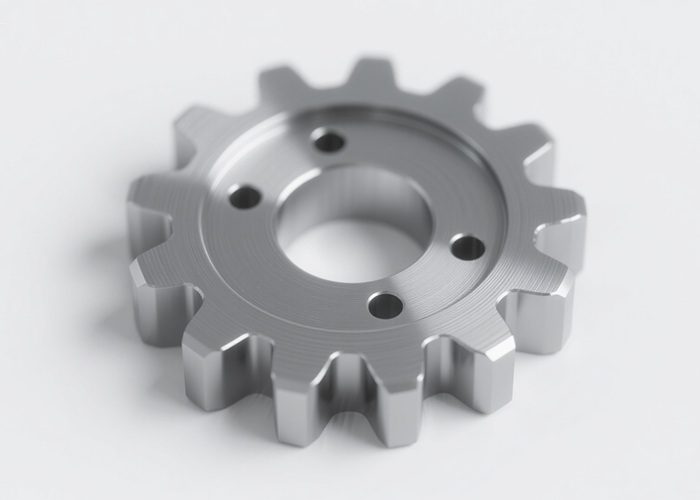
Customized metal parts also solve the problem of obsolescence. When a legacy machine—say, a printing press from the 1980s or a military vehicle from the 1990s—breaks a unique casting, the original manufacturer may no longer exist. Custom fabrication becomes the only viable path to resurrection, saving millions in replacement equipment costs.
The Art and Science of Making One Perfect Part
Producing a customized metal part is not merely about machining a block of steel; it is a multi-step process that blends engineering analysis, material science, and precision manufacturing. The journey begins with a need, translated into a 3D CAD model. Then comes material selection: aluminum for lightweight strength, stainless steel for corrosion resistance, titanium for biocompatibility and high strength-to-weight ratio, or Inconel for extreme heat environments. Each material behaves differently under cutting tools and heat treatment.
The actual fabrication has been revolutionized in the last two decades. Traditional subtractive methods like CNC milling and turning remain dominant for many parts. A five-axis CNC machine can carve a complex geometry from a solid billet with micron-level accuracy, producing features impossible to replicate with casting or stamping. For low-volume production (one to a few hundred units), CNC machining is often the most economical and precise choice.
However, additive manufacturing—metal 3D printing—has opened entirely new possibilities. Techniques like selective laser melting (SLM) or electron beam melting (EBM) build parts layer by layer from metal powder. This allows for internal lattices, conformal cooling channels, and topology-optimized shapes that reduce weight by 50% or more while maintaining strength. A customized metal part produced additively might be impossible to machine conventionally, yet it can outperform any forged or cast equivalent. For industries like aerospace and medical implants, additive manufacturing is no longer a novelty—it is a necessity.
Secondary processes then refine the part: heat treatment to relieve stresses, surface finishing (anodizing, plating, polishing) to enhance wear or corrosion resistance, and precision inspection using coordinate measuring machines (CMM) or optical scanners to certify every critical dimension.
Where Custom Metal Parts Make the Difference
The application areas are vast and inspiring. In medical technology, customized metal parts range from patient-specific cranial plates to spinal fusion cages and dental implants. These parts are often made of medical-grade titanium or cobalt-chrome, and their success depends on perfect fit—something only customization can achieve.
In aerospace, every component on a satellite, drone, or rocket is typically a customized metal part. The extreme conditions of launch and space vacuum mean that even a simple bracket must be engineered for that specific location and load. The recent boom in private spaceflight has intensified demand for small-batch, high-performance metal components.
The semiconductor industry relies on ultra-precise customized metal parts for wafer handling and chamber components. These parts must meet stringent cleanliness and dimensional stability requirements. A misalignment of 10 microns can ruin a million-dollar wafer.
Automotive racing (Formula 1, Le Mans, rally) is another hotbed. Teams design and fabricate custom suspension arms, uprights, and gearbox housings tailored to each track’s demands. These parts are often topology-optimized and machined from aerospace-grade aluminum or titanium.
Even renewable energy benefits: customized brackets, shafts, and couplings are frequently needed for wind turbines and hydroelectric plants, especially when retrofitting new technology into older infrastructure.
Overcoming Challenges and Looking Ahead
Despite its advantages, custom metal part manufacturing faces hurdles. Cost per unit is higher than mass production, lead times can be long (though additive manufacturing is shortening them), and design requires deep expertise. However, digitalization—from AI-driven design optimization to cloud-based CNC programming—is steadily lowering these barriers.
The future is bright and points toward hyper-customization. We are already seeing on-demand manufacturing platforms where an engineer uploads a CAD file, selects a metal, and receives a finished part in days, not weeks. Advances in hybrid manufacturing (combining additive and subtractive processes in one machine) will further streamline production. Moreover, as material costs stabilize and automation increases, the price premium for custom parts will continue to shrink.
In conclusion, the customized metal part is far more than a niche product. It is the tangible expression of engineering problem-solving—a physical answer to a unique challenge. Whether saving a historic machine, enabling a life-saving surgery, or propelling a rocket to Mars, these precisely crafted components prove that when standard won’t work, custom will. As industries become more specialized and performance demands grow ever higher, the role of customized metal parts will only become more central, more sophisticated, and more indispensable.


