In the vast and intricate world of manufacturing and construction, where attention is often captivated by sleek designs, powerful engines, or smart software, there exists a category of components so fundamental that they are frequently overlooked: fasteners. Nuts, bolts, screws, rivets, and pins are the literal and figurative glue holding our physical world together. Yet, when standard, off-the-shelf fasteners fall short, the domain of customized fasteners emerges as a critical enabler of innovation, safety, and performance. These are not mere pieces of metal; they are precisely engineered solutions designed to meet unique, demanding, and specific challenges.
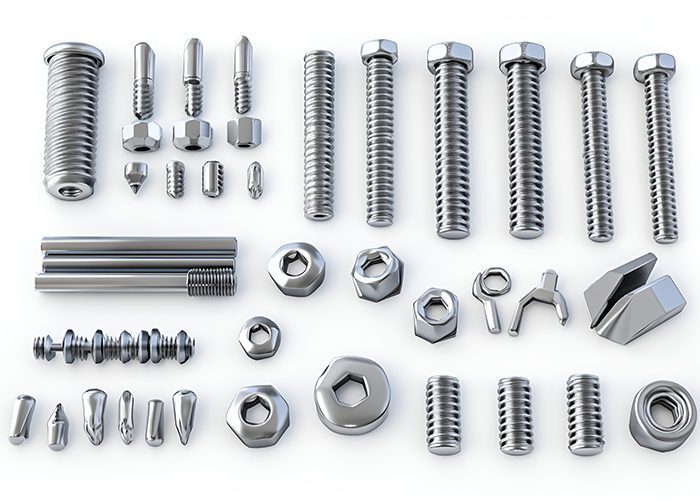
At its core, a customized fastener is any fastening element whose design, material, dimensions, coating, or performance characteristics deviate from industrial standards to fulfill a particular application’s exact requirements. This departure from standardization is never arbitrary. It is a calculated response to a set of constraints or goals that standard parts cannot satisfy. The drive for customization stems from several key factors: extreme environmental conditions, unique spatial constraints, specialized material compatibility, exceptional load demands, or the need for specific aesthetic or functional features like tamper resistance or quick assembly.
The applications for customized fasteners are as diverse as industry itself. In aerospace and aviation, where every gram matters and failure is not an option, fasteners made from titanium or high-strength alloys are custom-designed for optimal weight-to-strength ratios. They must withstand tremendous vibration, thermal cycling, and corrosive atmospheres. Their shapes are often streamlined, and their installation protocols are meticulously specified. In the medical device industry, biocompatibility is paramount. Custom screws and pins for orthopedic implants, for instance, are machined from medical-grade titanium or PEEK polymer. Their threads are engineered to promote osseointegration (bone growth), and their sizes are tailored to patient-specific anatomy, often created via 3D printing.
The automotive sector, especially in high-performance and electric vehicles, relies on custom fasteners for lightweighting, structural integrity, and thermal management. Specialized bolts for battery packs may require unique insulating properties or specific clamping force to maintain electrical connections and safety. In renewable energy, the massive bolts securing wind turbine blades to hubs or anchoring towers to foundations are colossal custom creations, designed to endure decades of fatigue loading and harsh weather. Even in consumer electronics, miniature custom screws with proprietary drive types secure devices while maintaining sleek aesthetics and deterring unauthorized access.
The advantages of opting for a customized fastener are substantial. Primarily, they provide an optimized fit and function. A fastener designed for its specific role eliminates compromises, leading to stronger, more reliable, and longer-lasting assemblies. This can result in enhanced safety, crucial in critical infrastructure and transportation. Furthermore, a well-designed custom fastener can simplify assembly processes, reducing the number of parts or steps needed, which translates to lower labor costs and increased production efficiency. In some cases, a clever custom fastener can even enable a design that would be impossible with standard parts, unlocking new engineering possibilities.
The journey of a custom fastener from concept to installation is a collaborative and technical process. It begins with a deep understanding of the application: the forces involved (shear, tension, vibration), the environmental exposure (temperature, chemicals, moisture), space limitations, and assembly/disassembly needs. Engineers from the client and fastener manufacturer work together to define specifications. Advanced materials are selected—from stainless steels and exotic superalloys to engineered plastics and composites. Precision manufacturing techniques like CNC machining, cold forging, or additive manufacturing (3D printing) are then employed to produce prototypes, followed by rigorous testing for strength, corrosion resistance, and durability. To enhance performance, coatings and platings like zinc-nickel, anodizing, or PTFE are applied.
Looking ahead, the future of customized fasteners is intertwined with broader industrial trends. Additive Manufacturing is revolutionizing the field, allowing for the production of complex, lightweight, topology-optimized fastener geometries that are impossible to forge or machine. This is particularly valuable for low-volume, high-value applications like aerospace prototypes or custom medical implants. Smart Fasteners, embedded with micro-sensors, are on the horizon. These could monitor pre-load tension, detect corrosion, or alert users to impending failure, transforming passive components into active data sources for predictive maintenance. Furthermore, the push for sustainability drives demand for fasteners made from recycled materials or designed for easier disassembly at a product’s end-of-life.
In conclusion, customized fasteners are far from a niche afterthought. They are a testament to the principle that true engineering excellence often lies in perfecting the smallest details. By providing tailored solutions where standard options fail, they empower engineers to push boundaries, enhance reliability, and innovate with confidence. They are the unsung heroes in the backbone of our machines, vehicles, and structures, quietly ensuring that everything stays securely, efficiently, and safely in its place. In a world increasingly demanding precision and performance, the role of the customized fastener is not only secure but is undoubtedly set to expand.