In the modern manufacturing landscape, precision, efficiency, and flexibility are not merely goals—they are necessities. As industries evolve from mass production to highly specialized, application-specific components, the demand for tailored manufacturing solutions has skyrocketed. At the heart of this transformation lies Customized CNC (Computer Numerical Control) Processing. This technology has become the backbone of industries ranging from aerospace and automotive to medical devices and consumer electronics, enabling the creation of complex parts with unparalleled accuracy and repeatability.
The Essence of Customization
Standard off-the-shelf components often fail to meet the unique requirements of advanced engineering projects. Customized CNC processing bridges this gap by allowing engineers and designers to translate digital blueprints into physical realities without compromise. Unlike conventional machining, which may be limited by tooling constraints or high setup costs for small batches, CNC customization thrives on complexity and specificity.
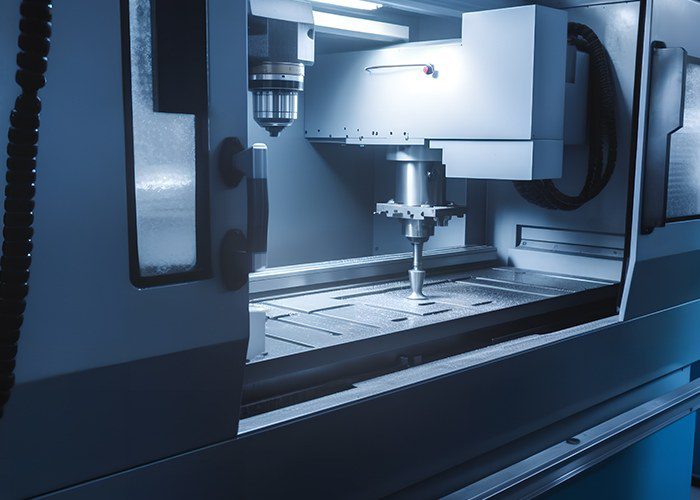
The process begins with Computer-Aided Design (CAD) software, where a part is modeled to exact specifications. This digital file is then converted into a set of instructions (G-code) that guide CNC machines—such as mills, lathes, routers, or grinders—through precise movements. Customization is embedded at every stage: from the selection of raw materials (aluminum, steel, titanium, plastics, or composites) to the choice of cutting tools, spindle speeds, and finishing techniques. Whether a client needs a single prototype for a revolutionary medical implant or a low-volume production run of specialized aerospace brackets, CNC processing adapts seamlessly.
Unmatched Advantages
1. Sub-Micron Accuracy and Repeatability
The hallmark of CNC technology is its ability to achieve tolerances measured in microns—thousandths of a millimeter. For customized parts, where fit and function are critical, this precision ensures that every component conforms exactly to the design. Moreover, once a program is verified, the machine can reproduce the same part hundreds or thousands of times with identical accuracy, eliminating human error and variability.
2. Complex Geometries Made Simple
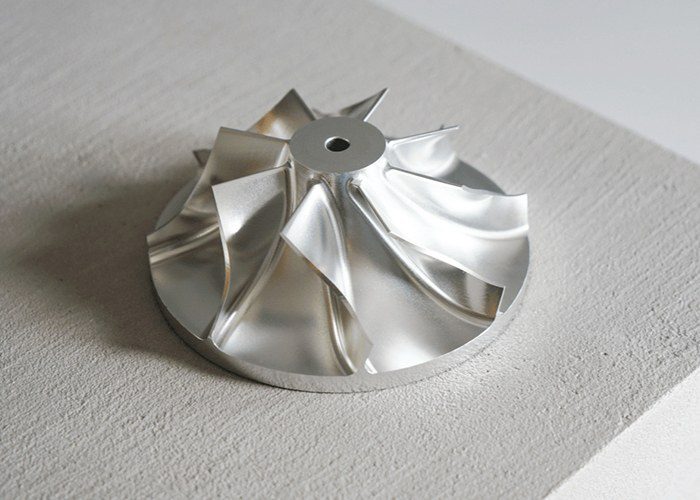
Custom components often feature intricate details that would be impossible or prohibitively expensive to produce with manual machining. Multi-axis CNC machines (such as 5-axis machining centers) can approach a workpiece from virtually any angle, carving out undercuts, complex contours, and deep cavities in a single setup. This capability is essential for industries like aerospace, where turbine blades require aerodynamic curves, or in orthopedics, where joint replacements must mirror the nuances of human anatomy.
3. Material Versatility
Different applications demand different material properties. Customized CNC processing accommodates a vast spectrum of materials, from soft plastics and brass to hardened steel and exotic alloys like Inconel or titanium. This flexibility allows manufacturers to optimize parts for strength, weight, corrosion resistance, or thermal conductivity based on the end-use environment.
4. Speed and Cost-Efficiency for Low Volumes
Traditional manufacturing methods like injection molding or die casting require expensive molds and long lead times, making them economical only for high-volume production. CNC processing, however, has minimal tooling requirements. A custom part can be machined directly from a solid block of material within hours of design completion. This agility reduces time-to-market and makes low-volume, high-mix production economically viable.
Applications Across Industries
The scope of customized CNC processing is vast:
- Aerospace: Critical safety components—such as landing gear parts, engine mounts, and structural brackets—demand adherence to rigorous quality standards and the use of lightweight, high-strength materials. Custom CNC ensures these parts meet strict FAA or EASA regulations.
- Medical: From surgical instruments to custom implants and dental prosthetics, the medical field relies on CNC for biocompatible, patient-specific solutions. The ability to machine titanium and medical-grade polymers with sterile precision saves lives.
- Automotive: In motorsports and electric vehicle development, custom CNC parts enable weight reduction and performance optimization. Prototype engine components, custom suspension systems, and battery housing units are frequently machined to exact specifications.
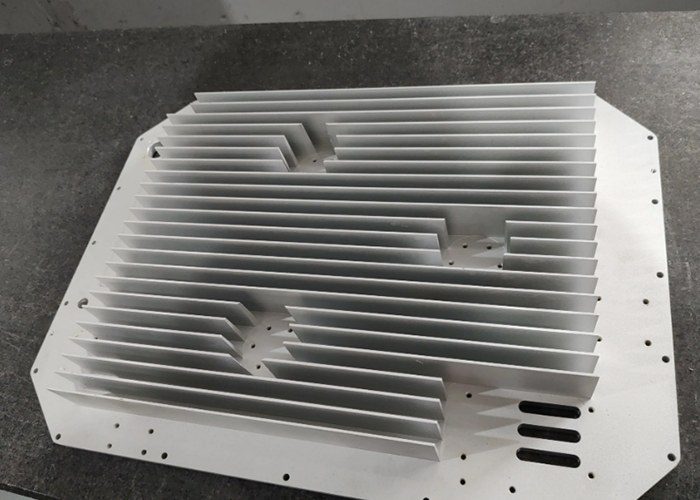
- Electronics: The miniaturization of electronics demands micro-machining capabilities. CNC processing creates heat sinks, enclosures, and connectors with fine details for smartphones, servers, and defense electronics.
The Role of Advanced Technology
Today’s customized CNC processing is increasingly integrated with digital technologies. IoT-enabled machines provide real-time monitoring of tool wear and temperature, preventing defects before they occur. Artificial intelligence (AI) algorithms optimize toolpaths to reduce machining time and extend tool life. Furthermore, the integration of CNC with additive manufacturing (3D printing) allows for hybrid approaches—near-net-shape parts can be printed and then finished with CNC to achieve critical tolerances.
Quality Assurance and Compliance
For customized parts, quality is not an afterthought—it is a prerequisite. Reputable CNC service providers incorporate comprehensive inspection protocols. Using Coordinate Measuring Machines (CMMs), laser scanners, and surface roughness testers, each part is validated against the original CAD model. Documentation such as Material Test Reports (MTRs) and First Article Inspection (FAI) reports provide traceability, which is essential for regulated industries.
Conclusion
Customized CNC processing represents more than just a manufacturing method; it is a collaborative enabler of innovation. By transforming digital concepts into tangible, high-performance components with exceptional accuracy, it empowers engineers, designers, and entrepreneurs to push the boundaries of what is possible. As technology continues to advance—with faster spindles, smarter software, and more adaptive automation—the scope of customization will only expand. For any project demanding precision, reliability, and design freedom, customized CNC processing remains the definitive solution, turning complex ideas into engineered realities.