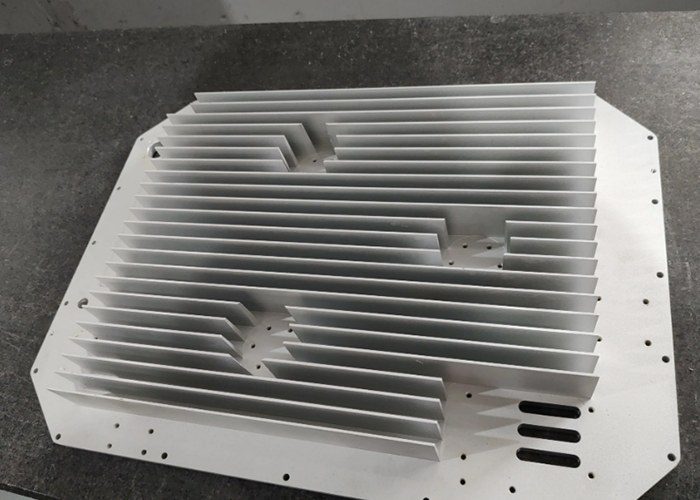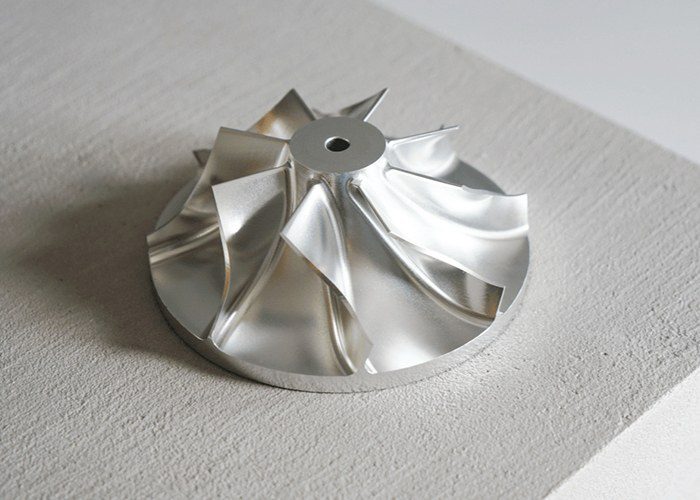
In today’s fast-paced manufacturing landscape, the demand for precision, efficiency, and adaptability has never been higher. At the heart of this revolution lies a cornerstone technology: Customized CNC Metal Parts. Computer Numerical Control (CNC) machining has transformed the way industries design and produce metal components, moving far beyond the limitations of mass production. Whether it’s a one-off prototype for an aerospace application or a small batch of intricate medical implants, custom CNC metal parts offer an unparalleled combination of accuracy, repeatability, and material versatility.
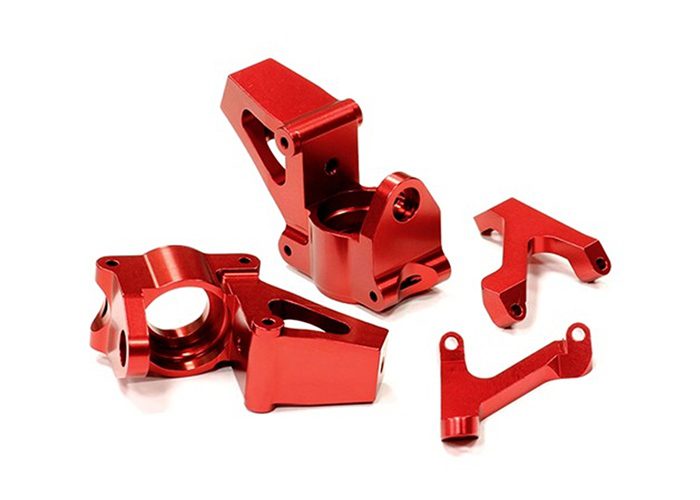
Why Customization Matters
Standard, off-the-shelf components rarely fit perfectly into complex engineering designs. Each machine, device, or structure has unique dimensional, mechanical, and thermal requirements. Customization allows engineers to tailor parts precisely to their specifications—adjusting tolerances as tight as ±0.005 mm, modifying geometries for weight reduction, or incorporating specific surface finishes for corrosion resistance. This level of personalization minimizes assembly errors, reduces the need for secondary modifications, and ultimately extends the lifespan of the final product. In industries where failure is not an option—such as aerospace, defense, and medical devices—customized CNC parts are not a luxury; they are a necessity.
The CNC Machining Process: From Digital Model to Physical Object
Creating a customized metal part begins with a digital 3D model, typically designed in CAD (Computer-Aided Design) software such as SolidWorks, AutoCAD, or Fusion 360. This model is then converted into a CAM (Computer-Aided Manufacturing) program that generates toolpaths—precise instructions for the CNC machine’s cutting tools.
The actual machining process can involve several operations:
- CNC Milling: Rotating cutting tools remove material from a stationary workpiece to create complex shapes, slots, holes, and contours.
- CNC Turning: The workpiece rotates while a stationary tool cuts away material, ideal for cylindrical components like shafts, bushings, and threaded studs.
- EDM (Electrical Discharge Machining): Uses electrical sparks to erode extremely hard metals into intricate shapes that conventional tools cannot achieve.
- Multi-axis Machining: Advanced 5-axis CNC machines can approach a part from virtually any direction in a single setup, reducing handling errors and enabling undercuts and freeform surfaces.
After machining, secondary processes such as deburring, heat treatment, anodizing, plating, or powder coating are often applied to enhance mechanical properties and aesthetic appearance. Each step is monitored with rigorous quality control, including CMM (Coordinate Measuring Machine) inspections and surface roughness tests.
Materials: A World of Possibilities
One of the greatest strengths of customized CNC metal parts is the vast range of materials available. Unlike additive manufacturing (3D printing), which is often limited to specific alloys, CNC machining can work with virtually any metal that is machinable. Common choices include:
- Aluminum alloys (6061, 7075): Lightweight, corrosion-resistant, and excellent thermal conductivity—ideal for drone frames, automotive parts, and heat sinks.
- Stainless steel (303, 304, 316): High strength, good weldability, and outstanding corrosion resistance, widely used in food processing, marine equipment, and surgical instruments.
- Brass and copper: Excellent electrical conductivity and machinability, perfect for electrical terminals, plumbing fittings, and decorative hardware.
- Titanium (Grade 2, Grade 5): Exceptional strength-to-weight ratio and biocompatibility, making it the gold standard for aerospace and medical implants.
- Tool steels (A2, D2, O1): Hardened and tempered for cutting tools, dies, and molds that require wear resistance.
Choosing the right material involves balancing cost, machinability, mechanical properties, and environmental factors—a decision where experienced CNC shops provide invaluable guidance.
Applications Across Industries
Customized CNC metal parts are ubiquitous across nearly every sector of modern industry:
- Aerospace: Turbine blades, landing gear components, structural brackets—all requiring extreme precision and traceability.
- Automotive: Engine blocks, transmission housings, custom brake calipers, and even one-off racing prototypes.
- Medical: Orthopedic implants, surgical guides, dental abutments, and instrument handles made from biocompatible stainless steel or titanium.
- Robotics and automation: Actuator mounts, gear trains, end-of-arm tooling, and custom chassis for collaborative robots.
- Energy: Connectors for solar tracking systems, wind turbine shafts, and nuclear reactor components.
- Consumer products: High-end bicycle parts, custom watch cases, kitchen knives, and unique jewelry designs.
Quality Assurance and Tolerances
The phrase “customized” does not mean compromised quality. On the contrary, reputable CNC machining services adhere to stringent international standards such as ISO 9001:2015, AS9100D (aerospace), or ISO 13485 (medical). Dimensional inspection reports are often provided, certifying that each critical feature falls within the specified tolerance band. Advanced CNC machines are equipped with in-process probing systems that automatically adjust tool offsets to maintain consistency across hundreds of parts. For extremely high-value components, non-destructive testing (NDT) methods like X-ray or ultrasonic inspection can be applied to detect internal flaws.
Cost, Lead Time, and Low-Volume Advantages
One common misconception is that custom CNC machining is prohibitively expensive. While it is true that setup costs (programming, fixturing, tool selection) exist, these are amortized over the production run. For low to medium volumes—ranging from one piece to a few thousand units—CNC machining is often more cost-effective and faster than injection molding or die casting, which require expensive molds. Modern “quick-turn” CNC shops can deliver simple custom parts in as little as 24 to 48 hours, enabling rapid iteration and just-in-time inventory strategies.
The Future: Automation, AI, and Hybrid Manufacturing
The field of customized CNC metal parts is not static. Emerging trends include:
- Automated lights-out machining: CNC cells running 24/7 with robotic part loading/unloading, maximizing productivity while reducing labor costs.
- AI-driven toolpath optimization: Machine learning algorithms that predict tool wear and dynamically adjust feed rates to reduce cycle times and improve surface finish.
- Hybrid additive-subtractive systems: Machines that combine metal 3D printing (e.g., laser powder bed fusion) with in-situ CNC milling, allowing near-net-shape printing followed by high-precision finishing. This unlocks geometries impossible with either method alone.
- Digital twins and cloud-based monitoring: Every custom part can be traced from raw material to finished component, with real-time analytics flagging anomalies before they cause scrap.
Conclusion
Customized CNC metal parts represent the perfect synergy between human ingenuity and machine precision. They empower engineers and designers to turn ambitious concepts into tangible, high-performance components without being constrained by off-the-shelf limitations. Whether you need a single prototype for testing or a repeatable run of complex geometries, CNC machining offers the accuracy, material flexibility, and speed required to succeed in today’s competitive markets. As manufacturing continues to embrace digitalization and automation, the role of custom CNC metal parts will only grow—driving innovation from the factory floor to the farthest reaches of aerospace and beyond.
For any project that demands reliability, precision, and tailor-made solutions, investing in custom CNC metal parts is not just a choice—it’s a strategic advantage.