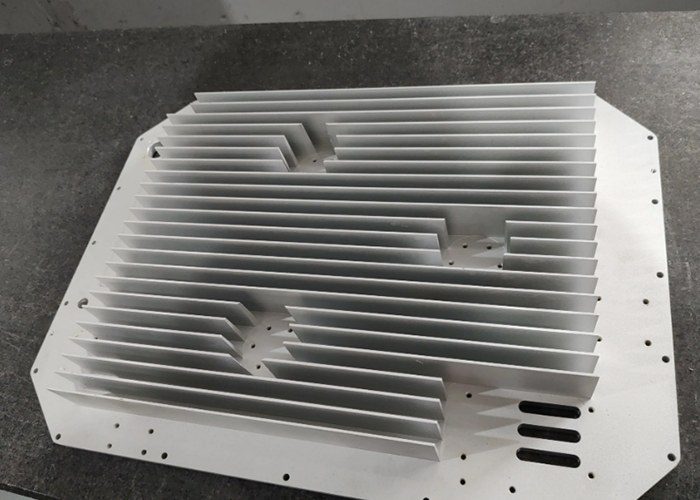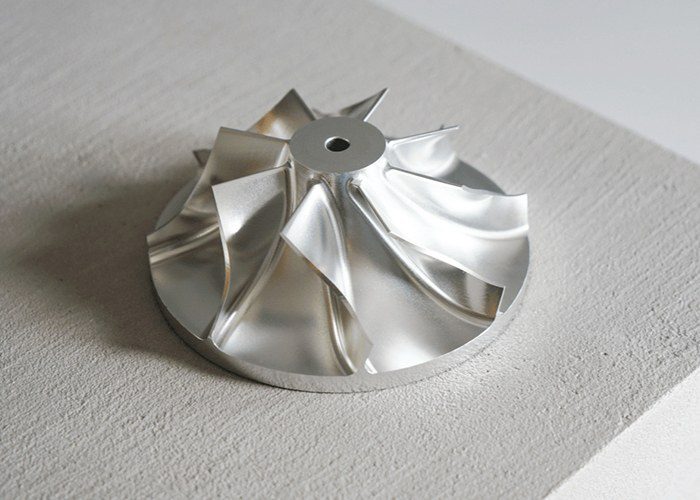
In the vast ecosystem of modern manufacturing, where micron-level accuracy dictates success and production speed determines market competitiveness, CNC Turning Machining Services stand as one of the most fundamental and indispensable processes. While 3D printing and five-axis milling often grab headlines, the humble lathe—now supercharged by computer numerical control (CNC)—remains the quiet workhorse producing billions of cylindrical components that power our world. From the tiny pins inside a smartphone connector to the massive shafts driving industrial turbines, CNC turning services are the unsung heroes of precision engineering.
What Exactly is CNC Turning?
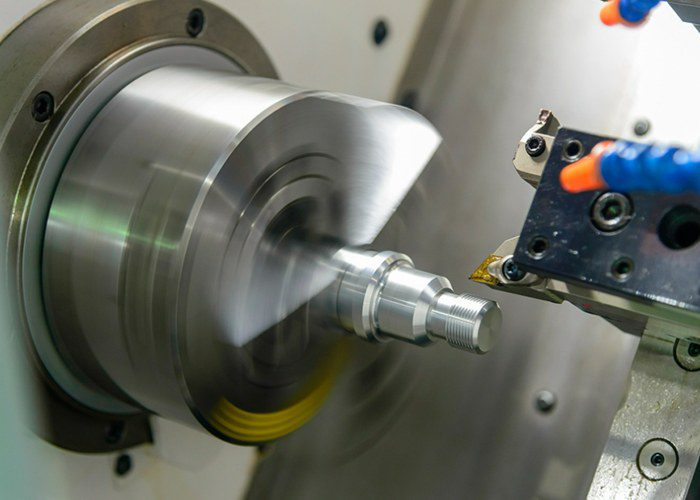
At its core, CNC turning is a subtractive manufacturing process. Unlike milling, where the cutting tool spins and the workpiece remains stationary, turning reverses the dynamic: the workpiece rotates at high speeds while a stationary (or linearly moving) cutting tool removes material to shape the exterior or interior of a part. The defining characteristic of turned parts is symmetry—they are typically cylindrical, conical, or spherical in nature.
The “CNC” element replaces manual human control with computer-aided precision. An operator writes a G-code program—a series of commands dictating spindle speed, tool position, feed rate, and depth of cut—which the machine executes flawlessly thousands of times over. Modern CNC lathes are equipped with live tooling, Y-axis capabilities, and sub-spindles, blurring the line between turning and milling centers. This means a single machine can now perform complex operations like drilling cross-holes, milling flats, or tapping threads without ever moving the workpiece to another station.
The Process: From Raw Stock to Finished Part
A typical CNC turning service begins with cylindrical raw material—usually bar stock made of metal or plastic. The operator loads the bar into the lathe’s spindle, which grips it using a hydraulic chuck. As the spindle rotates, the turret (holding up to 12 or more different cutting tools) indexes the appropriate tool into position.
Roughing passes remove the bulk of the material quickly, leaving a thin “skin” for finishing. Finishing passes then operate at slower feed rates to achieve the required surface finish and dimensional tolerance. For hollow parts, boring bars are used to enlarge existing holes or create internal features. Grooving tools cut recesses, threading tools create screw threads, and parting tools cut the finished component free from the bar stock. An entire simple part—like a bushing or a fitting—can be completed in seconds.
The Unmatched Advantages of CNC Turning Services
Why do engineers specify CNC turning over other methods? The reasons are compelling:
- Exceptional Precision and Repeatability: A modern CNC lathe can hold tolerances as tight as ±0.0001 inches (±2.54 microns). More importantly, it can repeat that precision across 10,000 identical parts. Human error is virtually eliminated.
- High Production Rates: For high-volume production runs (thousands or millions of parts), CNC turning is unmatched. Many services operate Swiss-type lathes or multi-spindle automatics that can produce a finished part every 10 to 30 seconds.
- Complex Geometries with Live Tooling: The advent of live tooling means turned parts are no longer limited to simple cylinders. Hexagonal profiles, off-center holes, keyways, and even eccentric diameters can all be machined in one setup, drastically reducing secondary operation costs.
- Superior Surface Finishes: The continuous cutting action of turning creates naturally smoother finishes compared to milling. With proper tooling and speeds, surface roughness (Ra) can be as low as 0.2 microns, often eliminating the need for grinding.
- Material Versatility: CNC lathes can cut virtually any machinable material—from free-cutting brass and aluminum to hardened tool steels (above 60 HRC), titanium, Inconel, stainless steel, and engineering plastics like PEEK or Delrin.
Critical Applications Across Industries
You cannot spend a day without touching a component made by CNC turning services. Consider these examples:
- Automotive: Engine pistons, brake rotors, transmission shafts, wheel hubs, and fuel injector bodies.
- Aerospace: Landing gear components, hydraulic fittings, turbine engine shafts, and structural bushings. The reliability of turning in aerospace is non-negotiable.
- Medical: Bone screws (often Swiss-turned from titanium or stainless steel), surgical guide pins, dental implant abutments, and orthopedic joint components.
- Defense & Firearms: Suppressor housings, bolt carriers, barrel profiles, and ammunition casings.
- Oil & Gas: Valve stems, drill pipe connectors, and downhole tool components that must withstand extreme pressure and corrosion.
Choosing the Right CNC Turning Service Provider
Selecting a turning shop is not merely about finding the cheapest hourly rate. Engineers and procurement managers should evaluate:
- Machine Capabilities: Do they offer live tooling, Y-axis, and multi-axis lathes for complex parts? What is their maximum turning diameter and length?
- Quality Certifications: ISO 9001:2015 is standard; AS9100D for aerospace or ISO 13485 for medical indicates higher rigor.
- Inspection Equipment: Do they have CMM (coordinate measuring machines), optical comparators, and surface roughness testers?
- Material Sourcing: Can they provide material certifications (mill test reports) for traceability?
- Lead Times and Volume Flexibility: Some shops specialize in rapid prototyping (1-50 parts), while others are optimized for mass production (10,000+ parts).
The Future of CNC Turning: Automation and AI
The evolution is far from over. Today, robotic part loaders and bar feeders allow lights-out manufacturing—running lathes unattended overnight. Machine shops are integrating in-process gauging, where the machine automatically measures a part and compensates for tool wear in real time. Artificial intelligence is beginning to predict tool breakage before it happens by analyzing spindle load and vibration patterns.
Furthermore, hybrid manufacturing machines that combine additive (laser cladding) with CNC turning are emerging, allowing shops to repair worn shafts or add exotic alloys to a base material.
Conclusion
CNC Turning Machining Services are far more than just “spinning a part and cutting it.” They represent a perfect marriage of mechanical physics, material science, and digital programming. For product designers and engineers, understanding the capabilities of modern turning is essential to designing parts that are not only functional but also cost-effective to produce.
Whether you are prototyping a medical device, scaling up a consumer electronics component, or rebuilding a heavy truck’s drivetrain, the precision, speed, and versatility of CNC turning services will remain a cornerstone of manufacturing for decades to come. In a world demanding tighter tolerances and faster delivery, the CNC lathe is not going away—it is getting smarter, faster, and more indispensable.