In today’s fast-paced industrial landscape, precision, efficiency, and adaptability are not just advantages—they are necessities. From aerospace components to medical devices, and from automotive assemblies to heavy machinery, the demand for custom-engineered parts has skyrocketed. At the heart of this manufacturing revolution lies CNC machining—a technology that has redefined what is possible in custom industrial part production. This article explores the world of CNC custom industrial parts, delving into their benefits, applications, materials, and the meticulous process that ensures every component meets the highest standards.
What Are CNC Custom Industrial Parts?
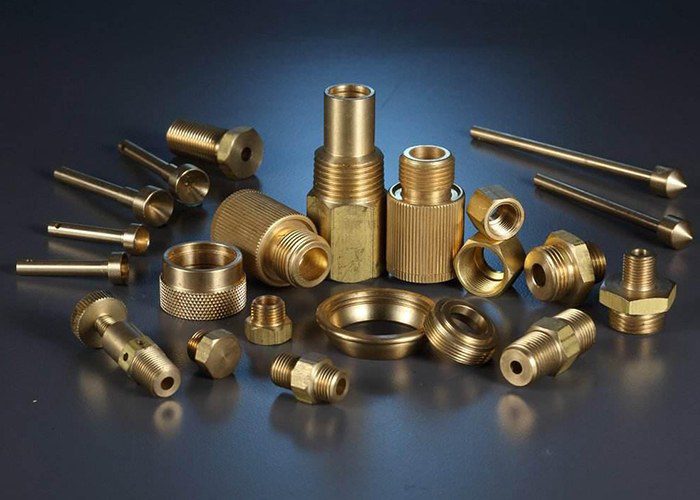
CNC stands for Computer Numerical Control. In essence, CNC machining is a subtractive manufacturing process where pre-programmed computer software dictates the movement of factory tools and machinery. When we talk about “custom industrial parts,” we refer to components that are designed and produced according to specific client requirements, rather than off-the-shelf standardized items. Combining these two concepts, CNC custom industrial parts are precision-engineered components created using automated, computer-guided machines to match unique design specifications, tolerances, and geometries.
Unlike traditional manual machining, where an operator directly controls the cutting tools, CNC machining offers unparalleled repeatability and complexity. Whether it’s a single prototype or a batch of thousands, each part emerges identical to the last, with tolerances often as tight as ±0.005 mm.
Key Advantages of CNC Custom Industrial Parts
The popularity of CNC machining in producing custom parts stems from several distinct advantages:
- Unmatched Precision and Accuracy
CNC machines operate with micrometer-level precision. For industries like aerospace or medical devices, where a fraction of a millimeter can mean the difference between success and failure, this level of accuracy is non-negotiable. Custom parts can be produced with complex features—undercuts, deep cavities, and intricate 3D contours—that would be impossible or extremely time-consuming manually. - Material Versatility
CNC machining works with an extensive range of materials. Metals such as aluminum, stainless steel, brass, titanium, and Inconel are commonly used, as well as engineering plastics like PEEK, nylon, acetal, and polycarbonate. This flexibility allows engineers to select the ideal material for the part’s intended environment—whether it requires high strength, corrosion resistance, lightweight properties, or thermal stability. - Scalability from Prototype to Production
One of the greatest strengths of CNC machining is its seamless transition from prototyping to full-scale production. The same digital file (CAD model) that guides the machine for a single prototype also runs the production run. This eliminates costly retooling and ensures consistency across the entire lifecycle of the product. - Rapid Turnaround and Cost-Effectiveness
For small to medium batch sizes, CNC machining is often the most economical option. Unlike injection molding, which requires expensive molds, CNC custom parts are produced directly from solid stock. This reduces upfront costs and lead times, making it ideal for iterative design and just-in-time manufacturing. - Complex Geometries and Tight Tolerances
Modern 5-axis CNC machines can approach a workpiece from any direction, allowing for single-setup machining of complex parts. This reduces human error, improves surface finishes, and enables features like angled holes, curved surfaces, and intricate pockets that would otherwise require multiple operations.
Common Applications Across Industries
The versatility of CNC custom industrial parts means they appear in virtually every sector:
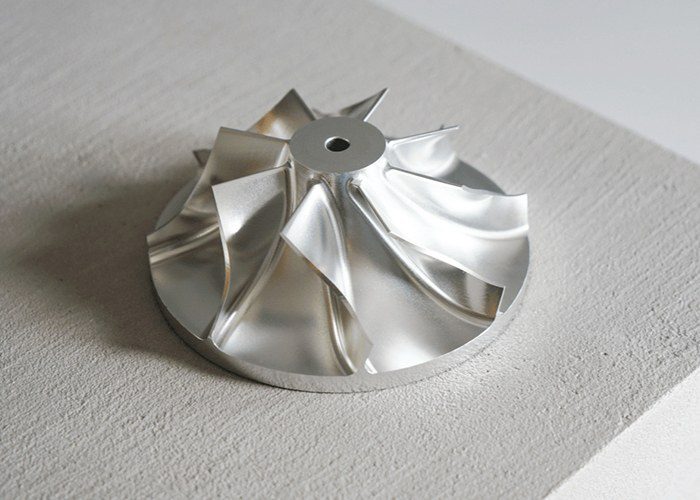
- Aerospace & Defense: Turbine blades, structural brackets, landing gear components, and engine mounts—all requiring lightweight yet incredibly strong materials and extreme precision.
- Medical: Surgical instruments, orthopedic implants, dental components, and custom prosthetics. CNC machining allows for patient-specific designs and biocompatible materials.
- Automotive: Performance engine parts, transmission housings, brake calipers, and custom suspension components—especially for racing or prototype vehicles.
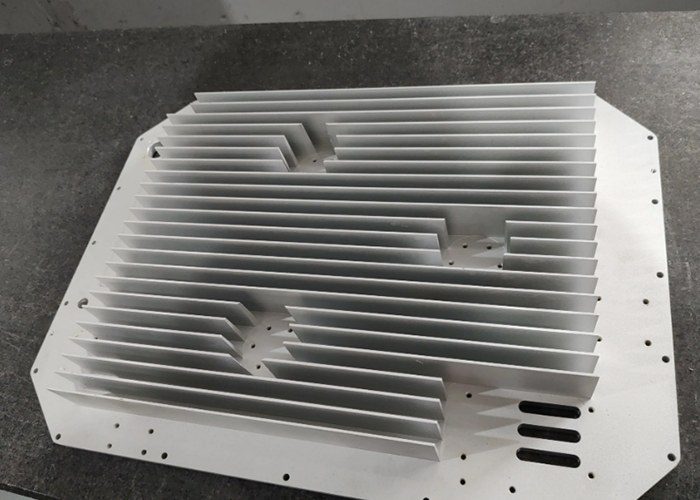
- Electronics: Heat sinks, enclosures, connectors, and EMI shielding components that demand fine details and tight tolerances.
- Oil & Gas: Valve bodies, pump components, and drilling equipment that must withstand high pressure, corrosion, and extreme temperatures.
- Robotics & Automation: Custom gears, end effectors, linkage arms, and sensor mounts for industrial robots and automated assembly lines.
The Production Process: From Idea to Finished Part
Creating a high-quality CNC custom industrial part follows a disciplined workflow:
- Design (CAD): The process begins with a 3D model created in computer-aided design (CAD) software. This model includes all dimensions, tolerances, and surface finish requirements. Proper design for manufacturability (DFM) is crucial at this stage.
- Programming (CAM): The CAD file is imported into computer-aided manufacturing (CAM) software, where a toolpath is generated. The programmer selects cutting tools, spindle speeds, feed rates, and cutting sequences to optimize efficiency and accuracy.
- Machine Setup: The raw material (bar stock, billet, or plate) is secured in the CNC machine (mill, lathe, or mill-turn center). Appropriate cutting tools are loaded into the tool changer, and coolant systems are primed.
- Machining: The machine executes the G-code program, removing material layer by layer. Depending on complexity, a part may undergo milling (rotating tools), turning (rotating workpiece), drilling, tapping, or even multi-axis simultaneous cutting.
- Inspection: After machining, every critical dimension is inspected using precision tools such as micrometers, calipers, CMM (coordinate measuring machines), or optical comparators. First-article inspection (FAI) reports are often provided.
- Secondary Operations: Some parts require post-processing: deburring, heat treatment, anodizing, plating, powder coating, or passivation. These steps enhance mechanical properties, corrosion resistance, or aesthetics.
- Final Quality Assurance: A final inspection ensures the part meets all specified requirements. Documentation, including material certificates and inspection reports, is compiled for traceability.
Choosing the Right CNC Partner for Custom Industrial Parts
Not all CNC shops are equal. When sourcing custom parts, look for a manufacturer that offers:
- Multi-axis capabilities (4-axis and 5-axis) for complex geometries.
- In-house metrology to guarantee quality.
- Material sourcing expertise—especially for aerospace-grade or medical-grade alloys.
- Flexible batch sizes from one-off prototypes to thousands of pieces.
- Certifications such as ISO 9001:2015, AS9100D (aerospace), or ISO 13485 (medical).
Conclusion
CNC custom industrial parts are the unsung heroes of modern engineering. They empower designers to push boundaries, enable industries to operate with precision, and provide the flexibility that mass production methods cannot match. As manufacturing continues to evolve with digital threads, automation, and smart factories, CNC machining remains a foundational pillar—reliable, precise, and endlessly adaptable. Whether you are building the next generation of electric vehicles, a life-saving medical device, or a high-performance drone, CNC custom parts turn your digital blueprints into physical reality, one micron at a time.