
In an era where mass production once reigned supreme, the manufacturing landscape is shifting toward personalization, agility, and precision. At the heart of this transformation lies customized CNC machining — a process that combines the automation of computer numerical control with the flexibility to produce unique, client-specific parts. Unlike standard CNC services that churn out identical components in high volumes, customized CNC machining tailors every toolpath, every tolerance, and every finish to meet the exact specifications of a single design. This article explores the principles, advantages, applications, and future of this bespoke manufacturing approach.
What Is Customized CNC Machining?
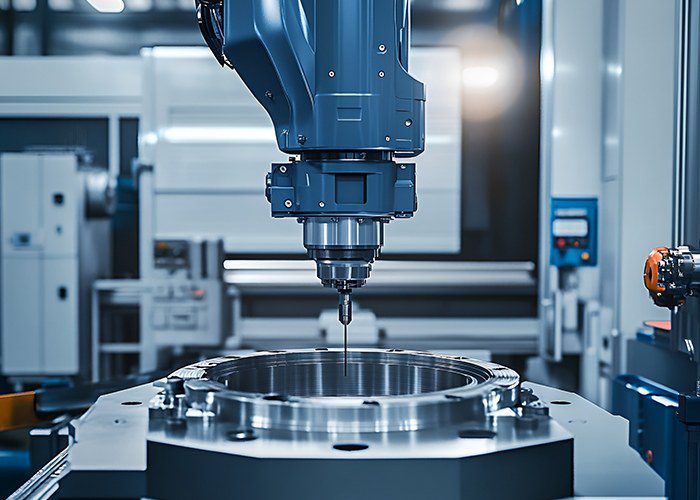
CNC machining is a subtractive manufacturing process that uses pre-programmed software to control the movement of factory tools and machinery. When we add “customized” to the term, it means that each workpiece is produced according to a unique digital blueprint — often a one-off prototype, a limited run of specialized components, or parts with complex geometries that cannot be made using standard templates. Customized CNC machining leverages mills, lathes, routers, and grinders to carve solid blocks of metal, plastic, wood, or composites into precise shapes. The “custom” aspect begins with the CAD (computer-aided design) file, which is converted into CAM (computer-aided manufacturing) instructions. From there, every operation — from roughing to finishing — is optimized for that particular part.
Key Advantages Over Conventional Manufacturing
- Unmatched Precision and Repeatability
Standard CNC is already accurate to within ±0.001 inches, but customized machining takes it further by allowing iterative refinement. If a client requires a tolerance of ±0.0002 inches for a medical implant or an aerospace valve, the machinist can adjust feeds, speeds, and tooling specifically for that job. Once the program is perfected, every copy — even in small batches — will be identical. - Geometric Freedom
Mass production often relies on molds or dies, which are expensive and inflexible. Customized CNC machining has no such constraints. Five-axis CNC machines can undercut, contour, and drill at compound angles, producing organic shapes, internal cavities, and non-standard threads that would be impossible with manual machining or conventional tooling. - Material Versatility
From titanium and Inconel to acetal resin and carbon-fiber composites, customized CNC machining handles nearly any engineering material. This is critical for industries like oil and gas, where a part must resist corrosion, or automotive racing, where weight reduction is paramount. - Rapid Prototyping and Low-Volume Economy
Traditional injection molding requires a costly mold that only pays off at tens of thousands of units. Customized CNC machining has no tooling cost — only programming and setup. This makes it ideal for producing 1 to 500 parts economically. Engineers can test a design, revise the CAD file, and have a new iteration machined within days, drastically shortening development cycles.
Core Technologies Behind Customized CNC
Several advanced techniques enable true customization:
- Multi-axis milling (3-axis to 5-axis): Allows machining from any direction without repositioning.
- Swiss-type turning: For long, slender, and intricate parts like bone screws or fuel injector nozzles.
- Electrical discharge machining (EDM): For hard metals and complex cavities that traditional cutters cannot reach.
- Laser and waterjet cutting: For sheet-based custom profiles with minimal heat-affected zones.
Integrating these technologies into a single workflow, many custom CNC shops also offer secondary operations such as anodizing, passivation, heat treating, or custom engraving — all coordinated from the same digital thread.
Real-World Applications
- Medical & Dental: Customized CNC produces patient-specific hip stems, spinal cages, and surgical guides. Each implant may differ slightly based on CT scan data, yet all must meet FDA traceability standards.
- Aerospace & Defense: Replacement parts for legacy aircraft, where original molds no longer exist, are recreated via reverse engineering and CNC machining. Satellite components with weight-critical lattice structures are also machined on demand.
- Automotive Prototyping & Motorsport: Formula 1 teams use customized CNC to make aerodynamic test parts, brake calipers, and suspension knuckles — often in limited runs of ten or fewer.
- Custom Consumer Goods: High-end bicycles, camera rigs, and even luxury pens rely on CNC-machined aluminum or brass parts that bear the customer’s exact dimensions and logos.
- Mold & Die Making: Ironically, the molds used for mass production are themselves made via customized CNC machining, requiring extreme precision and surface finish.
Comparison with 3D Printing and Manual Machining
While 3D printing (additive manufacturing) excels at extremely complex internal geometries, it often suffers from anisotropic strength and limited material choices. Customized CNC machining produces isotropic, fully dense parts with superior mechanical properties. Compared to manual machining, CNC offers far higher accuracy, speed, and ability to replicate complex curves. The two are not mutually exclusive; many hybrid shops first 3D print a concept model, then CNC-machine critical mating surfaces for final fit.
Future Trends
The next frontier for customized CNC machining includes:
- AI-powered process optimization: Algorithms that automatically select toolpaths, cutting parameters, and even predict tool wear for each unique job.
- In-line inspection: CNC machines with integrated probes that measure the part during machining and automatically compensate for any deviation.
- Cloud-based job quoting and DFM feedback: Customers upload CAD files, receive instant design-for-manufacturability suggestions, and get a price — all within minutes.
- Sustainable manufacturing: Near-net-shape blanks and cryogenic machining reduce material waste and coolant usage, making custom runs greener.
Conclusion
Customized CNC machining is far more than a niche service — it is the embodiment of Industry 4.0’s promise: flexible, data-driven, and user-centric production. Whether enabling a surgeon to save a life with a custom implant, helping an engineer test a revolutionary engine design, or allowing a hobbyist to realize a dream part, this technology democratizes precision manufacturing. As software, sensors, and automation continue to evolve, the line between “custom” and “standard” will blur, but the core value will remain: making exactly what you need, when you need it, with uncompromising quality. In a world that craves individuality, customized CNC machining delivers — one micron at a time.


