
When we think of “Made in China,” the mind often drifts toward massive assembly lines producing smartphones, toys, and textiles by the millions. But beneath this visible tide of consumer goods lies a quieter, more sophisticated revolution: precision machining. Over the past two decades, China has transformed itself from a low-cost parts supplier into a global powerhouse of high-tolerance manufacturing. Today, China precision machining is not merely about cutting metal; it is about enabling the future of aerospace, medical devices, automotive engineering, and renewable energy.
The Technological Leap
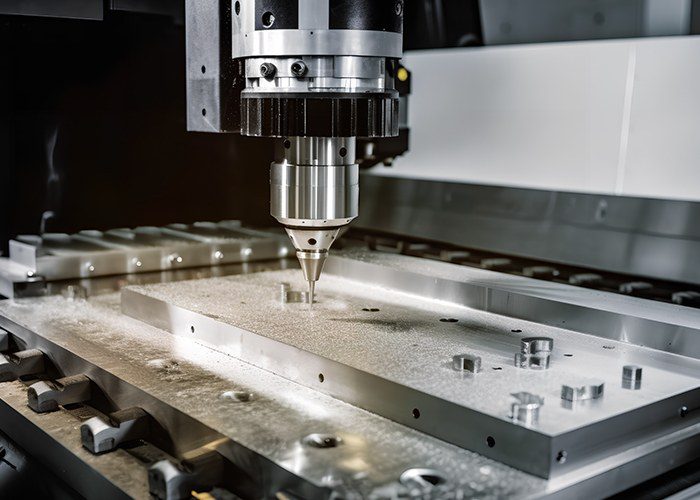
Precision machining refers to the process of removing material from a workpiece to create components with extremely tight tolerances—often measured in microns (thousandths of a millimeter). China’s journey in this field began with simple lathes and milling machines, but it has rapidly evolved into a landscape dominated by 5‑axis CNC (computer numerical control) machining centers, Swiss-type automatic lathes, and advanced electrical discharge machining (EDM) equipment.
Chinese manufacturers have invested heavily in German and Japanese machine tools (from DMG Mori, Mazak, and Okuma), while simultaneously developing their own competitive domestic brands such as Dalian Machine Tool and Qinchuan. More importantly, the country has mastered the process integration that turns raw metal into finished components in a single automated cycle. From hardened steel to titanium alloys and engineering plastics, Chinese machine shops now routinely handle materials that were once the exclusive domain of European or American specialists.
Quality Control: From “Good Enough” to World‑Class
A persistent stereotype about Chinese manufacturing is inconsistent quality. While that reputation may have been earned decades ago, today’s leading precision machining firms in China operate under stringent quality management systems. ISO 9001:2015 is standard, but many shops also hold AS9100D (aerospace), IATF 16949 (automotive), and ISO 13485 (medical devices). They deploy coordinate measuring machines (CMMs), optical comparators, and laser micrometers to verify every critical dimension.
In fact, some Chinese precision machining companies now achieve process capability indices (Cpk) above 1.33 for high-volume production—a level that satisfies even the most demanding European and North American customers. Third-party audits by companies like TÜV, SGS, and Bureau Veritas are routine. The result is a growing trust: many global OEMs have moved beyond prototyping in China to full-scale serial production of safety‑critical components.
The Cost‑Efficiency Equation
The most obvious advantage of China precision machining remains cost. However, it is no longer simply cheap labor. Wages for skilled CNC machinists in China’s first‑tier cities have risen significantly, yet total landed costs (including tooling, secondary operations, heat treatment, and surface finishing) can still be 30–50% lower than in Germany, Japan, or the United States. This advantage comes from a combination of factors: efficient supply chains for raw materials (aluminum, steel, brass, and plastics are available locally), lower factory overheads, and a highly competitive ecosystem of subcontractors.
Furthermore, many Chinese precision machining companies have adopted lean manufacturing and just‑in‑time delivery. Lead times for complex machined parts—say, a custom gearbox housing or a surgical instrument component—can be as short as two to three weeks from drawing approval to shipment. For urgent orders, expedited air freight makes it possible to go from CAD file to installation in under ten days.
Key Applications and Success Stories
The impact of China precision machining is felt across multiple industries.
- Automotive: From fuel injection nozzles to turbocharger housings and EV motor shafts, Chinese machine shops supply many of the world’s top automakers, including Tesla, BMW, and Volkswagen. The shift to electric vehicles has increased demand for lightweight, high‑precision battery components and thermal management parts.
- Medical: Surgical drills, orthopedic implants, and dental instruments require flawless surface finishes and biocompatibility. Several Chinese precision machining firms have gained FDA and CE certification, exporting sterile‑packaged components to hospitals and device manufacturers in Europe and North America.
- Aerospace & Defense: Although subject to export controls, non‑sensitive aerospace parts—such as hydraulic fittings, bracket assemblies, and instrument housings—are routinely machined in China for Boeing, Airbus, and their tier‑1 suppliers.
- Robotics & Automation: The rise of collaborative robots (cobots) and automated guided vehicles (AGVs) has created demand for complex, multi‑axis machined frames and gears. China’s own robotics industry, now the world’s largest, relies heavily on domestic precision machining.
Challenges and the Road Ahead
No industry is without challenges. China precision machining faces rising labor costs, increasing environmental regulations (especially regarding coolant disposal and energy use), and geopolitical tensions that disrupt supply chains. Some Western companies are pursuing “China plus one” strategies to diversify risk. Additionally, while China excels at production, it still lags in ultra‑precision machining (sub‑micron tolerances) and exotic alloys used in space or nuclear applications.
Nevertheless, the trajectory is clear. Chinese firms are investing in automation, artificial intelligence for predictive quality control, and additive‑subtractive hybrid machines. The government’s “Made in China 2025” initiative specifically prioritizes high‑end CNC systems and precision manufacturing. Over the next decade, we can expect China to close the remaining gap with world leaders—not by copying, but through its own relentless iteration and scale.
Conclusion
China precision machining has come of age. It is no longer a fallback option for cheap, low‑precision parts, but a strategic partner for global innovation. Whether you need 50 pieces of a complex medical prototype or 500,000 automotive components delivered just in time, China’s precision machining ecosystem offers a compelling combination of accuracy, speed, and value. For engineers and procurement professionals worldwide, ignoring China’s capabilities today would mean missing out on one of the most efficient manufacturing resources on the planet.
The chips that fly from Chinese CNC machines are not just waste metal—they are the shavings of a new industrial reality. And that reality is precise, reliable, and here to stay.


