
In the vast ecosystem of modern manufacturing, few technologies have been as transformative as Computer Numerical Control (CNC) processing. When applied to the production of hardware parts—ranging from tiny screws and brackets to complex engine components and aerospace fittings—CNC machining represents the gold standard for precision, repeatability, and efficiency. This article explores the intricacies of CNC processing for hardware parts, its advantages over conventional methods, and its indispensable role across global industries.
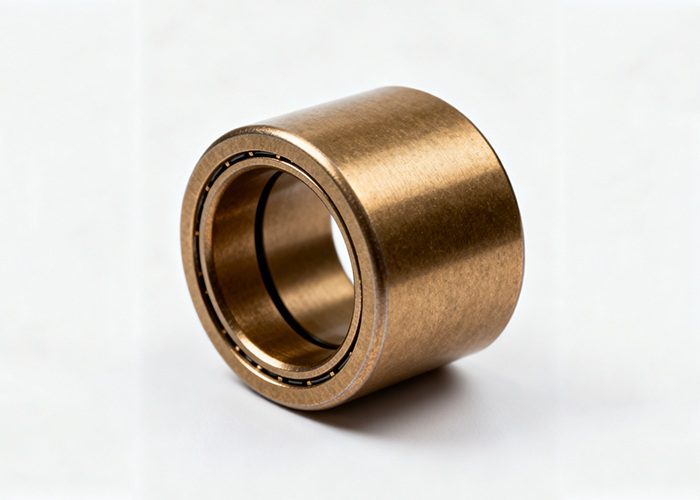
What is CNC Processing?
CNC processing is a subtractive manufacturing technique where pre-programmed computer software dictates the movement of factory tools and machinery. Unlike manual machining, which requires a human operator to guide levers and wheels, CNC systems rely on digital instructions (G-code) to control lathes, mills, routers, and grinders with microscopic accuracy.
For hardware parts—typically defined as metallic components used in assemblies, structures, or mechanisms—CNC machining can handle a wide range of materials, including aluminum, stainless steel, brass, titanium, copper, and even hardened alloys. The result is a finished part that matches the original CAD (Computer-Aided Design) model within tolerances as tight as ±0.001 inches or less.
The Step-by-Step Process of CNC Hardware Machining
Creating a hardware part via CNC processing involves several disciplined stages:
- Design and CAD Modeling: Every project begins with a detailed 3D solid model. Engineers define not only the geometry but also critical dimensions, thread specifications, surface finishes, and tolerances.
- CAM Programming: The CAD file is imported into CAM (Computer-Aided Manufacturing) software, where a machinist generates the toolpaths—the precise routes that cutting tools will follow. This step also determines spindle speeds, feed rates, coolant usage, and tool changes.
- Machine Setup: The appropriate raw material (e.g., a bar of 6061 aluminum or a block of cold-rolled steel) is secured in the CNC machine’s work-holding device, such as a vise, chuck, or fixture. Cutting tools are loaded into the tool turret or automatic tool changer.
- Machining Execution: The operator runs a simulation or dry run to verify no collisions occur. Once confirmed, the program is executed. The machine automatically mills, drills, turns, or grinds the workpiece against the digital blueprint.
- Inspection and Quality Control: After machining, parts are deburred, cleaned, and inspected. Using tools like CMMs (Coordinate Measuring Machines), micrometers, and optical comparators, quality technicians verify that every feature meets the required specifications.
Why CNC Processing for Hardware Parts?
Compared to traditional manual machining or other manufacturing methods like casting or stamping, CNC processing offers several critical advantages for hardware parts:
- Unmatched Precision and Consistency: A CNC machine can produce the 500th part with exactly the same accuracy as the first. For industries where hardware failures can lead to catastrophic consequences (e.g., braking systems or medical implants), this consistency is non-negotiable.
- Complex Geometries Made Simple: Modern hardware parts are rarely simple blocks or cylinders. They feature angled faces, internal cavities, deep holes, curved threads, and ergonomic contours. Multi-axis CNC machines (5-axis or even 6-axis) can machine these features in a single setup, eliminating multiple manual operations.
- Scalability from Prototyping to Production: CNC processing is equally adept at making a single prototype for a new drone design or running 10,000 identical brackets for an automotive assembly line. The only major change is the setup and programming time, which is amortized over larger batch sizes.
- Material Versatility: Hardware parts must withstand varying stresses, temperatures, and corrosive environments. CNC machines can switch between soft brass and superalloys like Inconel with only tooling and parameter adjustments, offering manufacturers immense flexibility.
- Reduced Human Error and Increased Safety: Once a CNC program is verified, the automated process significantly reduces scrap rates caused by operator fatigue or distraction. Moreover, operators are removed from direct contact with spinning cutters and flying chips, improving workplace safety.
Key Hardware Parts Produced by CNC Machining
The term “hardware parts” encompasses an enormous range of components. Some common examples produced via CNC processing include:
- Fasteners: Custom bolts, nuts, studs, and threaded rods that don’t conform to off-the-shelf standards.
- Brackets and Mounts: Structural connectors used in automotive chassis, solar panel frames, industrial shelving, and robotics.
- Enclosures and Heat Sinks: Electronic hardware often requires machined aluminum housings with intricate cooling fins.
- Pneumatic and Hydraulic Fittings: Brass or stainless steel connectors for fluid power systems, requiring leak-proof threads and smooth internal bores.
- Gears and Splines: Precision rotary components for transmissions, actuators, and power tools.
- Medical Hardware: Bone screws, surgical guide tools, and implantable device components made from biocompatible titanium or stainless steel.
Challenges and Solutions in CNC Hardware Processing
Despite its strengths, CNC processing is not without challenges. Tool wear is a significant factor when cutting hard materials; carbide or diamond-coated tools are often required to maintain edge life. Additionally, chip management can be problematic—long, stringy chips from ductile metals like stainless steel can tangle around the spindle. Modern machines address this with high-pressure coolant systems and chip conveyors.
Another challenge is initial investment. A professional 5-axis CNC machining center can cost hundreds of thousands of dollars, and skilled programmers are in high demand. However, for companies that consistently produce hardware parts, the return on investment through reduced labor, lower scrap, and faster cycle times quickly justifies the expense.
The Future of CNC Processing for Hardware Parts
The horizon for CNC machining is bright, driven by several emerging trends. Automation and lights-out manufacturing are becoming more accessible, with robotic arms loading and unloading parts, allowing machines to run unattended overnight. Digital twin technology allows programmers to simulate entire machining processes virtually, optimizing toolpaths before any metal is cut. Hybrid machines that combine additive manufacturing (3D printing) with subtractive CNC processing enable the creation of hardware parts with complex internal lattices that were previously impossible to manufacture.
Moreover, Industry 4.0 connectivity means that every machine, tool, and measurement device can share data in real time. A CNC lathe might automatically adjust its feed rate based on real-time vibration analysis, or a CMM might send correction data back to the machining center to compensate for thermal drift.
Conclusion
CNC processing has evolved from a niche automation technique into the backbone of modern hardware part production. Its ability to transform raw metal into finished components with micron-level accuracy, complex geometries, and flawless repeatability has enabled advancements in aerospace, automotive, medical, and consumer electronics. While the technology requires substantial capital and expertise, the benefits in quality, safety, and scalability are undeniable. As automation and digital integration continue to advance, CNC machining will remain the premier method for turning digital designs into physical hardware that powers our world. Whether you need a single custom fitting or a million identical brackets, CNC processing delivers the precision that modern engineering demands.


