
In the relentless march of modern manufacturing, standardization is no longer the ultimate benchmark of excellence. Instead, the ability to produce highly specific, intricate, and reliable components on demand has become the true differentiator. Customized Computer Numerical Control (CNC) machined parts stand at the forefront of this evolution, serving as the unsung heroes behind everything from aerospace turbines to medical implants. While off-the-shelf hardware may fill general needs, the bespoke approach to CNC machining empowers engineers to push boundaries, reduce waste, and achieve performance metrics that were previously unattainable.
Defining the Customized CNC Edge
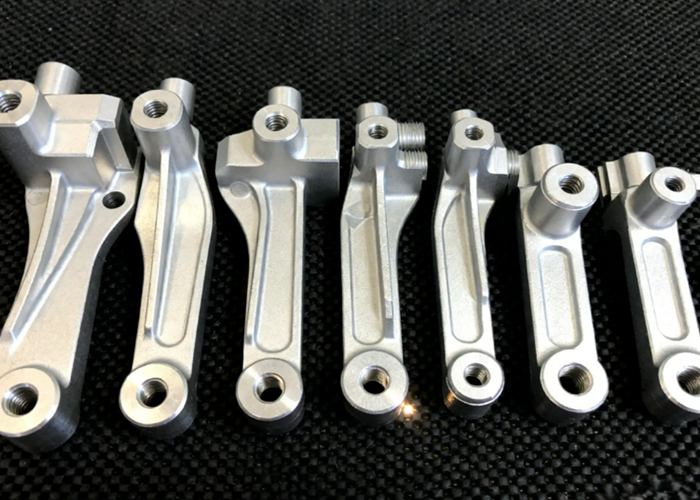
At its core, custom CNC machining involves the use of pre-programmed software to dictate the movement of factory tools and machinery. However, the “customized” aspect elevates this process from mere production to precision engineering. Unlike mass production, where a single mold or die churns out thousands of identical units, customization focuses on the specificity of the client’s requirements. It allows for the manipulation of complex geometries, the selection of exotic materials, and the adjustment of surface finishes to meet exact physical and chemical tolerances. More than just assembly, this is where a digital vision takes on tangible, physical form.
Material Versatility and Optimization
One of the most compelling advantages of customized CNC machining lies in its material flexibility. Industries often require parts that withstand extreme temperatures, corrosive environments, or immense mechanical stress. Customization permits the use of specialized alloys, high-grade stainless steels, titanium, brass, and even advanced engineering plastics like PEEK or Ultem. When producing parts for a subsea oil rig, for instance, a standard steel bolt will fail quickly. A customized CNC-machined bolt made from duplex stainless steel, with a precisely cut thread pitch designed for high torque, offers a solution that is tailored to the environment. This selective material usage not only extends the lifespan of the component but also optimizes the overall cost-effectiveness of the project.
Complex Geometries: The Digital-Sculpting Advantage
Traditional manufacturing methods, such as manual milling or casting, struggle with intricate internal cavities or undercuts. Custom CNC machining, particularly with 5-axis capabilities, bypasses these limitations. It allows for the creation of “impossible” shapes—organic curves, deep pockets, and angled holes—that are often critical for fluid dynamics or weight reduction. In the racing industry, unsprung mass is the enemy of performance. Custom CNC parts allow engineers to remove excess material from suspension components, leaving behind a structure that retains the strength of a solid block but weighs significantly less. This “hollowing out” process is only feasible when the machine path is programmed specifically for that unique design, utilizing advanced surfacing algorithms to ensure structural integrity remains intact.
Tolerances as a Competitive Advantage
When discussing customized CNC parts, the term “tolerance” is paramount. Standard components often operate within a tolerance of +/- 0.005 inches. For high-stakes applications, this level of variance is catastrophic. Customization allows for micromachining where tolerances can be held to +/- 0.0001 inches—a fraction of the width of a human hair. In the semiconductor industry, this level of precision is non-negotiable, as wafer-handling equipment must maintain flawless alignment through millions of repetitive cycles. By customizing the cutting parameters, tooling, and cooling methods to a specific design, CNC shops can guarantee repeatability that mass-produced parts simply cannot offer.
The Factor of On-Demand Manufacturing
The economic landscape of inventory management has shifted. Holding massive stockrooms of spare parts is no longer financially viable. Customized CNC machining offers an agile response to the “just-in-time” manufacturing ethos. When a legacy machine breaks down in a manufacturing plant, finding a direct replacement part might take weeks or months of international shipping. Conversely, customized CNC machining can produce that part locally in a matter of hours. A machine shop can reverse-engineer or read a digital CAD file and cut a repair part that fits perfectly, saving the company days of downtime and thousands of dollars in lost revenue. This rapid prototyping and rapid manufacturing capability transforms CNC machining from a production service into a logistical rescue tool.
Surface Finish and Post-Processing
Functionality extends beyond the dimensions of the part. The surface finish of a component dictates its friction coefficient, its ability to bond with adhesives, and its resistance to corrosion. Customization allows for an array of post-processing options that are selected based on the part’s application. For a hydraulic piston, a mirror-like finish achieved through diamond turning reduces seal wear. For a medical bone screw, a specific surface roughness (Ra value) promotes osseointegration. These finishes are not by-products of the machining process; they are features that are planned into the CNC program from the very first line of G-code, ensuring that the final product is ready for immediate integration.
Sustainability and Waste Reduction
The industry is increasingly focused on “green manufacturing.” Interestingly, customized CNC machining supports sustainability in a way that casting or injection molding cannot. While molding requires expensive tooling that often ends up in a landfill, CNC machining is a subtractive process that can often be optimized to use significantly less raw material—and the chips produced are 100% recyclable. Furthermore, by producing parts that last longer, require less maintenance, and improve energy efficiency through reduced weight, customized machining contributes to the overall lifecycle sustainability of the final product.
The Future: AI-Assisted Customization
Looking forward, the role of custom CNC machining is expanding through AI and machine learning. Smart algorithms are now capable of analyzing a custom design and predicting deflection, stress, and heat distribution before the first cut is made. This “digital twin” approach allows for the customization of the process itself, adjusting feed rates and spindle speeds on the fly to compensate for material anomalies. This ensures that even the most complex custom orders are manufactured right the first time, with zero defects.
In conclusion, customized CNC machined parts are more than just metal or plastic shapes; they are the embodiment of problem-solving. They bridge the gap between the limitations of standard manufacturing and the ambition of modern engineering. As industries move toward lighter, stronger, and more efficient systems, the reliance on custom machining will only deepen, solidifying its role as the backbone of industrial innovation.


