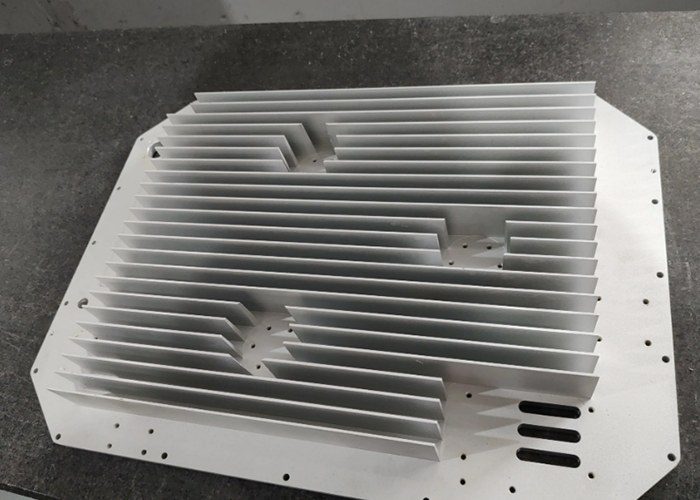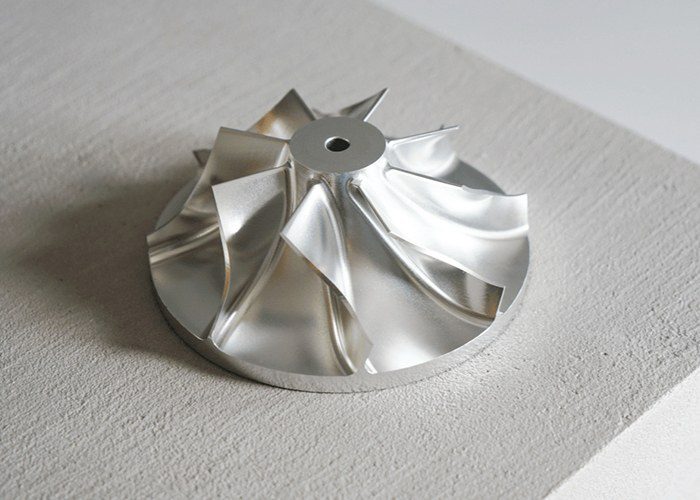
In an era where industrial systems demand ever-greater precision, complexity, and reliability, custom CNC machined mechanical parts have emerged as the indispensable foundation of advanced manufacturing. From the turbine blades that power commercial aircraft to the surgical implants that restore human mobility, these precision-engineered components enable technologies that were unimaginable just a generation ago. Computer Numerical Control (CNC) machining has evolved far beyond its origins as a simple automated cutting process—it is now a sophisticated, multi-axis, digitally integrated manufacturing discipline that sits at the heart of Industry 4.0.
The Essence of Custom CNC Machining
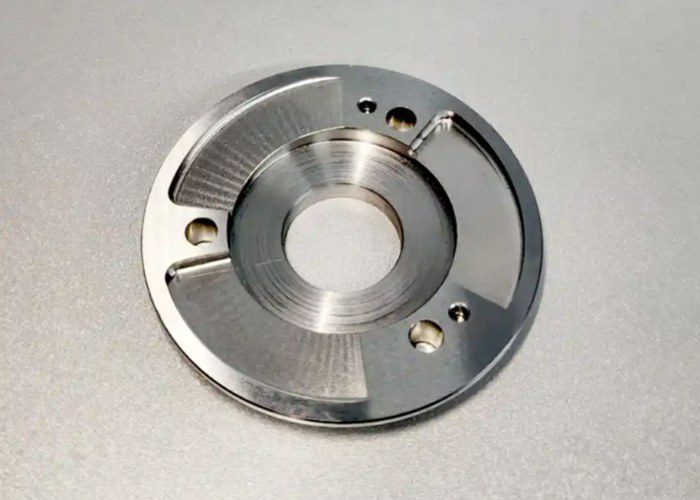
At its core, custom CNC machining is a subtractive manufacturing process in which computer-controlled tools remove material from a solid workpiece to create a part with exacting dimensions and geometries. What distinguishes custom CNC machining from mass production is its ability to produce components tailored precisely to a client’s specifications—not just in dimensions and shapes, but also in material selection, surface finishes, and mechanical properties. This level of customization is realized through precise computer programming that drives machine tools with exceptional accuracy, translating digital design files directly into intricately structured parts with micron-level precision.
The precision capabilities of modern CNC machining are nothing short of remarkable. Advanced CNC machines can now hold tolerances within ±1 micron—one-thousandth of a millimeter—and switch between different parts with minimal downtime. In aerospace applications, turbine blades routinely require tolerances tighter than 4 microns to withstand supersonic stresses. This extraordinary accuracy is not merely a technical achievement; it is a functional necessity. In mission-critical systems ranging from jet engines to medical devices, even a fractional deviation from design specifications can lead to catastrophic failure, compromised safety, or unacceptable performance degradation.
The Technological Evolution Driving Customization
The transformation of CNC machining into a truly customizable manufacturing platform has been driven by relentless technological advancement. Traditional machining relied on two- or three-axis systems that were effective for simple geometries but limited in their capacity for complexity. Today’s advanced machining centers incorporate five or even six axes of simultaneous motion, live tooling that enables drilling, milling, and tapping in a single setup, and dual spindles that can machine both ends of a part concurrently. This multi-axis capability allows manufacturers to produce parts with intricate contours, deep cavities, asymmetric features, and complex internal geometries in a single automated process—eliminating the need for multiple setups, reducing handling errors, and dramatically shortening production cycles.
Artificial intelligence is further accelerating this evolution. AI-powered systems now optimize tool paths in real time, predict machine failures before they occur, and improve overall equipment efficiency through continuous data analysis. These intelligent systems are particularly valuable for high-volume runs and complex parts where precision and uptime are critical. Meanwhile, the integration of digital thread technologies—seamless data flow between CAD/CAM design platforms and ERP/MRP production systems—enables full traceability, real-time quoting, and live order tracking from design through delivery.
Material Diversity: Expanding the Possible
One of the defining advantages of custom CNC machining is its remarkable material versatility. The process supports precision machining of an extensive range of materials, including aluminum alloys (such as 6061 and 7075), stainless steels (303, 304, 316L), titanium alloys, brass, copper, and high-performance superalloys like Inconel. Engineering thermoplastics—including PEEK, Delrin, PTFE, and polycarbonate—are also routinely machined to precise specifications. This material flexibility allows engineers to select the optimal material for each application’s specific requirements, whether that means the lightweight strength of aluminum for aerospace components, the biocompatibility of titanium for medical implants, or the corrosion resistance of stainless steel for marine and food-processing equipment.
Applications Across Critical Industries
The reach of custom CNC machined mechanical parts extends across virtually every sector of modern industry. In aerospace and defense, these components form the backbone of mission-critical systems—from satellite brackets and avionics housings to jet engine blades and landing gear assemblies. The medical device industry relies on CNC machining to produce surgical instruments, orthopedic implants, imaging device components, and lab automation fittings, all of which must meet stringent health and safety standards while achieving biocompatibility and exceptional surface finishes. In automotive manufacturing, custom CNC parts—including engine components, transmission gears, axles, and suspension brackets—enable the performance, durability, and efficiency that modern vehicles demand. The robotics and automation sector depends on CNC-machined gear systems, structural elements, and precision brackets to achieve the consistent, repeatable motion that robotic systems require.
Quality Control: The Assurance of Reliability
Given the critical nature of these applications, rigorous quality control is woven into every stage of custom CNC machining production. Manufacturers employ coordinate measuring machines (CMMs), laser interferometry, optical comparators, and in-line inspection systems to verify dimensional accuracy throughout the manufacturing process. First-article inspections (FAI), process capability studies (Cp/Cpk), and 100% final inspection before shipment are standard practices among leading suppliers. Many facilities maintain certifications including ISO 9001, AS9100D (aerospace), IATF 16949 (automotive), and ISO 13485 (medical devices), demonstrating their commitment to the highest quality standards.
The Future of Custom CNC Machining
As we look toward the future, custom CNC machining continues to evolve in response to emerging demands. Hybrid manufacturing—combining additive processes like 3D printing with subtractive CNC machining in a single workflow—is enabling greater design freedom, faster prototyping, and reduced material waste. The global precision parts market, valued at US$249.2 billion in 2024, is projected to reach US$383.0 billion by 2030, reflecting the sustained and growing importance of these precision-engineered components. With the advancement of Industry 4.0 technologies—digital twins, closed-loop feedback systems, and AI-driven process optimization—CNC machining will continue to provide ever more efficient, intelligent, and precise manufacturing support for the global industrial chain.
Custom CNC machined mechanical parts are far more than manufactured components; they are the precision-engineered enablers of modern civilization. From the vehicles we drive to the medical treatments we receive, from the aircraft that connect our world to the robots that increasingly share our workplaces, these meticulously crafted parts make possible the performance, safety, and reliability upon which our technological society depends.