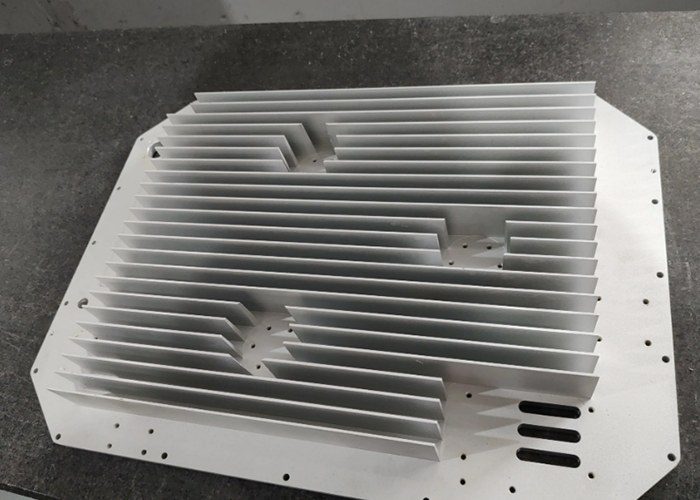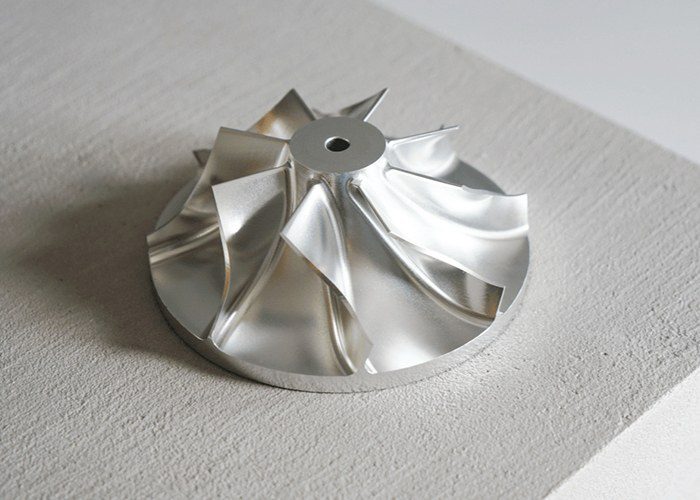
In an era dominated by digital ubiquity and software-defined everything, it is easy to forget that the physical world still runs on metal, torque, and micron-level tolerances. The silent workhorses of modern industry—precision mechanical parts—are the unsung enablers of everything from MRI machines to jet turbines. Yet, as global supply chains fragment and technological frontiers advance, a fundamental shift is reshaping this sector: the move from mass production to mass customization. Customization in precision mechanical parts is no longer a niche luxury; it is an operational imperative, a competitive differentiator, and, in many cases, the only viable path to innovation.
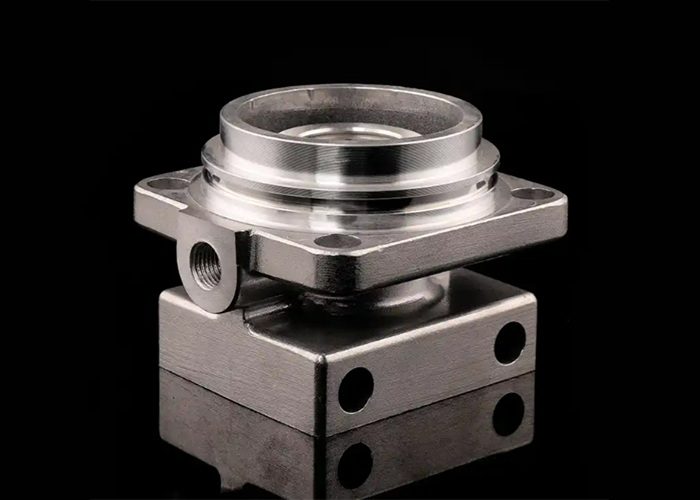
At its core, customization in this field is not merely about altering a diameter or changing a thread pitch. It is a holistic engineering dialogue that begins long before the first chip of metal is cut. It starts with a problem—often a unique constraint of space, weight, temperature, or load that off-the-shelf components cannot address. For instance, in aerospace, a fuel pump housing must not only withstand cryogenic temperatures and extreme pressures but also fit into an increasingly cramped engine nacelle designed for fuel efficiency. No standard catalogue offers that solution. Only a custom-engineered part, born from collaborative design and advanced simulation, can bridge the gap between theoretical performance and physical reality.
The technological arsenal enabling this customization is expanding at breakneck speed. Five-axis CNC machining, once the reserve of elite defense contractors, is now increasingly accessible, allowing for complex undercuts and organic geometries that were previously unmachinable. Additive manufacturing, or metal 3D printing, has moved from prototyping to production, enabling lattice structures that reduce weight by 60% without compromising strength. However, true precision customization is not about a single machine; it is about a process ecosystem. It involves topological optimization software that mimics bone growth to remove redundant material, in-process metrology that adjusts tool paths in real-time to compensate for thermal drift, and surface finishing technologies like electrochemical polishing that achieve Ra 0.2 µm smoothness—a mirror finish measured in millionths of a meter.
Yet, the most demanding frontier is not technological but informational. Customization creates a data explosion. Each bespoke part carries its own digital twin—a comprehensive record of material certificates, heat treatment cycles, cutting parameters, and inspection results. For industries like medical devices or nuclear energy, traceability is non-negotiable; a single undocumented variance can mean life or death. Therefore, the modern custom parts manufacturer is as much a data curator as a machinist. They must integrate ERP systems with quality management software, ensuring that every deviation, every tool change, and every measurement is time-stamped and auditable. This digital thread does not end at the factory gate; it extends to the customer’s assembly line, where IoT sensors can feed back performance data to close the loop and inform future iterations.
The economic calculus of customization has also inverted traditional wisdom. Historically, custom parts meant high cost and long lead times. Today, with agile manufacturing and flexible fixturing, setup times have plummeted. A well-optimized workshop can now produce a batch of fifty custom brackets with almost the same efficiency as five thousand standard ones, thanks to modular tooling and robotic part loading. Moreover, the hidden costs of standardization are becoming evident. Using a slightly oversized standard bearing or a thicker wall section to “play it safe” leads to heavier, less efficient end products. In electric vehicles, every gram saved translates to range; in satellites, every kilogram costs $10,000 to launch. Customization, therefore, is not an expense—it is an investment in functional density.
However, the path to successful customization is fraught with subtle pitfalls. The first is over-specification. Many engineers, in their zeal for perfection, demand tolerances that exceed functional needs—for example, specifying ±5 microns on a non-critical locating surface. This drives costs exponentially and extends delivery times for no tangible benefit. A seasoned custom manufacturer acts as a collaborative partner, not a passive order-taker. They will challenge such specifications, offering design-for-manufacturability (DFM) advice that balances performance with producibility. They might suggest a coarser tolerance on one feature to allow a tighter one on a mating surface, or recommend a different alloy that machines faster while delivering equivalent hardness.
The second pitfall is material selection. The universe of engineering materials—from Inconel 718 to titanium grade 5, from hardened tool steels to advanced polymers like PEEK—is bewildering. Customization does not mean reinventing the wheel; it means choosing the right wheel for the specific road. A competent partner will have in-house metallurgists who understand grain flow, residual stress, and hydrogen embrittlement. They know that a part machined from a forged billet behaves differently under cyclic loading than one from a cast blank, even if the dimensions are identical. This material intelligence is the invisible layer that separates durable custom parts from costly field failures.
Looking ahead, the next horizon for customization is predictive personalization. With AI-driven generative design, engineers will soon input functional requirements—load vectors, thermal flux, vibration modes—and let algorithms propose thousands of organic geometries, each optimized for a specific manufacturing process. The manufacturer, in turn, will use machine learning to predict tool wear and adjust feeds on the fly, ensuring that each custom part, even within a small batch, is produced at its individual optimal window. This is no work of fiction; it is already being harnessed by pioneers in Formula 1 and the world of haute horlogerie.
In conclusion, customization in precision mechanical parts is a symphony of science, art, and partnership. It demands not only state-of-the-art machinery but also a culture of curiosity, a willingness to question inherited assumptions, and an unwavering commitment to quality that transcends mere inspection. As industries pivot toward sustainability, miniaturization, and extreme performance, the one-size-fits-all paradigm becomes obsolete. The future belongs to those who can listen to a client’s unspoken need, translate it into a three-dimensional geometry, and deliver it with the fidelity of a Swiss watchmaker. Because in the end, precision is not about measuring a thousandth of a millimeter—it is about understanding that every thousandth matters differently to every customer. And that understanding is the true essence of customization.