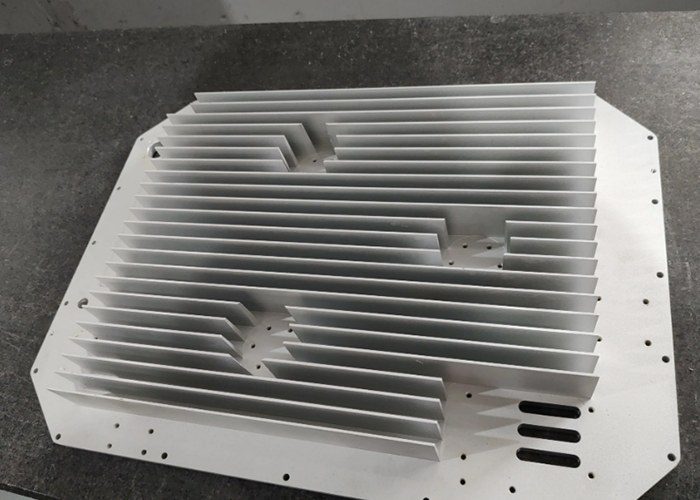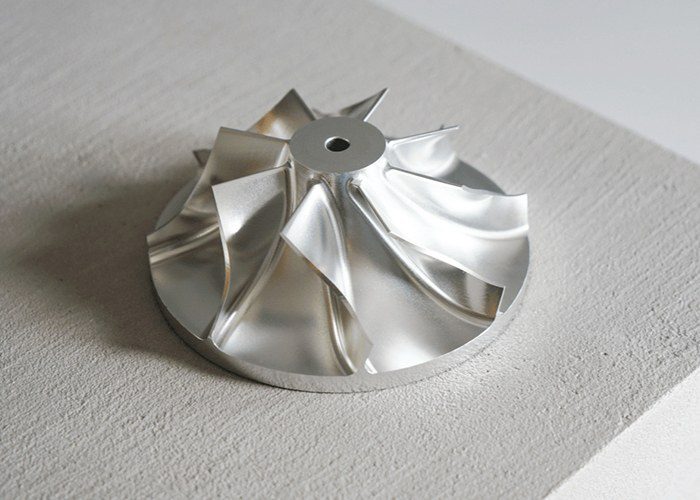
In an era defined by unprecedented demand for uniqueness and precision, custom CNC machining has emerged as a cornerstone of modern manufacturing. From performance automotive components and aerospace structures to medical implants and robotics systems, the need for parts that meet specific design, performance, and aesthetic standards has never been greater. Custom CNC machined metal parts represent the intersection of advanced technology, material science, and engineering ingenuity—transforming solid blocks of metal into precision components that power the world’s most demanding industries.
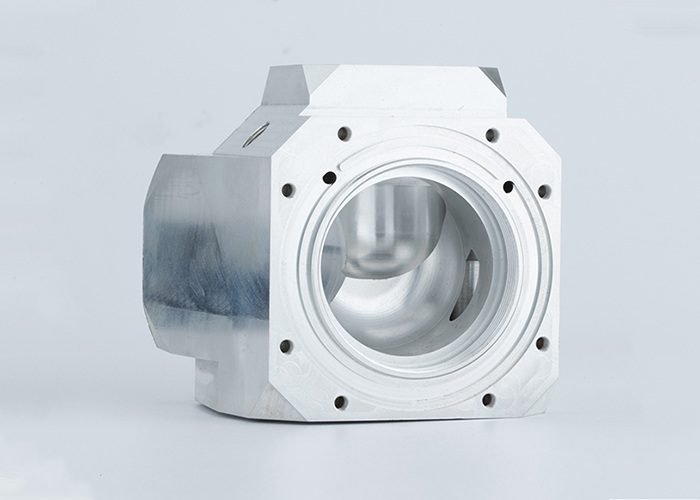
Understanding Custom CNC Machining
CNC stands for Computer Numerical Control, referring to the automated control of machining tools such as drills, lathes, and mills through computer programs. When we speak of custom CNC machining, we mean tailoring this process to meet the unique specifications of a specific part or component—often one that cannot be easily manufactured through conventional methods or standard mass-production tooling. Unlike relying on molds or dies, which require significant setup and are best suited for high volumes, custom machining carves a part out of a solid block—or billet—of material.
The process begins with a CAD (Computer-Aided Design) model, which is then converted into G-code—a programming language the CNC machine uses to follow exact cutting paths, speeds, and depths. Modern programming instructions are created through CAM (Computer-Aided Manufacturing) software. Once the raw material is loaded, multi-axis systems handle complex movements, cutting away material layer by layer through precision cutting, drilling, and milling—all governed by the digital blueprint. This subtractive manufacturing process ensures that every movement is incredibly precise, producing parts that perfectly match the digital design.
The Materials That Make It Possible
One of the greatest strengths of custom CNC machining is its remarkable material versatility. The process can work with virtually any machinable material, including most common metals such as aluminum, steel, stainless steel, copper, brass, bronze, titanium, and various alloys.
Aluminum—particularly grades like 6061-T6 and 7075-T6—is among the most commonly machined materials due to its excellent machinability, high strength-to-weight ratio, and natural corrosion resistance. It is widely used in aerospace, automotive, EV, and electronics applications. Stainless steel, including grades 304, 316, and 17-4 PH, is preferred for medical devices, food processing equipment, and applications requiring exceptional corrosion resistance and high strength. Titanium—especially Grade 5 (Ti-6Al-4V)—offers an outstanding strength-to-weight ratio and excellent fatigue resistance, making it indispensable for aerospace, medical, and motorsport applications. The choice of material is tailored to the specific requirements of each application, whether the priority is durability, thermal conductivity, or biocompatibility.
Applications Across Critical Industries
Custom CNC machined metal parts are essential across a vast spectrum of industries. In aerospace and defense, they form the backbone of mission-critical systems—from satellite brackets to jet engine blades. Components such as engine mounts, fuel flow parts, and landing gear are produced with the precision necessary to ensure safety and performance under extreme conditions.
In the medical field, custom CNC machining produces intricate parts such as orthopedic implants, surgical instruments, and dental components with the high cleanliness and precision these life-critical items require. The ability to work with biocompatible materials further highlights the importance of CNC machining in healthcare. The automotive industry reaps similar benefits from CNC-machined components—gearbox parts, pistons, engine blocks, and custom racing fixtures all depend on the unrivaled precision and durability intrinsic to the process. In robotics and automation, where consistent, repeatable motion is paramount, custom gear systems, structural elements, and internal brackets must adhere to exacting geometric tolerances.
The Advantages of Custom CNC Machining
Custom CNC machining’s primary advantage is producing parts that precisely match client requirements. This customization extends to dimensions, shapes, tolerances, and material selection. CNC equipment reliably holds tolerances within microns, guaranteeing full compliance with stringent design requirements. This level of precision is critical in industries where even minor variations can impact performance and safety.
Furthermore, CNC machining can effortlessly produce parts with intricate shapes, curves, and undercuts—enabling innovative designs that would be challenging or impossible to manufacture using traditional methods. The automated nature of the process ensures consistency and repeatability that manual methods cannot achieve. For prototyping and low-volume production, custom machining offers particular advantages: each part is identical, material integrity is preserved without casting voids or weak points, and design changes can be implemented simply by modifying the digital file. It is also a cost-effective solution for producing from single prototypes to hundreds of production units, requiring fewer operators and reducing labor costs.
The Future of Custom CNC Machining
The custom CNC machining landscape is undergoing rapid and relentless transformation. In 2025, precision machining technology has reached new levels, with AI-guided CNC machines producing components with micron-level accuracy—faster, cleaner, and with less waste than ever before. Leveraging sensor data, AI-driven systems autonomously generate toolpaths, fine-tune feed rates, and adapt parameters on the fly, while machine learning forecasts tool degradation and triggers proactive maintenance to avert costly breakdowns. Multi-axis machining—including 5-axis and even 7-axis systems—enables the production of increasingly complex geometries in single setups, reducing handling time and improving precision. After reaching a valuation of US$52.7 billion in 2024, the global CNC metal cutting services market is forecast to expand to US$88.6 billion by 2031, reflecting a compound annual growth rate of 7.7%.
Conclusion
Custom CNC machined metal parts have fundamentally transformed modern manufacturing. Combining digital precision with adaptive materials and flexible design, this technology delivers high-performance components engineered to meet the most rigorous standards in aerospace, medical, automotive, and a wide range of other industries. From the initial digital design to the final finished part, custom CNC machining represents a partnership between technology and creativity—one that continues to push the boundaries of what is possible in precision engineering. As AI-driven automation and advanced multi-axis systems reshape the industry’s future, custom CNC machined metal parts will remain indispensable to innovation, quality, and performance in the manufacturing world.