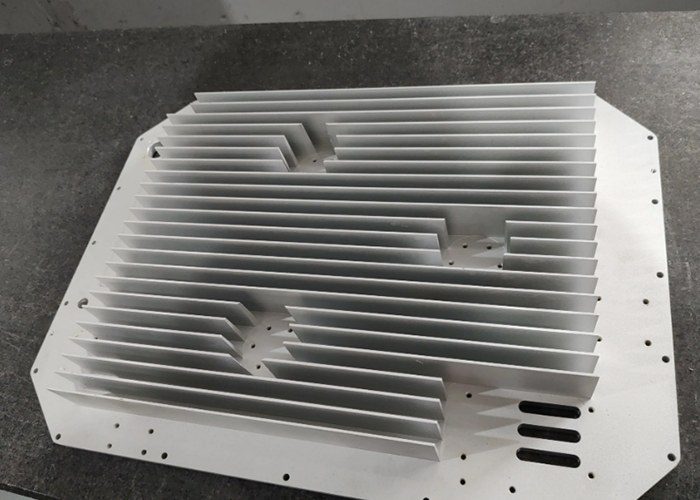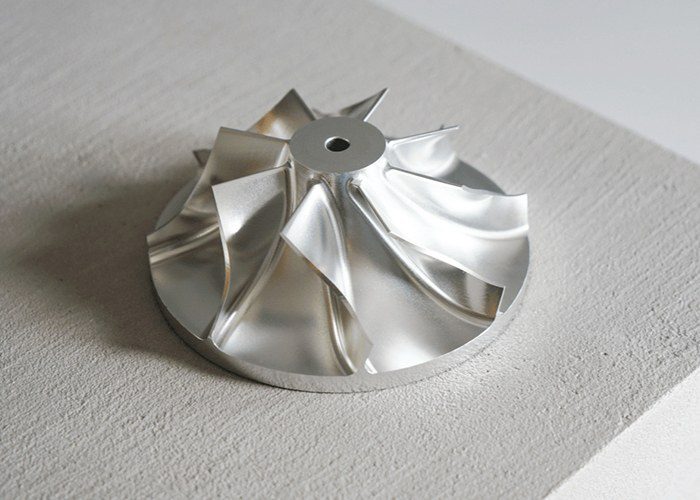
In the landscape of contemporary industry, the demand for components that are both highly accurate and uniquely designed has never been greater. Custom precision metal parts represent the intersection of exacting engineering and tailored design, serving as critical elements in everything from aerospace actuators to medical devices and electric vehicle powertrains. As global markets expand and technologies advance, the sector dedicated to manufacturing these components is undergoing a significant transformation.
The Essence of Precision and Customization
What defines a precision metal part? Fundamentally, it is a component manufactured to extremely tight tolerances, often measured in micrometers or “tenths of a thou” (0.0001 inches). When combined with “custom,” the definition extends to parts engineered to meet specific design and functional requirements rather than standard, off-the-shelf dimensions. This dual demand—for both microscopic accuracy and unique geometry—places custom precision manufacturing at the apex of the metalworking industry.
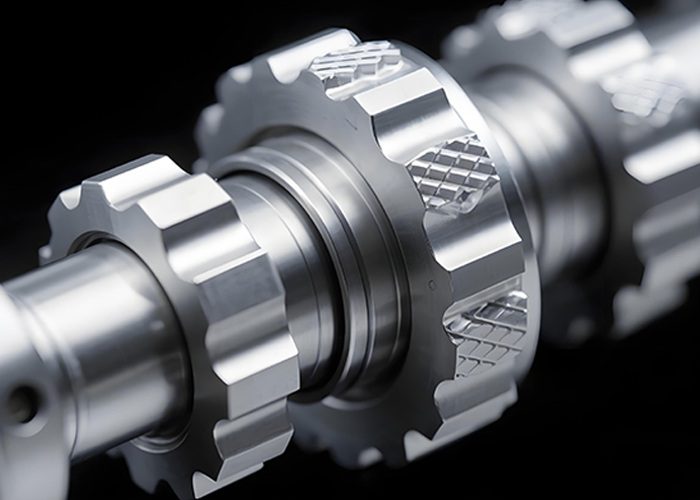
Modern fabrication achieves this through advanced processes such as CNC machining, multi-axis turning, and high-definition forming. For instance, in precision bending, manufacturers utilize CNC programming and process simulation to manage challenges like springback and stress distribution in materials as thick as 22 mm or as long as 10 meters, ensuring that even ultra-long, irregularly shaped components maintain absolute linearity and curvature consistency.
The Technological Drivers of Change
Several key trends are reshaping how custom precision metal parts are designed and produced. First, automation and smart manufacturing have revolutionized the shop floor. The integration of robotics, IoT sensors, and real-time data analytics allows for “lights-out” operations, where parts can be manufactured unattended with consistent quality. This shift not only increases efficiency but also enhances precision by removing the variable of human error from repetitive tasks.
Second, additive manufacturing is emerging as a complementary technology. While traditional subtractive methods like CNC machining remain dominant, 3D printing enables the creation of complex geometries that were previously impossible to machine, offering new flexibility in design and significant reductions in material waste.
Third, advancements in materials science are expanding the possibilities for custom components. Beyond standard stainless steel and aluminum, manufacturers now routinely work with exotic alloys such as Inconel, titanium, and magnesium to meet the extreme demands of aerospace and medical applications.
Quality Assurance and Standards
For custom precision parts, quality is not an afterthought—it is the foundation. The industry operates under a rigorous framework of international standards, including ISO 9001 for quality management and AS9100 for aerospace. Dimensional validation is performed using advanced metrology equipment such as Coordinate Measuring Machines (CMM) from manufacturers like Zeiss and Mitutoyo, which can verify complex geometries against CAD models with micron-level accuracy.
Tolerance standards, such as ISO 2768 and Geometric Dimensioning and Tolerancing (GD&T), serve as a universal language that enables engineers to precisely define a part’s functional requirements within an assembly. As one industry expert notes, achieving tolerances as tight as ±0.005 mm for critical components requires not only advanced machinery but also a deep understanding of material behavior and process control.
Market Outlook and Future Trends
The global market for custom metal fabrication is projected to grow significantly, with the precision turned products segment alone expected to reach $128.3 billion by 2030. This growth is fueled by several sectors. The rise of electric vehicles (EVs) creates demand for custom battery housings, connectors, and thermal management components. In aerospace, the need for lightweight, high-strength parts continues to drive innovation. Additionally, the medical sector requires miniaturized, biocompatible components for surgical instruments and implants.
Looking ahead, sustainability is becoming a strategic priority. Manufacturers are adopting eco-friendly practices, including the use of recycled metals and energy-efficient machinery, to reduce their carbon footprint while maintaining the high quality that customers expect.
Conclusion
Custom precision metal parts are far more than simple components; they are the enablers of modern technology. As industries continue to demand greater efficiency, reliability, and performance, the role of precision manufacturing will only grow in importance. Through the integration of smart technology, adherence to stringent quality standards, and a commitment to customization, this sector remains vital to the advancement of global industry.