
In today’s fast-paced industrial landscape, standard off-the-shelf components often fall short of meeting the unique demands of advanced machinery and specialized applications. This is where custom precision mechanical parts become indispensable. Engineered to exact specifications with extremely tight tolerances, these components form the backbone of innovation across sectors such as aerospace, medical devices, automotive engineering, robotics, and electronics. Unlike mass‑produced parts, custom precision parts are designed, machined, and finished to perform flawlessly within a specific assembly, ensuring optimal efficiency, longevity, and reliability.
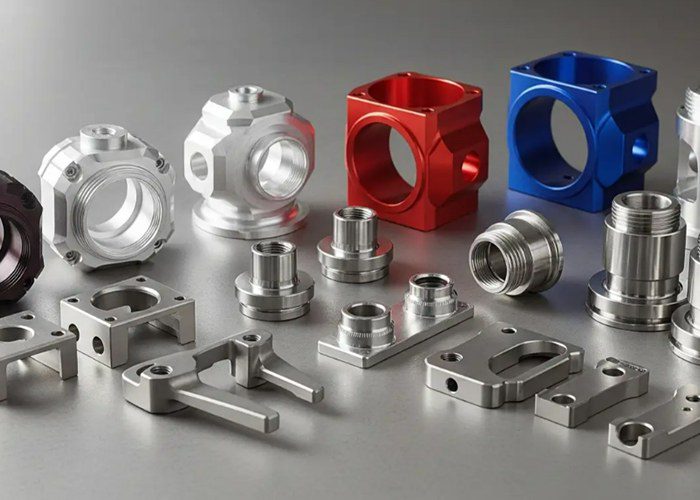
What Defines a “Custom Precision Mechanical Part”?
The term “custom” implies that the part is designed for a particular product or system, not for general use. “Precision” refers to the ability to manufacture the component within extremely tight tolerances—often as small as ±0.005 mm or even microns. “Mechanical parts” encompass everything from gears, shafts, and bushings to complex housings, turbine blades, and surgical instrument components. Achieving such precision requires advanced manufacturing technologies, rigorous quality control, and deep material science knowledge.
The Manufacturing Process: From Blueprint to Finished Component
Creating a custom precision mechanical part begins with a detailed engineering drawing, usually in CAD (Computer‑Aided Design). Once the design is finalized, CAM (Computer‑Aided Manufacturing) software converts it into machine instructions. The actual production involves several cutting‑edge techniques:
- CNC Machining (Milling & Turning): Computer Numerical Control machines remove material from a solid block with unparalleled repeatability. Multi‑axis CNC mills can create complex geometries in a single setup.
- EDM (Electrical Discharge Machining): Ideal for hard metals or intricate cavities where conventional cutting tools cannot reach. Wire EDM cuts through conductive materials with microscopic precision.
- Precision Grinding: Used to achieve ultra‑smooth surface finishes and tight dimensional tolerances, often after initial machining.
- Laser Cutting & Micro‑machining: Suitable for thin sheets, micro‑components, or when minimal heat‑affected zones are critical.
- Additive Manufacturing (Metal 3D Printing): Increasingly used for complex, low‑volume custom parts, especially in aerospace and medical implants.
After machining, parts undergo deburring, heat treatment (if required), and surface finishing such as anodizing, plating, or passivation to enhance corrosion resistance or wear properties.
Quality Assurance: The Non‑negotiable Step
No custom precision part leaves the workshop without rigorous inspection. Metrology tools like Coordinate Measuring Machines (CMM), optical comparators, laser micrometers, and surface roughness testers verify every critical dimension. Statistical process control (SPC) ensures that the entire production run stays within specifications. For industries like medical implants or aerospace fasteners, traceability and certification (e.g., ISO 9001, AS9100) are mandatory.
Key Applications Driving Demand
- Aerospace & Defense: Turbine blades, fuel system components, and avionics housings must endure extreme temperatures, vibrations, and pressures. A failure measured in microns can lead to catastrophic results.
- Medical Devices: Surgical tools, orthopedic implants (hip and knee joints), dental drills, and pacemaker casings require biocompatible materials and mirror‑like surface finishes to avoid infection or rejection.
- Automotive & Motorsport: High‑performance engines depend on custom pistons, camshafts, injector nozzles, and transmission gears to push the limits of horsepower and fuel efficiency.
- Robotics & Automation: Harmonic drive components, servo motor shafts, and end‑effector grippers require zero backlash and exceptional repeatability to ensure consistent operation.
- Electronics & Semiconductors: Contact probes, chip test sockets, and miniature connectors demand sub‑micron tolerances to ensure reliable electrical connectivity.
Advantages Over Standard Parts
Why invest in custom precision mechanical parts instead of buying ready‑made components? The benefits are substantial:
- Perfect Fit & Function: Eliminates makeshift adaptations, spacers, and redesigns. The part integrates seamlessly into the existing assembly.
- Improved Performance: By optimizing geometry and material for the exact load, speed, and environment, custom parts often outperform generic ones.
- Reduced Assembly Time & Cost: A precisely made part reduces shimming, adjustment, and rework on the production line.
- Longer Lifespan: Tailored heat treatment and surface coatings can dramatically extend component life under harsh conditions.
- Innovation Enablement: Breakthrough products—from next‑gen drones to robotic surgical systems—rely on parts that simply don’t exist in standard catalogues.
Choosing the Right Manufacturing Partner
Not all machine shops are equal. When sourcing custom precision mechanical parts, look for vendors who offer:
- In‑house CNC capabilities (5‑axis milling, Swiss turning, etc.)
- Advanced metrology lab with CMM and automated reporting
- Material certifications and ability to work with exotic alloys (Inconel, titanium, Monel, PEEK, etc.)
- Experience with your industry’s quality standards
- Clear communication and design‑for‑manufacturability (DFM) feedback
Conclusion
As technology pushes the boundaries of what machines can do, the demand for custom precision mechanical parts will only intensify. Whether it’s a one‑off prototype for a research lab or a high‑volume run for a new electric vehicle model, the ability to manufacture components that fit perfectly, last longer, and perform better under real‑world conditions is a true competitive advantage. Precision is not just a metric—it’s a mindset that transforms good designs into exceptional products. Companies that embrace custom precision machining position themselves at the forefront of quality, innovation, and reliability in the ever‑evolving world of modern manufacturing.


