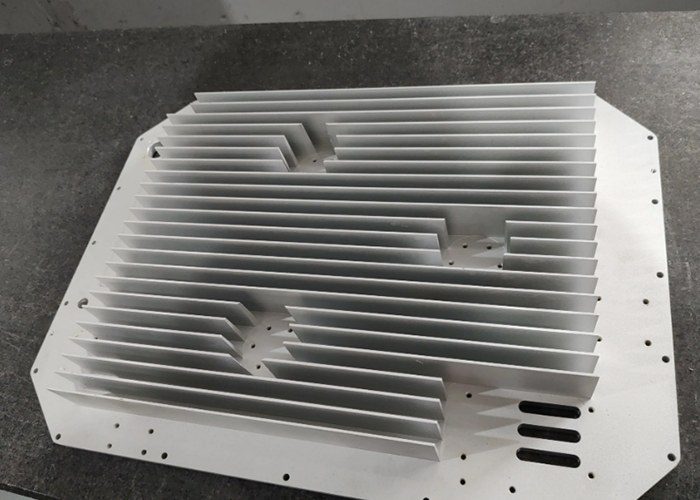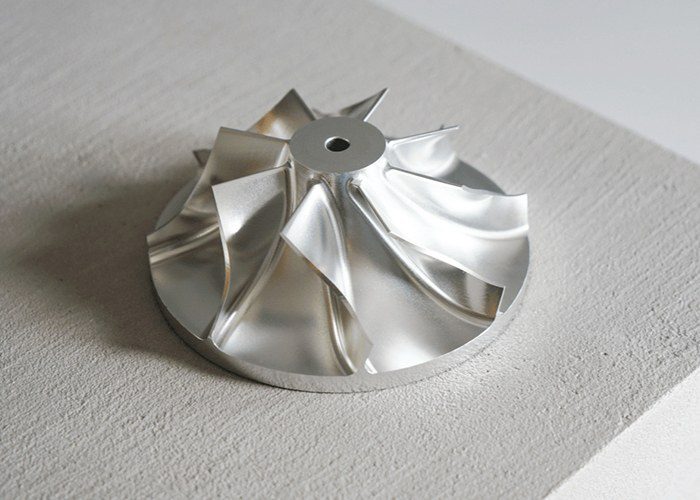
In an age dominated by mass production and assembly-line uniformity, the unsung hero of modern manufacturing is often the machine shop that specializes in custom precision mechanical machining. While high-volume production lines churn out millions of identical components, the world of custom machining exists at the opposite end of the spectrum—one defined by flexibility, extreme tolerances, and problem-solving. It is the discipline where raw metal, plastic, or ceramic is transformed into a one-of-a-kind component that fits, functions, and fails only when and where it is supposed to.
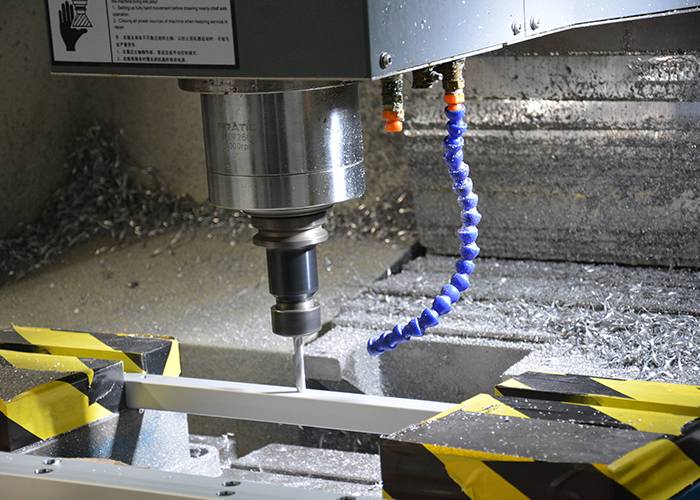
At its core, custom precision mechanical machining is the process of removing material from a workpiece to achieve a specific, often complex, geometry with exceptionally tight tolerances. These tolerances are frequently measured in microns—thousandths of a millimeter, or a fraction of the width of a human hair. The “custom” aspect is key: there is no pre-existing tooling or mold. Every toolpath, every spindle speed, and every cutting angle is calculated from scratch based on a unique engineering drawing or 3D model.
The Technical Arsenal: From Manual to CNC
The backbone of this industry is Computer Numerical Control (CNC) machining. Unlike manual lathes or mills that rely on a machinist’s steady hand, CNC machines follow coded instructions—G-code—with robotic consistency. The primary processes include:
- CNC Milling: Rotating cutting tools remove material from a stationary workpiece to create flat surfaces, slots, angles, and complex 3D contours. Multi-axis mills (5-axis or even 7-axis) can approach a part from virtually any direction, producing organic shapes like turbine blades or prosthetic joints in a single setup.
- CNC Turning: A stationary cutting tool shapes a rotating workpiece. This is ideal for cylindrical parts—such as shafts, bushings, and connectors. Modern turn-mill centers combine both turning and milling capabilities, drilling holes or cutting flats on a round part without moving it to another machine.
- Electrical Discharge Machining (EDM): For materials too hard for conventional cutting, EDM uses controlled electrical sparks to erode the workpiece. Sinker EDMs create intricate cavities (e.g., mold inserts), while wire EDMs cut through thick plates with microscopic precision, leaving a flawless finish.
Material Mastery
The choice of material dictates every parameter of the machining process. Custom precision shops must work with an astonishing variety of stock:
- Metals: From aerospace-grade aluminum 7075 and stainless steel 316 to exotic alloys like Inconel, Monel, and titanium. Each material behaves differently: aluminum is gummy and tends to clog tools; titanium work-hardens almost instantly; Inconel retains heat and quickly destroys cutting edges.
- Engineering Plastics: PEEK, PTFE, Delrin, and polycarbonate are machined into insulators, bearings, and medical implants. These require sharp, polished tools to avoid melting or stress cracking.
- Advanced Ceramics and Composites: Alumina, zirconia, and carbon-fiber-reinforced polymers demand diamond tooling and specialized dust extraction.
A skilled machinist doesn’t just cut a material—they negotiate with it, adjusting feeds, speeds, and coolants to achieve dimensional accuracy without surface damage.
Where Custom Precision Matters Most
You will find custom-machined components in the places where failure is not an option. In medical technology, hip implant stems and spinal fixation screws are machined one at a time from titanium or cobalt-chrome, polished to a mirror finish to promote osseointegration. In aerospace, a single turbine disk for a jet engine requires thousands of precisely machined airfoil shapes; a deviation of 25 microns could cause catastrophic imbalance at 50,000 RPM. In semiconductor manufacturing, the nozzles and chucks inside wafer steppers are machined to nanometer-level flatness, often from ultra-hard ceramic or silicon carbide.
Even in prototype development and research, custom machining is indispensable. When an automotive engineer designs a new combustion chamber shape, they cannot order it from a catalog. They send a SolidWorks file to a precision machine shop, and within days, a physical aluminum prototype arrives for flow-bench testing. Iterations are fast and affordable.
The Human Element in an Automated World
One might assume that CNC automation has eliminated the need for human skill. The opposite is true. Programming a multi-axis CNC machine to cut a complex freeform surface without gouging or tool chatter requires years of experience. Selecting the right end mill geometry, calculating step-over distances, and predicting thermal expansion during a two-hour machining cycle are judgments that no software currently masters. Moreover, custom machining frequently involves one-off or low-volume runs (often just 2–50 parts). Setting up the machine, creating fixtures, and proving out the program can take longer than the machining itself. The machinist’s ability to optimize for speed versus accuracy—knowing when a ±0.01 mm tolerance is essential and when ±0.1 mm is plenty—directly affects the customer’s cost and lead time.
Quality assurance is equally rigorous. Finished parts are inspected using coordinate measuring machines (CMMs), laser micrometers, and optical comparators. Every critical dimension is documented. In industries like defense or nuclear energy, 100% inspection is standard, not a luxury.
Trends and the Future
The custom precision machining industry is evolving rapidly. Digital twin technology allows machinists to simulate the entire cutting process on a virtual model, detecting collisions or deflection before steel meets metal. In-process probing uses touch-trigger probes inside the CNC machine to measure a feature while the part is still clamped, automatically compensating for tool wear. Hybrid manufacturing (additive + subtractive) is emerging: a 3D printer deposits a near-net shape of a difficult alloy, and then a CNC mill finishes it to precision, bypassing expensive forging dies.
Conclusion
Custom precision mechanical machining is far more than a manufacturing service—it is a fundamental enabler of innovation. Every breakthrough in aerospace, medicine, energy, and transportation eventually passes through a machine shop where raw stock meets precision tools under the guidance of a master machinist. In a world striving for ever-tighter tolerances and ever-more-complex geometries, the value of custom, on-demand precision will only grow. It is the quiet, exacting craft that turns blueprints into reality—one micron at a time.